Why Homemade Pico de Gallo Beats Store-Bought Every Time
Have you ever wondered why the salsa at your favorite taquería tastes so much brighter than the jarred versions? The secret lies in making it yourself. Preparing a fresh Pico de Gallo at home takes just minutes, yet delivers a burst of flavor that transforms tacos, nachos, or grilled meats. This classic Mexican condiment—also known as salsa fresca—is a celebration of ripe tomatoes, crisp onions, spicy jalapeños, and fragrant cilantro. By controlling every ingredient, you avoid preservatives, customize heat levels, and save money. Whether you’re a seasoned cook or a beginner, this recipe ensures perfect results every time.
—
Ingredients & Kitchen Tools
Ingredients
– Roma tomatoes (4–5, diced) – meaty and less watery; avoid overripe ones.
– White onion (½ medium, finely diced) – sharpness mellows after resting.
– Fresh jalapeño (1–2, seeded and minced) – adjust for heat tolerance.
– Cilantro (¼ cup, chopped) – use leaves and tender stems.
– Lime juice (2–3 tbsp, freshly squeezed) – brightens and balances.
– Salt (½ tsp or to taste) – coarsely ground kosher salt works best.
– (Optional) Garlic – one small clove, minced, for extra depth.
Kitchen Tools
– Cutting board and sharp chef’s knife
– Mixing bowl (non-reactive like glass or stainless steel)
– Measuring spoons
– Colander (for rinsing cilantro, optional)
—
Prep Time & Cooking Schedule
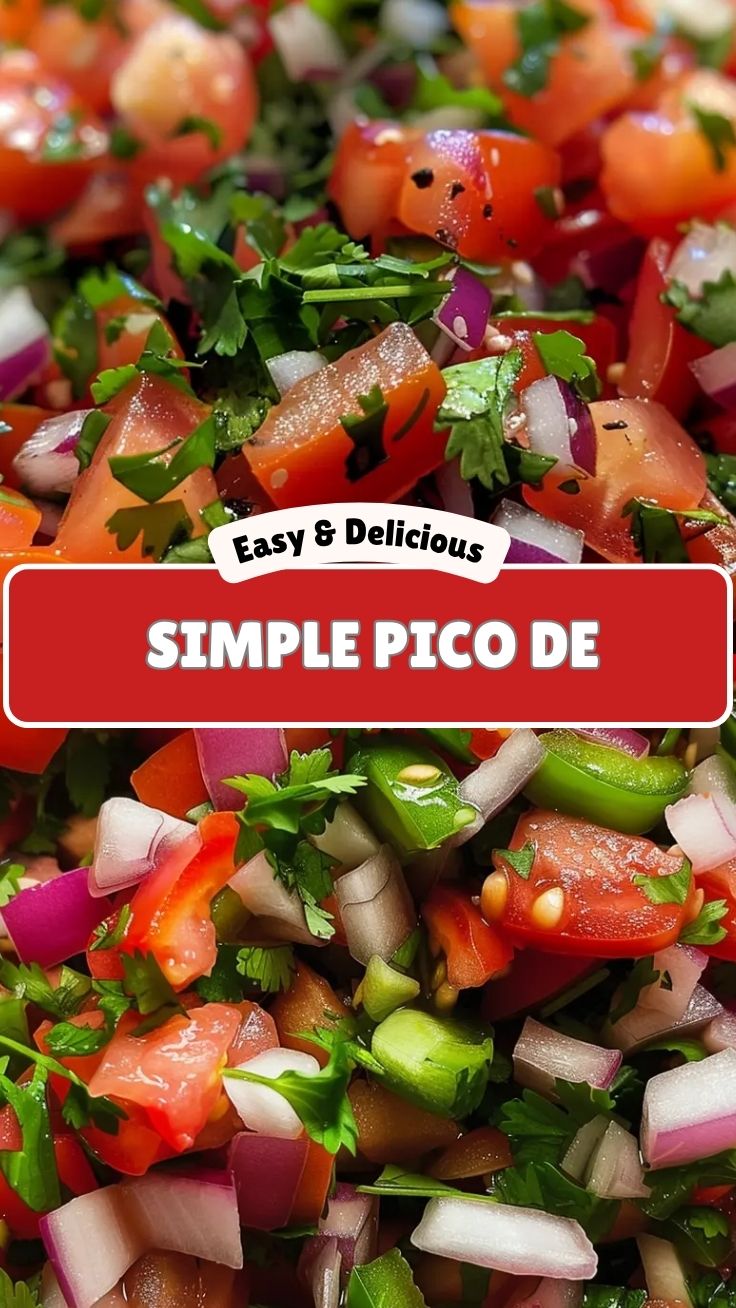
– Prep Time: 15 minutes (dicing and chopping)
– Resting Time: 30 minutes (allows flavors to meld)
– Total Time: 45 minutes
Plan ahead: the resting time is crucial for the onions to mellow and the salt to draw out juices. You can prep the vegetables while your grill heats or your tortilla chips are ready.
—
Step-by-Step Instructions
1. Dice the tomatoes. Cut each Roma tomato in half lengthwise, remove the core, and scoop out the seeds and gel with a spoon. This step prevents watery Pico de Gallo. Dice into ¼-inch cubes and place in the mixing bowl.
2. Chop the onion and jalapeño. Finely dice the white onion. For the jalapeño, slice it in half, remove seeds and white ribs (where most heat resides), then mince. Add both to the bowl.
3. Add cilantro and lime. Roughly chop fresh cilantro leaves and tender stems—don’t dry them too hard. Squeeze fresh lime juice directly over the mixture.
4. Season and toss. Sprinkle salt evenly. Gently stir everything together with a spoon. Taste a small amount and adjust salt or lime. If you prefer a milder salsa fresca, use only one jalapeño and skip the seeds.
5. Rest for best flavor. Cover the bowl and let it sit at room temperature for 30 minutes. This allows the flavors to marry and the onion’s bite to soften.
6. Final adjustments. Stir again before serving. If it looks too dry, add another squeeze of lime. If too watery (from tomatoes that weren’t seeded enough), drain off excess liquid.
—
Nutritional Benefits & Advantages
Pico de Gallo is naturally low in calories (about 15–20 calories per half cup) and packed with vitamins. Tomatoes provide lycopene, a powerful antioxidant linked to heart health and reduced inflammation. Onions and garlic (if used) offer quercetin and sulfur compounds that support immune function. Cilantro may aid in heavy metal detoxification, while lime juice delivers a punch of vitamin C. Because this salsa fresca is raw and unprocessed, you absorb maximum nutrients. It’s also vegan, gluten-free, dairy-free, and keto-friendly—making it a versatile addition to almost any diet.
—
Tips, Variations & Cooking Advice
– Flavor variations: Swap half the tomatoes with diced mango or pineapple for a tropical twist. Add roasted corn for smokiness.
– Herb swaps: Replace cilantro with fresh basil or mint (works surprisingly well with grilled fish).
– Dietary adaptations: Already gluten-free and dairy-free. For low-FODMAP, omit onion and garlic, and use only the green parts of scallions.
– Spice control: For extra heat, leave seeds in the jalapeño or add a serrano pepper. For mild, use poblano pepper instead.
– Make it ahead: The flavor improves after a few hours in the fridge, but best within 24 hours.
—
Common Mistakes to Avoid
– Watery salsa: Skipping the step of seeding tomatoes leads to a pool of liquid. Always remove seeds and pulp.
– Bitter or harsh onion: Not resting the salsa for at least 15–20 minutes. The salt and lime tame the raw onion’s sharpness.
– Overchopping: Dicing too finely turns everything into mush. Aim for uniform ¼-inch pieces.
– Under-seasoning: Salt is critical. Don’t be shy; it enhances fruitiness.
– Using bottled lime juice: Fresh lime juice is non-negotiable for vibrant flavor. Bottled juice adds a metallic taste.
—
Storage & Meal Prep Tips
Store leftover Pico de Gallo in an airtight container in the refrigerator for up to 3 days. The tomatoes will release more liquid over time; drain excess before serving. Do not freeze—the texture becomes mushy after thawing. For meal prep, chop all vegetables but keep them separate until ready to serve. Combine with lime juice and salt just before eating to maintain maximum crunch. If you need to refresh day-old salsa, add a squeeze of fresh lime and a pinch of salt.
—
Conclusion
Making your own Pico de Gallo at home is a game-changer for anyone who loves fresh, vibrant Mexican food. This simple recipe delivers authentic flavor in under 20 minutes of active work. By using ripe tomatoes, fresh lime, and a little patience for the flavors to meld, you create a salsa fresca that outshines anything from a jar. Whether you spoon it over tacos, serve it with chips, or use it as a topping for grilled chicken, the payoff is immense. Try this recipe today, and share your experience or photos in the comments. For more fresh salsas and dips, explore our other recipes.
—
FAQs
1. Can I use canned tomatoes instead of fresh?
Fresh tomatoes are essential for the crisp texture of Pico de Gallo. Canned tomatoes are too soft and will produce a mushy, watery salsa.
2. How do I make it less spicy?
Remove all seeds and white membranes from the jalapeño. You can also substitute a bell pepper for part of the jalapeño.
3. Why does my Pico de Gallo taste bitter?
Bitterness often comes from over-chopping cilantro or using the thick lower stems. Use only tender leaves and stems. Also, ensure your lime juice is fresh.
4. Can I add sugar to balance acidity?
If your tomatoes are not fully ripe, a pinch of sugar (or a tiny amount of honey) can balance acidity. But good ripe tomatoes shouldn’t need it.
5. How long can I leave Pico de Gallo at room temperature?
For food safety, do not leave it out more than 2 hours (1 hour if above 90°F). Refrigerate promptly.
Quick way to grow 7 Pico de Gallo recipesPico de Gallo
Ingredients
Equipment
Method
- Combine diced tomatoes, onion, cilantro, minced jalapeño, lime juice, and salt in a medium bowl.
- Stir gently to combine all ingredients. Serve immediately or chill for later use.
- In a bowl, mix together mango, red onion, cilantro, minced jalapeño, lime juice, and salt.
- Toss to combine and serve chilled. This variation is excellent with grilled fish or chicken.
- Gently combine diced tomatoes, avocado, onion, cilantro, minced jalapeño, lime juice, and salt in a bowl.
- Mix carefully to avoid mashing the avocado. Serve immediately to prevent browning.
- Combine corn, black beans, red onion, cilantro, minced jalapeño, lime juice, and salt in a large bowl.
- Mix well and chill for at least 15 minutes before serving for flavors to meld.
- Mix diced pineapple, red onion, cilantro, minced jalapeño, lime juice, and salt in a bowl.
- Stir until all ingredients are well combined. Great with pork or chicken.
- In a medium bowl, combine tomatoes, onion, cilantro, minced serrano peppers, lime juice, and salt.
- Mix thoroughly and be mindful of the added heat from the serrano peppers.
- Gently combine diced cucumber, tomatoes, red onion, cilantro, lime juice, and salt in a bowl.
- Stir to blend the flavors. This refreshing salsa is perfect for a light snack or side dish.