Why Homemade Pesto Pasta Beats Store-Bought Every Time
Have you ever wondered why restaurant-quality Pesto Pasta tastes so much better than anything you can buy pre-made at the supermarket? The secret isn’t complicated ingredients or expensive equipment—it’s freshness, control, and a little bit of kitchen confidence. When you prepare this vibrant, herbaceous dish at home, you unlock layers of flavor that no jarred sauce can replicate. Plus, you avoid preservatives, excess oil, and sodium while saving money. Whether you’re a beginner or a seasoned cook, homemade Pesto Pasta delivers satisfaction in under 30 minutes. And if you’re looking to expand your repertoire, exploring other pasta recipes is a delicious way to elevate everyday meals.
—
Ingredients & Kitchen Tools
For the Pesto
– 2 cups fresh basil leaves (packed) – Wash and dry thoroughly; wet basil makes watery pesto.
– 1/3 cup pine nuts – Toast lightly for deeper flavor; walnuts or almonds work as substitutes.
– 2 cloves garlic – Use fresh; pre-minced garlic lacks brightness.
– 1/2 cup grated Parmesan cheese – Buy a block and grate it yourself for superior melt and flavor.
– 1/2 cup extra-virgin olive oil – Use good quality; it’s the backbone of the sauce.
– Salt and black pepper to taste.
For the Pasta
– 12 oz dried pasta – Linguine, fettuccine, or penne work best; fresh pasta reduces cooking time.
– Salt for pasta water – Use 1 tablespoon per 4 quarts water.
Kitchen Tools
– Large pot for boiling pasta
– Colander
– Food processor or blender
– Chef’s knife and cutting board
– Wooden spoon or tongs
– Measuring cups and spoons
Optional Add-Ins
– Cherry tomatoes (halved)
– Grilled chicken or shrimp
– Fresh mozzarella pearls
– Red pepper flakes for heat
—
Prep Time & Cooking Schedule
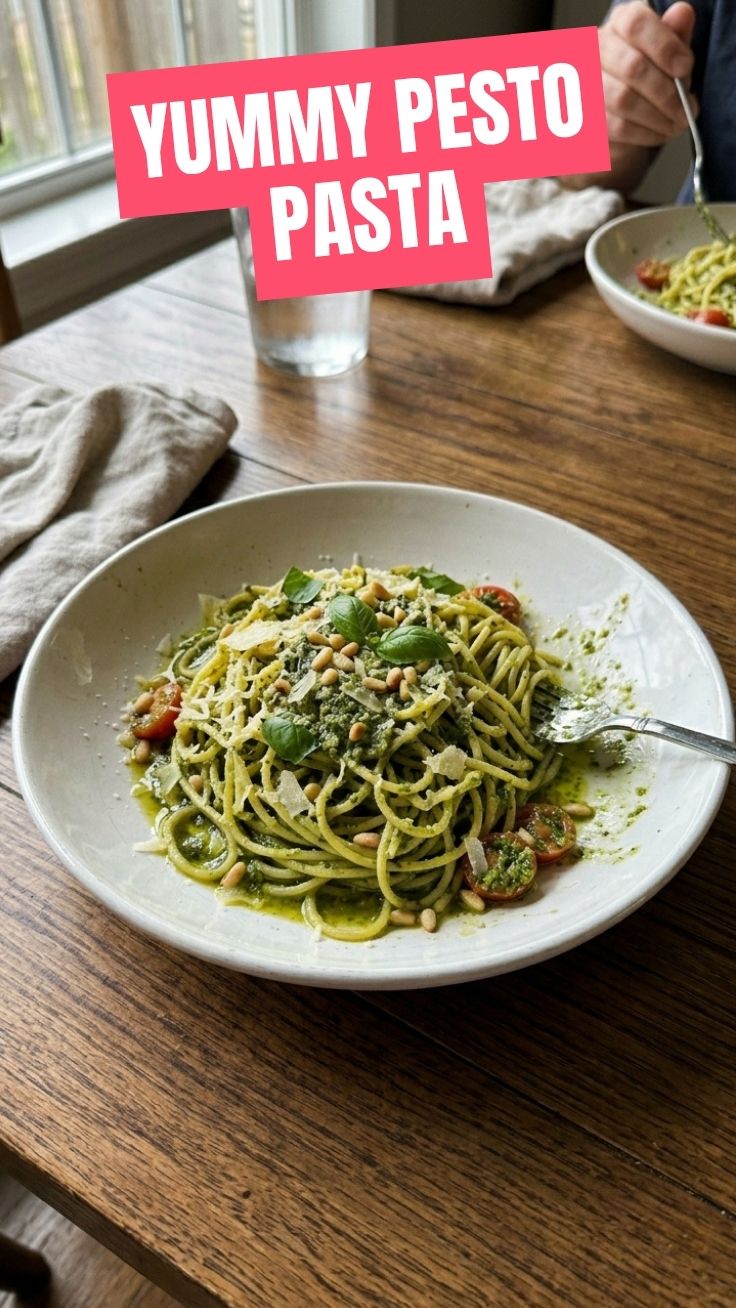
– Prep time: 10 minutes
– Cook time: 10–12 minutes
– Total time: 20–22 minutes
Timing is everything here. While your pasta water comes to a boil (about 5–7 minutes), you can wash and dry basil, toast pine nuts, and measure ingredients. By the time the water boils, your pesto will be ready to go. This recipe moves quickly, so have everything prepped and within arm’s reach before you start cooking.
—
Step-by-Step Instructions
1. Bring a large pot of salted water to a rolling boil. Use about 4 quarts of water per 12 oz of pasta. The water should taste like the sea—that’s your only chance to season the pasta from within.
2. While the water heats, make the pesto. In a food processor, combine basil leaves, toasted pine nuts, garlic, and Parmesan. Pulse 5–6 times to break down. With the motor running, slowly drizzle in the olive oil until a smooth, thick emulsion forms. Scrape down the sides as needed. Season with a pinch of salt and a crack of black pepper.
3. Cook the pasta according to package directions. For al dente texture, check 1 minute before the recommended time. Reserve 1 cup of starchy pasta water before draining—this liquid gold helps bind the pesto to the noodles.
4. Drain the pasta and return it to the pot (off heat). Add 3/4 of the pesto and toss vigorously. If the sauce seems too thick, add reserved pasta water a tablespoon at a time until glossy and well-coated. The starch in the water helps the pesto cling beautifully.
5. Taste and adjust. Add more pesto if desired. Finish with extra Parmesan, fresh basil ribbons, or a squeeze of lemon juice for brightness. Serve immediately.
In this simple process, you create a vibrant Pesto Pasta that bursts with fresh flavor. If you enjoy this, be sure to explore other pasta recipes like creamy carbonara or roasted vegetable primavera for even more variety.
—
Nutritional Benefits & Advantages
This dish is deceptively nutritious. Basil is rich in vitamin K, antioxidants, and anti-inflammatory compounds. Pine nuts provide healthy monounsaturated fats and magnesium, while garlic supports immune function. Olive oil contributes heart-healthy polyphenols. When paired with whole-grain pasta (a simple swap), this meal delivers fiber and sustained energy. Compared to heavy cream-based sauces, pesto is lighter yet still satisfying. Plus, making it at home lets you control sodium and oil levels—perfect for anyone watching their intake.
—
Tips, Variations & Cooking Advice
– Gluten-free option: Use chickpea or lentil pasta for added protein and fiber.
– Dairy-free version: Replace Parmesan with nutritional yeast or vegan Parmesan; use a 2:1 ratio of yeast to nuts.
– Nut-free pesto: Substitute sunflower seeds or hemp hearts for pine nuts.
– Herb variations: Swap half the basil with fresh spinach or arugula for peppery notes, or use cilantro and mint for a twist.
– Protein boost: Toss in grilled chicken, shrimp, or white beans after cooking.
– Serving suggestion: Pair with a crisp green salad and a glass of Sauvignon Blanc.
—
Common Mistakes to Avoid
| Mistake | Solution |
|———|———-|
| Watery pesto | Always dry basil leaves thoroughly after washing. |
| Bitter garlic | Remove the green germ from the center of old garlic cloves. |
| Gluey pasta | Don’t rinse after draining; the starch helps sauce adhere. |
| Overcooked pesto | Never heat pesto directly; toss with hot pasta only. |
| Bland sauce | Season aggressively with salt and add lemon juice at the end. |
—
Storage & Meal Prep Tips
– Refrigeration: Store pesto in an airtight jar with a thin layer of olive oil on top to prevent oxidation. It keeps 5–7 days.
– Freezing: Spoon pesto into ice cube trays, freeze, then transfer cubes to a freezer bag. Use within 3 months. Thaw in the fridge overnight.
– Assembled pasta: Store leftovers in a sealed container for up to 2 days. To reheat, add a splash of water or olive oil and microwave in 30-second bursts, stirring between intervals. For best texture, reheat in a skillet over low heat, adding pasta water as needed.
– Meal prep strategy: Make a double batch of pesto on Sunday. Portion it in small containers for quick weekday dinners. Cook fresh pasta the day you plan to eat it for best results.
—
Conclusion
Making homemade Pesto Pasta is one of the most rewarding kitchen skills you can develop. It’s fast, flexible, and packed with fresh, wholesome ingredients that taste infinitely better than store-bought alternatives. The key is balance—bright basil, nutty pine nuts, salty Parmesan, and fruity olive oil all working in harmony. And once you master this technique, you’ll find endless ways to adapt it into other pasta recipes like creamy salmon pesto or roasted vegetable versions. I encourage you to try this recipe tonight, snap a photo, and share your creation with friends or family. Your taste buds—and your dinner guests—will thank you.
—
FAQs
Can I use store-bought pesto instead of homemade?
Yes, but the flavor won’t be as vibrant. If using store-bought, look for refrigerated pesto in the deli section and add extra fresh basil and lemon juice to brighten it up.
How do I prevent my pesto from turning brown?
Oxidation causes browning. Press plastic wrap directly onto the surface of leftover pesto before refrigerating, or add a thin layer of olive oil to create a barrier from air.
Can I make this recipe vegan?
Absolutely. Replace Parmesan with 2 tablespoons nutritional yeast and use a plant-based pasta. The texture and umami flavor will still be satisfying.
My pesto tastes bitter. What went wrong?
Bitterness usually comes from old garlic or burnt nuts. Toast pine nuts gently—just until fragrant, about 2 minutes in a dry skillet. Use fresh garlic cloves and remove any green sprouts.
How can I make this recipe spicier?
Add 1/4 teaspoon red pepper flakes to the food processor while making the pesto, or sprinkle extra flakes over the finished dish. A drizzle of chili oil also works well.
Can I use frozen basil?
Fresh basil is strongly recommended for the best flavor and color. Frozen basil releases too much water and becomes slimy, ruining the emulsion. Stick with fresh leaves only.
Pesto Pasta
Ingredients
Equipment
Method
- Cook the pasta according to package directions in salted boiling water until al dente.
- While the pasta cooks, heat olive oil in a large skillet over medium heat and sauté the halved cherry tomatoes for 3-5 minutes until they begin to soften.
- Drain the cooked pasta, reserving about 1/4 cup of the pasta water.
- Add the drained pasta to the skillet with the tomatoes, then stir in the pesto sauce, grated Parmesan cheese, and chopped fresh basil.
- If the pasta seems too dry, add a splash of the reserved pasta water to reach your desired consistency.
- Season with salt and black pepper to taste and serve immediately.