The Ultimate Guide to Perfect Authentic Cacio e Pepe at Home
Have you ever wondered why the Cacio e Pepe served at your favorite Roman trattoria is so irresistibly creamy, while your attempts at home end up clumpy and dull? Mastering this classic four-ingredient dish is one of the most rewarding challenges in Italian pasta recipes, and once you understand its science, you’ll never order it out again.
This isn’t just pasta with cheese—it’s alchemy. The silky sauce depends entirely on technique, not ingredients you cannot find. By learning how to properly emulsify Pecorino Romano with starchy pasta water and black pepper, you unlock one of Italy’s greatest culinary treasures. Whether you are a novice or a seasoned home cook, this guide provides the data-driven, fail-proof method for producing restaurant-quality results every time.
Ingredients & Kitchen Tools
For the Recipe (Serves 2)
– 200g (7 oz) spaghetti or tonnarelli – Traditional Roman pasta shapes; tonnarelli are preferred but spaghetti works beautifully with a slightly thinner sauce
– 150g (5.3 oz) Pecorino Romano – Grate it yourself from a block; pre-shredded contains anti-caking agents that prevent proper melting
– 2 teaspoons whole black peppercorns – Toasting and grinding fresh releases aromatic oils that make the dish sing
– Fine sea salt – Use sparingly because Pecorino is salty; salt your pasta water lightly
Essential Tools
– Large pot (at least 5 quarts) for pasta
– Medium skillet or saucepan (12-inch preferred) for sauce
– Microplane or very fine grater (not a box grater)
– Mortar and pestle or spice grinder for pepper
– Tongs for pasta tossing
– Wooden spoon or silicone spatula
Optional Substitutions
– Gluten-free pasta – Works perfectly with increased starch attention; save extra pasta water
– Parmigiano-Reggiano mix – Substitute up to 30% of Pecorino for a milder, creamier sauce
– Lactose-free Pecorino – Aged cheese naturally has minimal lactose; true lactose-intolerant cooks can use this
Prep Time & Cooking Schedule
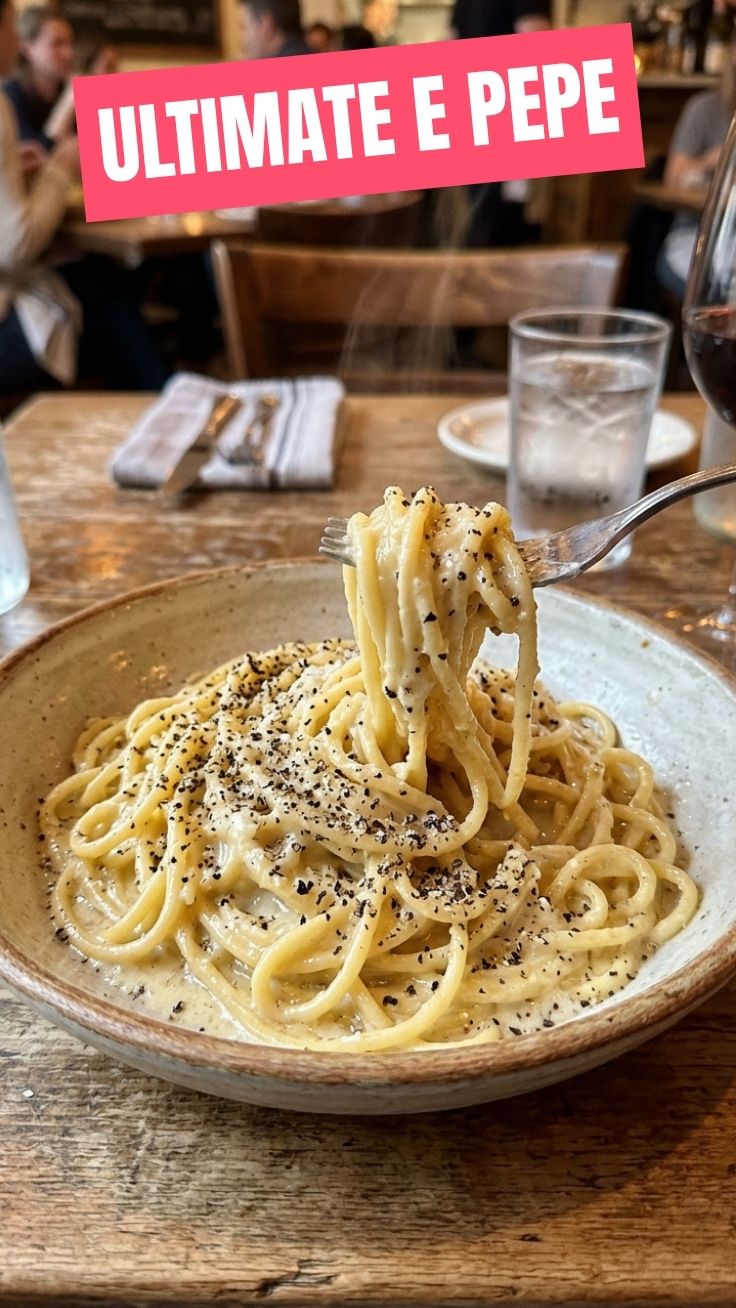
Total active time: 20 minutes | Prep: 10 minutes | Cook: 10 minutes
This recipe moves fast—there are no marinating or resting pauses. Start by bringing a large pot of water to a rolling boil. While the water heats, grate your cheese finely using a Micrograde, toast and crack your pepper, and measure your pasta. Have a heatproof measuring cup ready to reserve pasta water the moment you drop the noodles. Once the pasta hits the water, everything else happens in the next six minutes, so mise en place is critical.
If you are serving guests, have plates warmed in the oven at 200°F (93°C) and a timer set. There is no waiting step—this pasta must be eaten immediately after assembly.
Step-by-Step Instructions
1. Toast and crack the pepper. Place whole peppercorns in a dry skillet over medium heat for 60–90 seconds until fragrant. Transfer to a mortar or spice grinder and coarsely crack—not powder. You want visible flecks for texture and visual appeal.
2. Boil the pasta. Salt your water to taste like the sea—about 1 tablespoon per 4 quarts. Cook pasta 2 minutes less than the package suggests; it will finish cooking in the pan.
3. Create the pepper base. In your skillet over medium-low heat, add 2 tablespoons of reserved pasta water and the cracked pepper. Stir gently for 30 seconds to bloom the pepper.
4. The emulsion technique. This is where authentic Cacio e Pepe differs from other Italian pasta recipes—temperature control is everything. Remove the skillet from heat. Using tongs, transfer al dente pasta directly from the pot into the skillet (no draining!). Add 1/2 cup of hot pasta water and quickly toss.
5. Add cheese in stages. Sprinkle one-third of the Pecorino over the pasta while tossing vigorously. The water should be steaming but not bubbling—around 160–170°F (71–77°C). Add another third, toss, then the final third. If sauce appears too thick, add 1 tablespoon of water at a time until it flows like heavy cream.
6. Serve immediately. Twirl onto warmed plates and finish with a final crack of fresh pepper and a microplane dusting of extra Pecorino. The sauce will continue to thicken as it cools.
Pro tip: If you see clumps forming, your water was too hot. Immediately add 2 tablespoons of cool water and whisk vigorously to rescue the emulsion.
Nutritional Benefits & Advantages
Cacio e Pepe delivers surprising nutritional density relative to its simple ingredient list. A single serving provides approximately 650 calories, 32 grams of protein, and 1,200 mg of calcium—more than an entire glass of milk. Pecorino Romano is a fermented dairy product rich in probiotics that support gut health when consumed fresh. The black pepper contains piperine, a compound shown to enhance nutrient absorption by up to 2000 percent for certain vitamins.
Compared to cream-based Alfredo sauces, this dish contains zero added fats beyond the natural dairy lipids in the cheese. The pasta provides sustained-release carbohydrates for energy without blood sugar spikes when paired with the protein and fat from Pecorino. It is naturally vegetarian and can be adapted for lactose-sensitive individuals by using aged cheese with minimal lactose content.
Tips Variations & Cooking Advice
Flavor Variations
– Cacio e Pepe Aglio e Olio – Sauté 2 sliced garlic cloves in olive oil before adding the pepper base for an aromatic twist
– Lemon-herb version – Fold in 1 teaspoon lemon zest and 2 tablespoons chopped parsley after emulsifying
– Spicy Calabrian – Add 1 teaspoon Calabrian chili paste alongside the pepper for heat complexity
Dietary Adaptations
– Gluten-free – Use high-quality brown rice or chickpea pasta; reserve extra starchy water
– Dairy-free – Substitute aged Pecorino with cultured cashew cheese; use nutritional yeast for umami
– Low-carb – Replace pasta with spiralized zucchini or shirataki noodles; adjust water ratios
Cooking Method Adjustments
– One-pot method – Cook pasta in a wide skillet with just enough water to cover; this concentrates starch for easier emulsification
– Baked variation – Prepare as directed, then transfer to a buttered dish, top with extra cheese, and broil 3 minutes
Common Mistakes to Avoid
| Mistake | Cause | Solution |
|———|——-|———-|
| Clumpy sauce | Water too hot when adding cheese | Remove pan from heat; water should steam, not bubble |
| Grainy texture | Using pre-shredded cheese | Always grate Pecorino from a block just before cooking |
| Soupy pasta | Insufficient tossing after draining | Let pasta drain briefly in tongs; carry-over starch matters |
| Pepper bitterness | Burning the peppercorns | Toast 60 seconds maximum; use lower heat |
| Cheese tearing | Adding cheese too quickly | Sprinkle in three stages while tossing constantly |
Storage & Meal Prep Tips
Cacio e Pepe is best consumed within 15 minutes of preparation, but leftovers can be salvaged with proper technique. Store cooled pasta in an airtight container in the refrigerator for up to 2 days. Do not freeze—the emulsion breaks irreversibly upon thawing.
Reheating method: Place leftover pasta in a skillet over low heat. Add 1 tablespoon of water per serving. Cover and heat for 3 minutes, then toss vigorously. The added water helps re-emulsify the cheese. If clumping occurs, add another tablespoon of water and toss continuously for 90 seconds.
For meal prep, consider separating components: cook and cool pasta, toast and crack pepper, and grate cheese individually. Combine fresh within 24 hours using the same starchy water technique. Prep time drops to 6 minutes when components are ready.
Conclusion
Mastering Cacio e Pepe teaches you one of Italy’s most valuable cooking principles—how to create silkiness from pure technique rather than cream or butter. It stands as a testament to why Italian pasta recipes remain globally beloved; minimal ingredients, maximum flavor, and a process that rewards attention to detail. Once you taste the difference that properly toasted pepper and carefully emulsified cheese make, you will never settle for dry, clumpy versions again.
Now it is your turn—grab that block of Pecorino and try this method tonight. Tag your results and share your progress with fellow enthusiasts. The perfect Cacio e Pepe is just 20 minutes away.
Frequently Asked Questions
Can I use Parmesan instead of Pecorino Romano?
Parmigiano-Reggiano alone produces a thinner sauce with less sharpness. For authentic results, use at least 70% Pecorino. A 50/50 blend creates a milder, more accessible version.
Why is my Cacio e Pepe stringy instead of creamy?
Stringiness indicates the cheese fats separated from the water. This happens when the pasta water is too hot or when cheese is added too quickly. Cool the pan by adding 2 tablespoons of cold water and stir vigorously.
How much pasta water should I reserve?
Six ounces of pasta requires at least 1.5 cups of reserved water. You might use only 3/4 cup during assembly, but having extra ensures you can adjust consistency without adding plain water.
Can I make Cacio e Pepe with gluten-free pasta?
Yes, but choose pasta made from brown rice or legume flours for better starch content. Reserve extra water and be prepared to add more during tossing—gluten-free noodles release less starch.
Is Cacio e Pepe traditionally vegetarian?
Yes, because Pecorino Romano is made with animal rennet. Many versions still use rennet from lambs, but some producers now offer vegetarian-friendly alternatives. Check labels if this matters to you.
Proven way to grow 6 perfect Cacio e Pepe
Ingredients
Equipment
Method
- Bring a large pot of salted water to a rolling boil and cook the spaghetti or tonnarelli according to package directions until al dente.
- While the pasta cooks, toast the freshly cracked black peppercorns in a dry skillet over medium heat for 1-2 minutes until fragrant.
- Remove about 1.5 cups of pasta cooking water just before draining the pasta, then drain the pasta.
- Add the drained pasta to the skillet with the toasted pepper. Gradually add 1 cup of the reserved pasta water, stirring continuously to create a starchy base.
- Remove the skillet from the heat. In a bowl, combine the grated Pecorino Romano with a splash of the remaining pasta water to form a thick paste. Add this cheese paste to the pasta, tossing vigorously and adding more pasta water a tablespoon at a time until a creamy sauce forms and coats the pasta.
- Serve immediately, garnished with extra cracked black pepper and Pecorino Romano if desired.