Why Your Fried Rice Never Tastes Like Takeout (And How to Fix It)
Have you ever wondered why restaurant Fried Rice (Classic) has that unmistakable wok hei flavor—that smoky, slightly charred taste that elevates every grain—while your Homemade Fried Rice often turns out clumpy, greasy, or bland? The secret isn’t a secret ingredient; it’s technique, temperature control, and a few critical steps most home cooks overlook. Making Fried Rice (Classic) at home doesn’t just save money—it gives you complete control over ingredients, from protein quality to sodium levels. In this guide, you’ll learn the exact methods used by seasoned chefs to create that perfect takeout-style Homemade Fried Rice in your own kitchen, using tools you probably already own.
Ingredients & Kitchen Tools
Ingredients
– 3 cups day-old jasmine rice – Freshly cooked rice is too moist; day-old rice has dried out slightly, preventing clumping.
– 2 large eggs – Lightly beaten; adds richness and binds the dish.
– ½ cup frozen peas and carrots – Thawed; provides color and texture without extra prep.
– 4 green onions – Sliced diagonally; whites for cooking, greens for garnish.
– 3 cloves garlic – Minced; the aromatic backbone of the dish.
– 2 tablespoons soy sauce – Use low-sodium for better control of saltiness.
– 1 tablespoon oyster sauce – Adds umami depth; can substitute with hoisin or mushroom sauce.
– 1 teaspoon sesame oil – Finished at the end for nutty aroma.
– 2 tablespoons neutral oil (canola or avocado) – High smoke point is crucial for stir-frying.
– ½ cup cooked protein (chicken, shrimp, or tofu) – Optional but recommended for heartiness.
Kitchen Tools
– Wok or large non-stick skillet – A wok’s curved sides allow proper tossing; a skillet works if wide enough.
– Metal spatula – Wooden spatulas don’t break up rice clumps effectively.
– Small bowls for prepped ingredients – Stir-frying moves fast; mis en place is non-negotiable.
– Heatproof serving spoon – For portioning without scratching your pan.
Prep Time & Cooking Schedule
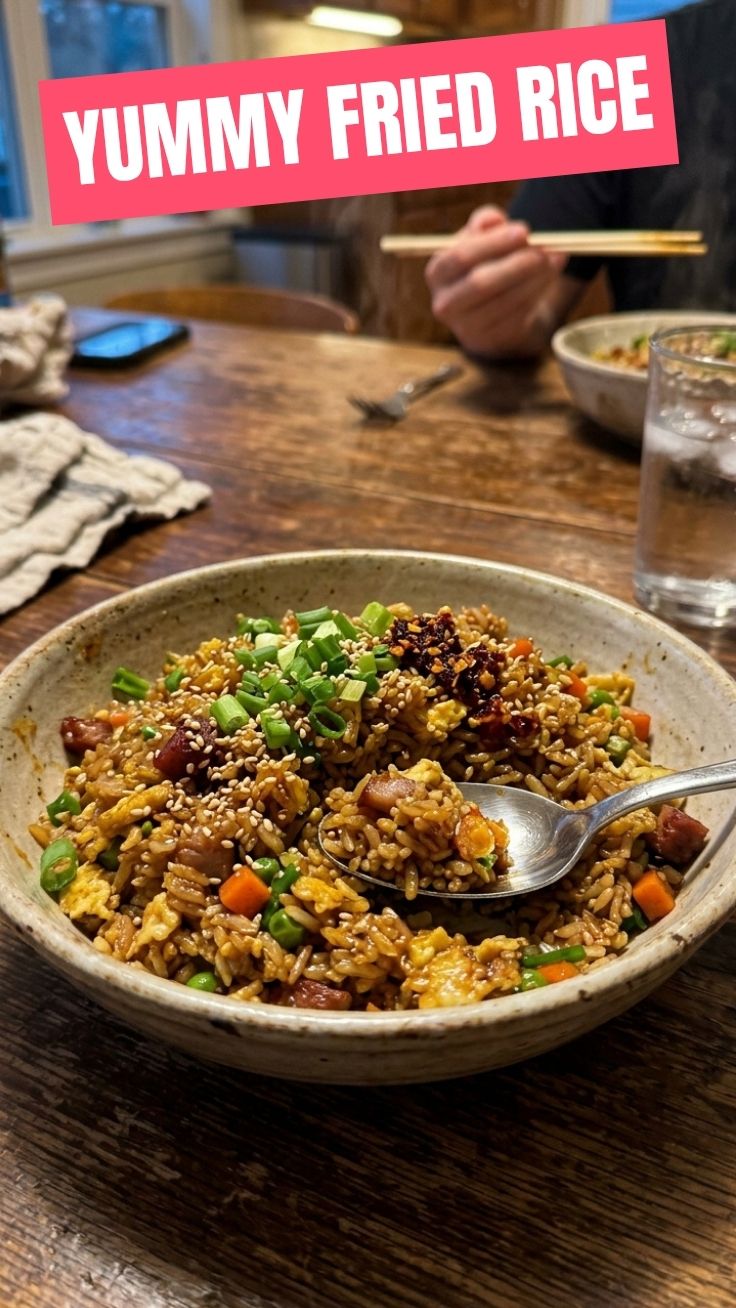
– Prep Time: 10 minutes (chop vegetables, beat eggs, thaw peas and carrots)
– Cook Time: 5 minutes total (high heat stir-frying)
– Total Time: 15 minutes
– Resting/Marinating: Rice should ideally be refrigerated uncovered for 2–24 hours before cooking. If using fresh rice, spread it on a baking sheet and refrigerate for 30 minutes to dry it out.
Planning tip: Cook your rice the day before dinner and refrigerate it overnight. This passive step dramatically improves texture without adding active work.
Step-by-Step Instructions
1. Preheat your wok over high heat until a drop of water evaporates instantly. Add 1 tablespoon neutral oil and swirl to coat.
2. Scramble the eggs – Pour beaten eggs into the hot oil. Stir vigorously for 20 seconds until just set, then transfer to a bowl. Don’t overcook; they’ll finish in the rice later.
3. Add remaining oil – Heat until shimmering. Add white parts of green onions and garlic; stir 15 seconds until fragrant.
4. Add protein – If using chicken, shrimp, or tofu, cook 1–2 minutes until browned. Push to the side.
5. Add rice – Crumble day-old rice into the wok. Press it flat against the hot surface for 30 seconds without moving—this creates the coveted charred bits. Then toss vigorously.
6. Season – Drizzle soy sauce and oyster sauce over the rice, not directly on the pan (prevents burning). Toss to coat evenly.
7. Add vegetables and eggs – Return scrambled eggs, add peas and carrots. Stir-fry 30 seconds until heated through.
8. Finish – Remove from heat. Drizzle sesame oil, toss once more, and garnish with green onion tops.
Temperature cue: If your rice isn’t sizzling on contact, your pan isn’t hot enough. Adjust heat upward before adding grains.
This is precisely how you achieve restaurant-quality Fried Rice (Classic) —and it’s the same technique that makes Homemade Fried Rice taste just as good.
Nutritional Benefits & Advantages
A single serving of this Fried Rice (Classic) provides approximately 380 calories, 12g protein, 8g fat, and 65g carbohydrates. By making Homemade Fried Rice, you reduce sodium by 40% compared to takeout versions—two tablespoons of low-sodium soy sauce contain about 600mg sodium versus 1,200mg in restaurant servings. Vegetables add beta-carotene (from carrots), vitamin K (from green onions), and fiber. The eggs contribute choline for brain health, while the sesame oil provides healthy monounsaturated fats. Customizing with lean protein or tofu makes this a balanced one-bowl meal.
Tips Variations & Cooking Advice
– Gluten-free version: Substitute tamari for soy sauce and ensure oyster sauce is GF-certified (or use coconut aminos).
– Dairy-free: Already dairy-free. Avoid butter as a cooking fat.
– Spicy variation: Add 1 teaspoon sriracha or chili crisp with the soy sauce.
– Protein swap: Use leftover rotisserie chicken, frozen edamame, or diced SPAM for a Hawaiian twist.
– Fried rice without a wok: Use the largest skillet you own. Cook in smaller batches to avoid overcrowding, which causes steaming instead of frying.
– Portion change: Double all ingredients except oil. Cook in two batches to maintain high heat.
Common Mistakes to Avoid
Mistake #1: Using fresh rice. Fresh grains are moist and sticky. Solution: Refrigerate rice uncovered for at least 2 hours before cooking.
Mistake #2: Low heat. Fried rice is a high-heat technique. Solution: Preheat your pan 2–3 minutes before adding oil. Rice should audibly sizzle immediately.
Mistake #3: Overcrowding the pan. Too many ingredients lower pan temperature. Solution: Cook in batches if needed, especially when doubling the recipe.
Mistake #4: Adding sauce directly to the pan. Soy sauce burns quickly on bare metal. Solution: Always drizzle sauce over the rice, then toss.
Mistake #5: Stirring constantly. Letting rice sit briefly against the hot surface creates charred flavor. Solution: Press rice down for 30 seconds, then toss.
Storage & Meal Prep Tips
– Refrigeration: Store cooled fried rice in an airtight container for up to 4 days. Place a paper towel inside the container to absorb excess moisture; replace it daily.
– Freezing: Portion into freezer-safe bags, flatten to remove air, and freeze for up to 3 months. Thaw overnight in the refrigerator.
– Reheating: For best texture, reheat in a skillet over medium-high heat with 1 tablespoon water or broth. Cover for 1 minute to steam, then uncover and stir-fry until heated through. Microwave works but will soften grains—add a splash of soy sauce to revive flavor.
Conclusion
Mastering Fried Rice (Classic) at home is about understanding three principles: dry rice, high heat, and proper timing. By following these steps, you transform simple ingredients into a dish that rivals any takeout window. Making Homemade Fried Rice gives you the freedom to adjust flavors, control nutritional content, and use up leftover vegetables and proteins from your refrigerator. The best part? Once you internalize this technique, you can riff endlessly—try pineapple and ham, kimchi and pork, or even a breakfast version with bacon and sunny-side eggs. Share your creation in the comments below, and don’t forget to explore our other quick weeknight recipes.
FAQs
Can I use brown rice instead of jasmine rice?
Yes, but brown rice contains more moisture and fiber, so it requires extra drying time. Refrigerate it uncovered for at least 4 hours, and reduce soy sauce slightly since brown rice absorbs liquid less efficiently.
Why is my fried rice mushy?
Mushy rice occurs from using freshly cooked rice or overcrowding the pan. Ensure your rice is at least 1 day old, cook in small batches, and keep heat high enough to evaporate surface moisture instantly.
Can I make this vegetarian?
Absolutely. Omit the protein, or use cubed tofu (press it dry first to prevent sogginess). Replace oyster sauce with vegetarian mushroom stir-fry sauce.
How do I prevent eggs from turning into dry clumps?
Cook eggs just until set—they should still look slightly glossy when removed from the pan. They will finish cooking when returned to the rice mixture later.
What’s the best substitute for oyster sauce?
Hoisin sauce provides sweetness and thickness, while fish sauce (start with 1 teaspoon) adds pungent umami. For a vegan option, use mushroom soy sauce or tamari with a pinch of sugar.
Proven way to grow 5-Star Fried Rice (Classic)
Ingredients
Equipment
Method
- Prepare all ingredients by dicing vegetables, mincing garlic, and chopping green onions, separating the white and green parts.
- Combine soy sauce, oyster sauce, and sesame oil in a small bowl, then set aside.
- Heat a wok or large skillet over high heat with one tablespoon of vegetable oil. Pour in the beaten eggs and scramble until just set, then remove and set aside, breaking them into small pieces.
- Add the remaining oil to the wok. Stir-fry the chicken and shrimp until cooked through, then add minced garlic and the white parts of the green onions, cooking for another minute.
- Add carrots and peas to the wok, stir-frying for 2-3 minutes until slightly tender.
- Introduce the cold rice to the wok, breaking up any clumps, and stir-fry for 3-5 minutes until heated through and slightly toasted.
- Pour the prepared sauce over the rice and ingredients, mixing well to ensure even coating.
- Return the scrambled eggs to the wok, mixing them in along with the green parts of the green onions. Cook for another minute.
- Season with salt and pepper to taste, then serve immediately.