The Ultimate Savory Wild Rice Pilaf Recipe: A Nutty, Chewy Side Dish
Have you ever wondered why restaurant-quality Wild Rice Pilaf tastes so much better than the boxed versions at home? The secret lies in the toasting technique and the quality of your broth—two elements that transform humble grains into a side dish worthy of any holiday table. Preparing this recipe at home not only saves money but also gives you complete control over the sodium levels and the variety of vegetables you include. If you are exploring different Wild rice recipes, this pilaf stands out because it balances earthy nuttiness with bright, aromatic vegetables for a texture that pairs beautifully with roasted meats or grilled tofu.
Ingredients & Kitchen Tools
Required Ingredients
– 1 cup wild rice – Not a true rice but an aquatic grass seed; it has a chewy texture and nutty flavor.
– 2 tablespoons olive oil – Use extra virgin for better flavor, or substitute avocado oil.
– 1 medium yellow onion, diced – Adds sweetness; shallots work as a substitute.
– 2 celery stalks, diced – Provides a subtle crunch and savory depth.
– 2 medium carrots, diced – Adds natural sweetness and color.
– 3 cloves garlic, minced – Fresh is best; pre-minced may be less aromatic.
– 4 cups vegetable or chicken broth – Low-sodium recommended to control salt levels.
– 1 bay leaf – Infuses a subtle herbal note.
– 1 teaspoon dried thyme – Or 1 tablespoon fresh thyme leaves.
– ½ teaspoon salt – Adjust based on broth saltiness.
– ¼ teaspoon black pepper – Freshly ground preferred.
– ⅓ cup dried cranberries – Optional, for a touch of sweetness and color contrast.
– ¼ cup toasted pecans or slivered almonds – Adds crunch; substitute pumpkin seeds for nut-free option.
– 2 tablespoons fresh parsley, chopped – For garnish and freshness.
Kitchen Tools & Equipment
– Large saucepan or Dutch oven with a tight-fitting lid
– Wooden spoon or silicone spatula
– Fine-mesh strainer (for rinsing wild rice)
– Cutting board and chef’s knife
– Measuring cups and spoons
– Fork (for fluffing finished rice)
Prep Time & Cooking Schedule
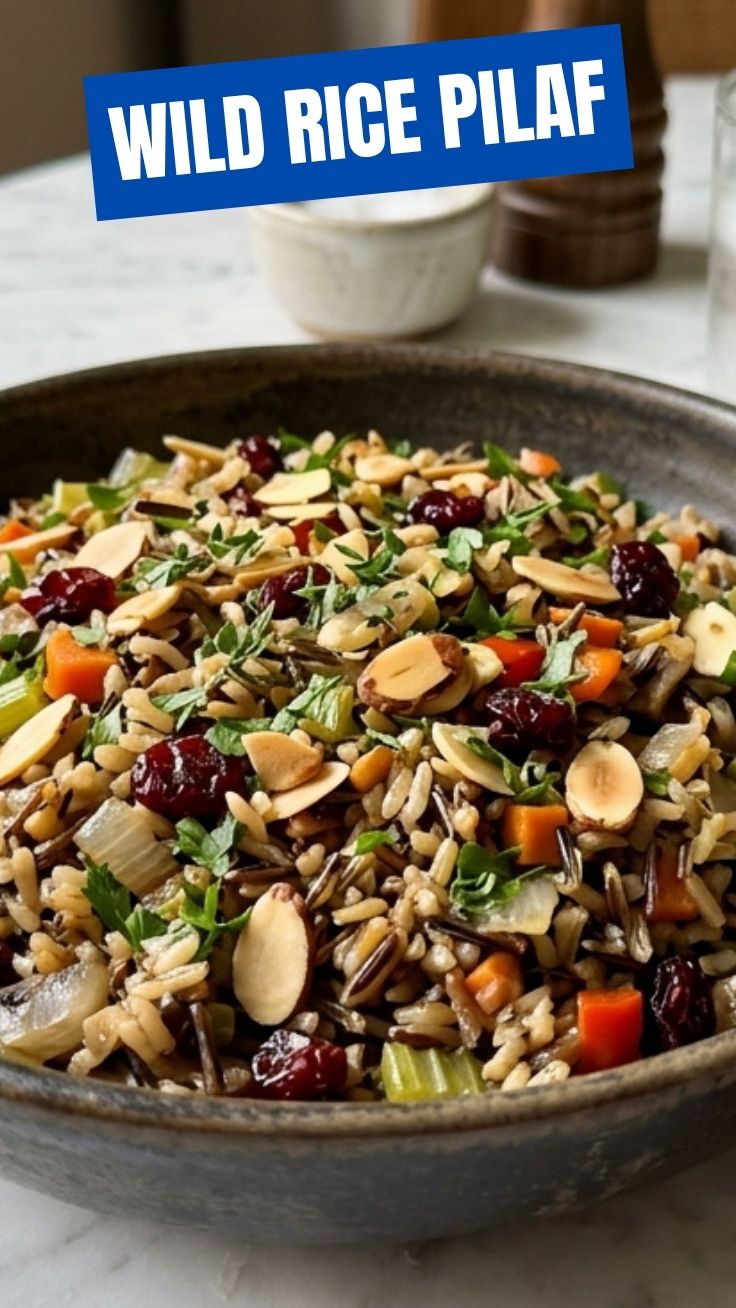
– Prep time: 15 minutes (rinsing and chopping vegetables)
– Cook time: 45–55 minutes (depends on rice brand and age)
– Resting time: 10 minutes (covered, off heat)
– Total time: approximately 1 hour 10 minutes
Planning tip: This pilaf can be made a day ahead and gently reheated. The flavors deepen overnight as the herbs meld with the grains. If you are hosting a dinner, prepare the vegetables and rinse the rice in advance, then start cooking about 1 hour before serving to allow for resting time.
Step-by-Step Instructions
1. Rinse and drain the wild rice – Place the rice in a fine-mesh strainer and rinse under cold running water for about 30 seconds. This removes excess starch and prevents the grains from clumping.
2. Toast the rice – In a large saucepan over medium heat, add 1 tablespoon of the olive oil. Once shimmering, add the rinsed wild rice and stir constantly for 2–3 minutes until the grains become fragrant and start to pop slightly. This step deepens the nutty flavor, a hallmark of great Wild Rice Pilaf.
3. Sauté the aromatics – Reduce heat to medium-low. Add the remaining tablespoon of olive oil, then stir in the diced onion, celery, and carrots. Cook for 5–6 minutes, stirring occasionally, until the vegetables soften and the onion turns translucent. Add the minced garlic and cook for 1 more minute until fragrant.
4. Add liquid and seasonings – Pour in the broth (or water, but broth adds far more flavor), then add the bay leaf, thyme, salt, and pepper. Stir to combine, scraping up any browned bits from the bottom of the pan.
5. Simmer the rice – Bring the mixture to a boil over high heat. Once boiling, reduce the heat to low, cover with a tight-fitting lid, and let it simmer gently for 40–50 minutes. Do not lift the lid during cooking, as steam is essential for even cooking. Check at 40 minutes: the rice should be tender but still chewy, and most of the liquid should be absorbed. If you are exploring different Wild rice recipes, you will notice that cooking times vary by brand—older rice may require a few extra minutes.
6. Rest and fluff – Remove the pan from heat and let it sit, covered, for 10 minutes. This allows the grains to absorb any remaining steam. Remove the bay leaf, then fluff the rice gently with a fork. Fold in the dried cranberries and toasted nuts (if using), and garnish with fresh parsley.
Nutritional Benefits & Advantages
Wild rice is a nutritional powerhouse, offering more protein and fiber than brown rice or white rice. A one-cup serving of cooked wild rice provides approximately 6 grams of protein and 3 grams of fiber, which supports digestive health and helps maintain steady blood sugar levels. The dish also delivers vitamin A from carrots, vitamin K from celery, and antioxidants from the fresh herbs. If you are following a gluten-free diet, this pilaf is naturally gluten-free as long as you use certified gluten-free broth. The combination of complex carbohydrates, healthy fats from olive oil and nuts, and plant-based protein makes this recipe a balanced side that keeps you full longer.
Tips Variations & Cooking Advice
– Vegetarian/vegan: The recipe is already vegan if using vegetable broth. For a richer flavor, add 1 tablespoon of nutritional yeast with the broth.
– Dairy-free: This pilaf contains no dairy, so it works for lactose-intolerant diets.
– Gluten-free: All ingredients are naturally gluten-free; just double-check your broth label.
– Add protein: Stir in 1 cup of cooked lentils or chickpeas at the end for a complete plant-based main dish.
– Make it spicy: Add ½ teaspoon of red pepper flakes or a pinch of cayenne when you sauté the vegetables.
– Swap the nuts: If nut allergies are a concern, use pumpkin seeds or sunflower seeds instead of pecans or almonds. Toast them separately in a dry pan for 2–3 minutes until fragrant.
– Use a rice cooker: For hands-off cooking, sauté the vegetables in a skillet, then transfer everything to a rice cooker. Use the same liquid ratio and cook on the “brown rice” setting if available.
Common Mistakes to Avoid
Overcooking or Undercooking the Rice
Wild rice has a distinct chewy texture—it should not be mushy like white rice. Test it at the 40-minute mark. If the rice is still hard and the liquid is gone, add ¼ cup more hot broth and continue cooking for 5–10 minutes. If the rice is tender but liquid remains, uncover and cook on low heat for 2–3 more minutes.
Skipping the Toasting Step
Toasting the dry rice in oil before adding liquid is crucial for flavor development. Skipping this step results in a flat, one-dimensional taste. The grains should turn slightly translucent and emit a popcorn-like aroma.
Lifting the Lid Too Early
Every time you lift the lid, steam escapes and slows the cooking process. Resist the urge to check until the minimum cooking time has passed. If you need to test, do so quickly and replace the lid immediately.
Using the Wrong Ratio
The standard ratio for wild rice is 1 cup rice to 3–4 cups liquid. For a pilaf with vegetables, start with 3½ cups broth and adjust. Too much liquid makes the rice soggy; too little leaves it undercooked.
Storage & Meal Prep Tips
Refrigeration: Store cooled pilaf in an airtight container for up to 5 days. The flavors actually improve after a day in the fridge.
Freezing: Wild rice freezes well. Portion the pilaf into freezer-safe bags or containers and freeze for up to 3 months. Thaw overnight in the refrigerator before reheating.
Reheating: To maintain texture, reheat in a covered saucepan over low heat with 2–3 tablespoons of broth or water per cup of pilaf. Alternatively, microwave in 30-second bursts, stirring between intervals. Avoid high heat, which can dry out the grains.
Meal prep tip: Cook a double batch and freeze half for quick side dishes during busy weeks. The pilaf works well as a stuffing for bell peppers or as a base for grain bowls with roasted vegetables.
Conclusion
This savory Wild Rice Pilaf delivers a satisfyingly chewy texture and rich nutty flavor that elevates any meal from simple weeknight dinners to festive holiday spreads. By toasting the grains and layering aromatic vegetables, you create a side dish that stands on its own while complementing roasted chicken, grilled fish, or hearty stews. The recipe is naturally gluten-free and vegan, making it a versatile option for diverse dietary needs. If you are building a collection of Wild rice recipes, this pilaf is a foundational recipe you will return to again and again. Try it this week with a simple roasted chicken or as a stuffing for acorn squash, and let us know how it turns out in the comments below.
FAQs
Can I use a rice cooker to make this wild rice pilaf?
Yes. Sauté the vegetables and toast the rice in a skillet first, then transfer to the rice cooker. Add the broth and seasonings, and cook on the “brown rice” or “whole grain” setting. Check for doneness and adjust cooking time as needed.
What is the best substitute for wild rice in this recipe?
If you cannot find wild rice, substitute brown rice (long-grain) or a wild rice blend. Note that pure brown rice cooks faster (about 35–40 minutes) and has a less chewy texture. Adjust the liquid ratio to 2½ cups per 1 cup of brown rice.
Why is my wild rice still hard after 50 minutes of cooking?
Several factors can cause undercooking: old rice takes longer to absorb liquid, the lid didn’t seal properly, or your stovetop heat was too low. Add ¼ cup extra hot broth, cover tightly, and cook for another 10–15 minutes. Always check for doneness by tasting a few grains.
Can I add dried fruit like cranberries or apricots?
Yes. Dried cranberries, chopped dried apricots, or golden raisins add pleasant sweetness. Add them during the last 5 minutes of cooking so they plump slightly but don’t become mushy. For a savory twist, omit the fruit altogether.
How do I prevent the pilaf from becoming mushy?
Use the correct liquid ratio (3½ cups per 1 cup wild rice) and avoid overcooking. Also, do not stir the rice while it simmers, as that releases starch and creates a sticky texture. Fluff gently with a fork after resting to separate the grains without crushing them.
Wild Rice Pilaf
Ingredients
Equipment
Method
- Rinse the wild rice thoroughly under cold water. In a large saucepan, melt butter over medium heat and sauté the chopped onion and celery until softened.
- Add the rinsed wild rice and broth to the saucepan. Bring the mixture to a boil, then reduce heat to low, cover, and simmer for 40-45 minutes, or until the rice is tender and the liquid is absorbed.
- Fluff the wild rice pilaf with a fork before serving. Season with salt and pepper to taste.