Beat the Heat with Homemade Frozen Lemonade: A Step-by-Step Guide
Is there anything more refreshing than a cold, tangy drink on a sweltering summer day? While store-bought options are convenient, nothing compares to crafting a batch of Frozen Lemonade in your own kitchen. You control the sweetness, the tartness, and the texture—all while skipping the preservatives and artificial flavors found in commercial versions. This frozen lemonade recipe delivers a refreshing balance of citrus and sweetness that will keep you coming back for more. Best of all, it comes together in minutes with simple, wholesome ingredients.
Ingredients & Kitchen Tools
For the frozen lemonade base:
– 4–5 fresh lemons – yields about 1 cup of juice; avoid bottled juice for the brightest flavor.
– ¾ cup granulated sugar – adjust to taste; honey or agave syrup work as substitutes.
– 3 cups ice cubes – crushed ice blends faster, but whole cubes work too.
– 1 cup cold water – filtered water enhances clarity and taste.
– Pinch of sea salt – balances acidity and deepens flavor.
Optional add-ins:
– Fresh mint leaves – for a herbaceous twist.
– 1–2 tablespoons simple syrup – if you prefer extra sweetness without graininess.
– Lemon zest – adds fragrant oils; use organic lemons.
Kitchen tools needed:
– Citrus juicer – hand-held or electric; reamers work too.
– Blender – a high-speed model yields the smoothest texture.
– Measuring cups & spoons – for accurate proportions.
– Fine-mesh strainer – removes pulp and seeds if desired.
– Serving glasses – chilled glasses keep the drink colder longer.
Prep Time & Cooking Schedule
– Prep time: 10 minutes (juicing, measuring, and rinsing produce)
– Blending time: 2–3 minutes
– Total time: 12–15 minutes
No resting or marinating is required, making this an instant-gratification recipe. For best results, chill your lemons beforehand and freeze your serving glasses for 10 minutes. This small step prevents rapid melting and keeps your frozen lemonade perfectly refreshing from the first sip to the last.
Step-by-Step Instructions
1. Juice the lemons. Roll each lemon firmly on the countertop for 15 seconds—this loosens the membranes and maximizes juice yield. Cut them in half and juice until you have 1 cup (about 4–5 lemons). Strain the juice through a fine-mesh sieve to remove seeds and excess pulp if you prefer a smoother drink.
2. Create the simple syrup. In a small saucepan, combine ¾ cup sugar and ½ cup water. Warm over medium heat, stirring constantly until the sugar fully dissolves—about 2 minutes. Remove from heat and let cool slightly. Alternatively, skip heating by blending sugar directly with the juice and ice, but the texture may be slightly grainy.
3. Blend to perfection. Add the lemon juice, cooled simple syrup, 3 cups ice, and 1 cup cold water to your blender. Add a pinch of salt. This frozen lemonade method is refreshing because the salt enhances the citrus notes without making the drink salty. Blend on high for 30–45 seconds until the ice is crushed and the mixture is slushy but pourable. If the consistency is too thick, add ¼ cup more water; if too thin, add 2–3 additional ice cubes and blend again.
4. Taste and adjust. Dip a spoon and taste. Too tart? Add 1 tablespoon of honey or simple syrup. Too sweet? Squeeze in half a lemon’s worth of extra juice. Remember that flavors dull slightly when cold—aim for a flavor that’s slightly brighter than your target.
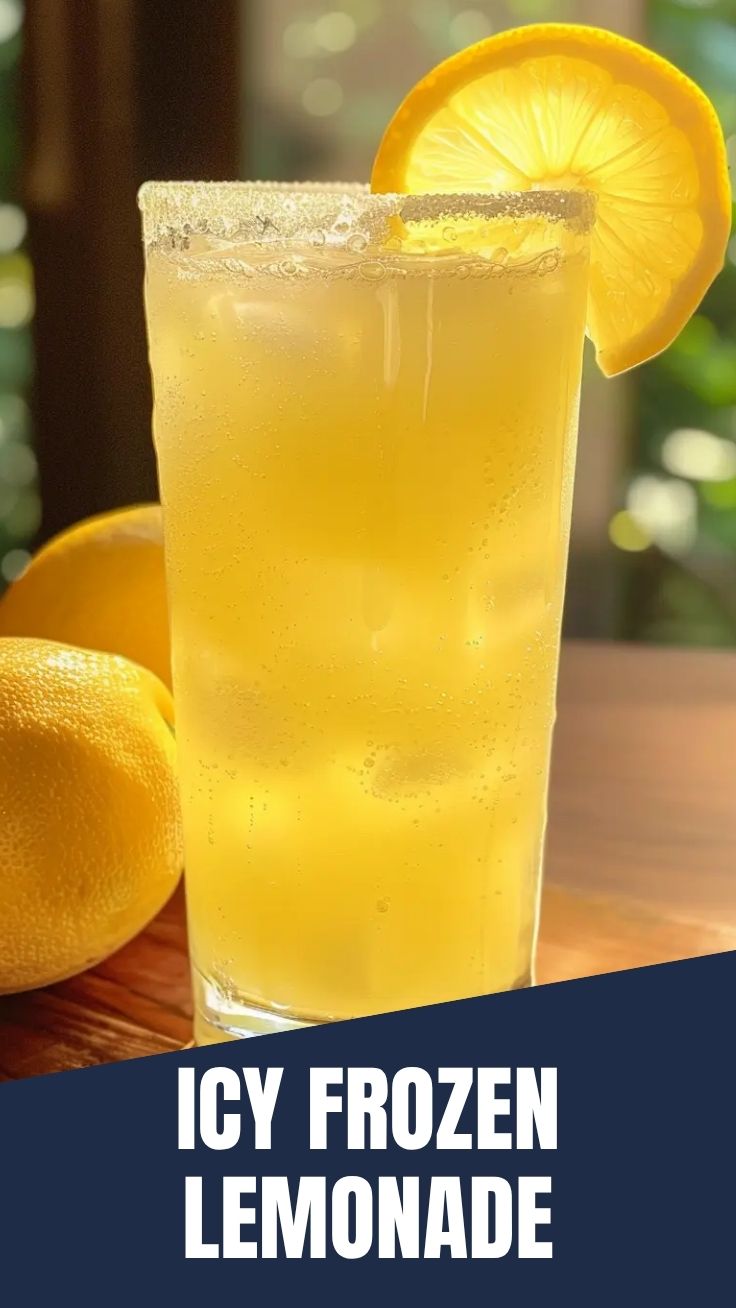
5. Serve immediately. Pour into chilled glasses and garnish with a lemon wheel or fresh mint. For a fancy touch, rim the glass with sugar or salt before pouring.
Nutritional Benefits & Advantages
This homemade frozen lemonade offers several health advantages over store-bought versions:
– Rich in vitamin C – one serving provides about 30–40% of your daily needs from fresh lemon juice, supporting immune function and collagen production.
– Low in calories – with approximately 110–130 calories per 8-ounce serving when made as directed, it’s lighter than many creamy frozen treats.
– No artificial additives – you control every ingredient, avoiding high-fructose corn syrup, preservatives, and artificial colors.
– Hydrating – the water and ice content help replenish fluids, while the natural electrolytes from lemons support rehydration on hot days.
Tips Variations & Cooking Advice
Flavor variations:
– Strawberry frozen lemonade – blend in ½ cup frozen strawberries for a fruity pink version.
– Sparkling frozen lemonade – substitute half the water with club soda for a fizzy, slushy texture.
– Herbal twist – muddle 6 fresh mint leaves or 3 basil leaves in the simple syrup before blending.
Dietary adaptations:
– Sugar-free version – use ¾ cup of monk fruit sweetener or erythritol; blend as directed.
– Vegan-friendly – this recipe is naturally vegan; just ensure your sugar is certified vegan if that’s a concern.
– Low-calorie option – reduce sugar to ⅓ cup and add ½ cup of unsweetened apple juice for natural sweetness.
Portion changes: This recipe makes about four 8-ounce servings. Double the batch for parties, but blend in two rounds to avoid overfilling your blender.
Common Mistakes to Avoid
– Using bottled lemon juice – it often contains preservatives and lacks the bright, fresh flavor essential for frozen lemonade. Always use fresh lemons.
– Not straining the simple syrup – if you skip heating, undissolved sugar crystals can create a gritty texture. Always dissolve sugar completely before blending.
– Over-blending – blending too long (over 1 minute) generates heat from the motor, melting the ice and turning your slushy drink watery. Pulse in short bursts if needed.
– Skipping the salt – that tiny pinch is the secret to making the flavor pop. Without it, the drink tastes flat and one-dimensional.
– Serving in warm glasses – room-temperature glasses cause rapid melting. Chill them in the freezer for at least 10 minutes before serving.
Storage & Meal Prep Tips
Refrigeration: Frozen lemonade is best consumed fresh, but leftovers can be stored in an airtight container in the fridge for up to 24 hours. The texture will become more liquid, but the flavor remains intact. Stir well before serving over fresh ice.
Freezing for longer storage: Pour the blended mixture into a freezer-safe container, leaving ½ inch of headspace for expansion. Freeze for up to 1 month. To serve, let it thaw at room temperature for 10–15 minutes, then re-blend with 2–3 ice cubes to restore the slushy consistency.
Meal prep hack: Juice lemons in bulk and freeze the juice in ice cube trays. When you’re ready, pop 8–10 lemon juice cubes directly into the blender with the other ingredients—no juicing required.
Reheating note: Do not microwave frozen lemonade. If it’s too icy straight from the freezer, let it sit at room temperature for 5 minutes, then shake or stir vigorously.
Conclusion
Making frozen lemonade at home is one of the simplest ways to enjoy a refreshing treat that’s tailored to your taste. With just five core ingredients and a blender, you can create a drink that’s far superior to anything from a carton—naturally sweet, brightly tangy, and perfectly slushy. Whether you stick to the classic recipe or experiment with fruit and herb variations, this versatile drink is guaranteed to become a summer staple. Try it today and share your results; tag your creation or leave a comment below with your favorite twist. For more icy beverages, explore our collection of fruit-based slushies and mocktails.
FAQs
1. Can I use limes instead of lemons?
Absolutely. Substitute an equal amount of freshly squeezed lime juice. The flavor will be more tart and slightly less floral—try adding a touch more sugar to balance.
2. My frozen lemonade came out too watery. How do I fix it?
Too much water or ice that melted during blending is usually the culprit. Next time, reduce the water to ¾ cup and use frozen lemon juice cubes for extra concentration. If it’s already made, add 4–5 ice cubes and blend again briefly.
3. Can I make frozen lemonade without a blender?
Yes, but the texture will be icier. Crush ice in a sealed bag with a rolling pin, then whisk in the lemon juice, sugar, and water until the sugar dissolves. Serve immediately over the crushed ice.
4. How do I make this drink less sweet?
Reduce the sugar to ½ cup and replace the remaining sweetness with a few drops of stevia, or simply add more lemon juice. You can also increase the ice-to-liquid ratio, which dilutes the sweetness.
5. Can I use frozen lemons?
Frozen whole lemons are not ideal for juicing—they become mushy. However, you can freeze lemon juice in ice trays as mentioned earlier. For best results, always juice fresh lemons first before freezing.
Proven way to grow creamy Frozen Lemonade
Ingredients
Equipment
Method
- In a blender, combine the lemon juice, sweetened condensed milk, and cold water.
- Add the ice to the blender.
- Blend until the mixture is smooth and creamy.