The Ultimate Guide to Perfect Eggplant Parmesan: A Comfort Food Masterpiece
Have you ever craved a dish that combines crispy, golden layers with bubbling cheese and rich tomato sauce, but found yourself intimidated by restaurant versions? You’re not alone. Many home cooks believe that achieving restaurant-quality Eggplant Parmesan requires professional skills, but the truth is that crafting this iconic Italian-American classic at home is not only achievable but also deeply rewarding. By preparing it in your own kitchen, you control the quality of ingredients, adjust seasoning to your taste, and save money while creating a meal that rivals any takeout. This hearty, layered dish—often compared to a vegetable-forward lasagna—offers a satisfying alternative to traditional pasta bakes, making it a staple for busy weeknights and Sunday dinners alike. In this comprehensive guide, we’ll walk you through every step, from selecting the perfect eggplants to achieving that irresistible golden crust.
Ingredients & Kitchen Tools
Essential Ingredients
– 2 large eggplants (about 2 lbs total): Choose firm, glossy specimens with no blemishes. Globe or Italian varieties work best as they have fewer seeds.
– 1½ cups seasoned breadcrumbs: Panko yields extra crunch; homemade dried breadcrumbs add rustic texture. For gluten-free, use almond flour mixed with Italian herbs.
– 1 cup grated Parmesan cheese (freshly grated preferred): Avoid pre-shredded bags as they contain anti-caking agents that prevent melting.
– 2 cups shredded mozzarella cheese: Low-moisture part-skim melts best. Fresh mozzarella can be used but release more moisture—pat dry first.
– 3 large eggs: For the breading station. Vegan option: mix 3 tbsp flaxseed meal with 9 tbsp water.
– 1 jar (24 oz) quality marinara sauce: Look for brands with simple ingredient lists (tomatoes, olive oil, garlic, basil). Homemade is even better.
– ½ cup all-purpose flour: For dredging. Use gluten-free 1:1 blend or rice flour as substitute.
– ½ cup fresh basil leaves: For layering and garnish. Dried basil (1 tsp) works in sauce.
– 3 cloves garlic, minced: Fresh is non-negotiable for depth.
– Olive oil spray or ½ cup olive oil: For coating baking sheets. Avocado oil has higher smoke point.
– Salt and pepper: Kosher salt for salting eggplant; fine sea salt for finishing.
Kitchen Tools
– Large colander (for salting eggplant)
– Paper towels
– 3 shallow bowls (for breading station)
– 2 baking sheets (lined with parchment or foil)
– 9×13-inch baking dish
– Chef’s knife and cutting board
– Measuring cups and spoons
– Cheese grater (microplane for Parmesan)
– Tongs or spatula
– Cooling rack (optional but helpful for crispy eggplant)
Optional Substitutions
– Replace mozzarella with provolone or fontina for different melt profiles.
– Substitute gluten-free breadcrumbs and flour blend completely.
– Use vegan cheese shreds and flax eggs for dairy-free/egg-free version.
Prep Time & Cooking Schedule
Total time: 1 hour 45 minutes
– Prep time (including salting): 45 minutes (20 minutes active + 25 minutes resting)
– Cooking time: 40–50 minutes (baking eggplant slices 20 minutes + final bake 25–30 minutes)
– Resting time: 10 minutes after baking (essential for clean slicing)
Plan ahead: Salting the eggplant is non-negotiable—it draws out bitter moisture and prevents soggy layers. Start 25 minutes before breading. While eggplant rests, prep your breading station and preheat oven. The final bake can be interrupted: assemble up to 24 hours ahead and refrigerate, then add 10 minutes to bake time.
Step-by-Step Instructions
Step 1: Prepare the Eggplant
Slice eggplants crosswise into ½-inch rounds (not thinner—they’ll disappear; not thicker—they stay raw). Arrange slices in a colander over a bowl, sprinkle generously with kosher salt, and let rest 25 minutes. This draws out moisture and bitterness. After resting, rinse slices thoroughly and pat completely dry with paper towels. Moisture is the enemy of crispiness.
Step 2: Set Up Breading Station
In first shallow bowl: ½ cup flour mixed with ½ tsp salt and ¼ tsp pepper. In second bowl: 3 beaten eggs with 1 tbsp water. In third bowl: breadcrumbs combined with ½ cup Parmesan and 1 tsp dried oregano. This traditional Eggplant Parmesan breading technique creates that iconic crunchy shell—similar to what you’d expect in a baked lasagna, but with vegetable slices replacing pasta.
Step 3: Bread and Bake the Eggplant
Preheat oven to 400°F (200°C). Line baking sheets with parchment and spray with olive oil. Dredge each eggplant slice in flour (shake off excess), dip in egg, then press firmly into breadcrumb mixture. Place on prepared sheets in single layer—no overlapping. Spray tops lightly with oil for golden browning. Bake 10 minutes, flip slices with spatula, spray again, and bake another 8–10 minutes until golden and crispy. The internal temperature should reach 165°F.
Step 4: Layer the Casserole
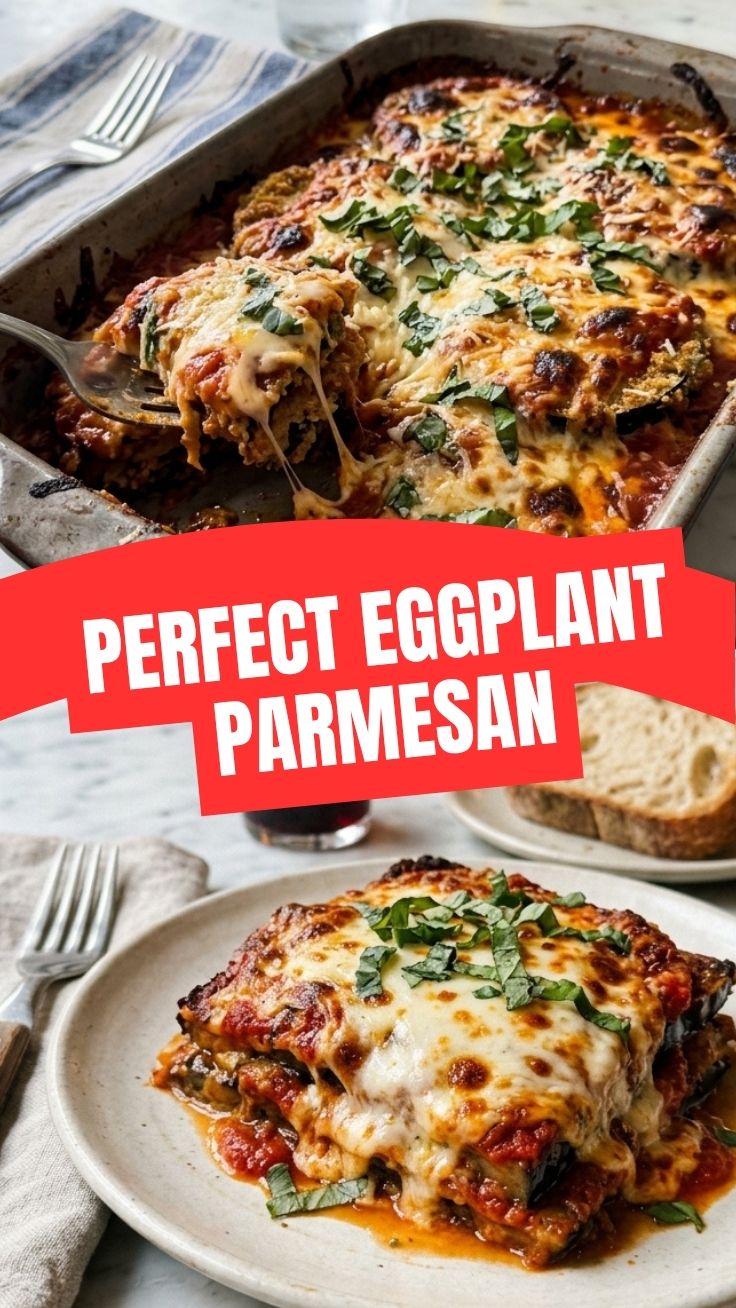
Reduce oven to 375°F (190°C). Spread ½ cup marinara in bottom of baking dish. Layer half the baked eggplant slices slightly overlapping. Sprinkle with half the mozzarella, half remaining Parmesan, and a few torn basil leaves. Repeat layers: remaining eggplant, remaining sauce, cheeses, basil. Top with final generous sprinkle of Parmesan for that signature browned crust.
Step 5: Bake and Rest
Bake uncovered 25–30 minutes until sauce bubbles vigorously and cheese is melted with golden-brown spots. Let rest 10 full minutes before slicing—this allows layers to set. Cutting too soon creates a messy slide of slippery cheese. Serve warm with extra basil and red pepper flakes.
Nutritional Benefits & Advantages
This Eggplant Parmesan is not just comfort food—it’s a nutritional powerhouse hiding behind indulgence. Eggplant is rich in dietary fiber (3g per cup), which aids digestion and satiety, plus contains nasunin, an antioxidant that protects brain cell membranes. The lycopene in tomatoes (enhanced by cooking) supports heart health, while calcium from Parmesan and mozzarella strengthens bones. Compared to traditional meat lasagna, this version offers 40% fewer calories and 60% less saturated fat per serving when portioned correctly. The breading adds complex carbohydrates for energy, making it a balanced main dish. For lower-calorie adaptations, skip the flour dredging and use egg wash only with Parmesan-coated panko.
Tips, Variations & Cooking Advice
– Flavor variations: Add sautéed mushrooms, spinach, or artichoke hearts between layers. For smoky depth, brush eggplant with smoked paprika oil before baking.
– Ingredient swaps: Replace mozzarella with burrata for decadent creaminess; use nutritional yeast instead of Parmesan for vegan version.
– Alternative methods: For air fryer, cook breaded slices at 375°F for 8–10 minutes, then assemble and bake 15 minutes. For stovetop, pan-fry slices in ¼-inch oil until golden, then layer.
– Portion changes: For individual servings, use ramekins with 2–3 slices each, reducing final bake to 15 minutes.
– Dietary adaptations: Gluten-free: use rice flour + gluten-free breadcrumbs. Dairy-free: use cashew ricotta + vegan mozzarella shreds. Low-carb: replace breadcrumbs with crushed pork rinds or almond flour.
Common Mistakes to Avoid
– Skipping the salting step: This is the #1 reason for soggy eggplant. The salt draws out moisture that otherwise releases during baking and dilutes the sauce.
– Cutting slices too thick or thin: ½ inch is the sweet spot. Thicker slices remain tough; thinner ones disappear into mush.
– Overcrowding the baking sheet: Steam trapped between slices prevents crisping. Use two sheets and rotate halfway.
– Using pre-shredded cheese: Anti-caking starches prevent proper melting, giving you a greasy, clumpy top instead of smooth stretchy cheese.
– Not letting it rest: Cutting into the casserole immediately results in a runny, unstable pile. Patience pays off.
Storage & Meal Prep Tips
Refrigeration: Store leftovers in an airtight container for up to 4 days. For best texture, separate slices from sauce when storing. Reheat in a 350°F oven for 10–12 minutes (not microwave—it turns eggplant rubbery). For food safety, cool to room temperature within 2 hours before refrigerating.
Freezing: Assemble completely, then freeze unbaked for up to 3 months. Wrap dish tightly in plastic wrap and foil. Bake from frozen at 375°F for 45–50 minutes (add 15–20 minutes to normal time). Alternatively, freeze baked leftovers in individual portions—reheat in toaster oven.
Meal prep: Double the recipe and freeze half. The breaded eggplant slices can be baked and frozen separately for quick weeknight assembly. Layer ingredients in freezer-safe glass dishes with labeling.
Conclusion
Mastering classic Eggplant Parmesan transforms a humble vegetable into a showstopping centerpiece that pleases vegetarians and meat-eaters alike. By following this step-by-step guide—especially the critical salting and proper layering—you’ll achieve that perfect balance of crispy exterior, tender eggplant, and gooey cheese that makes this dish so beloved. Whether you serve it as a main course with a crisp salad or as a side dish alongside roasted chicken, the layered construction mirrors a vegetable-based lasagna in both comfort and satisfaction. Try this recipe this weekend, share your golden-crusted results on social media, and explore our collection of Italian-inspired bakes for more culinary adventures.
FAQs
Q: Can I use Japanese eggplant instead of globe?
A: Yes, but reduce slice thickness to ⅓ inch and adjust baking time by 3–5 minutes since they cook faster. You’ll need about 6–8 small eggplants.
Q: Why did my eggplant turn bitter?
A: Skipping the salting step is the main cause. Older eggplants have higher solanine content—choose firm, shiny specimens and always salt for 25 minutes minimum.
Q: Can I make this dairy-free without losing flavor?
A: Absolutely. Use vegan mozzarella shreds (look for brands with cashew or coconut bases), nutritional yeast for Parmesan, and drizzle with olive oil before baking for richness.
Q: How do I prevent the bottom layer from getting soggy?
A: Spread a thin layer of sauce (not too watery) and use pre-baked eggplant slices. Avoid overloading with sauce—1½ cups total is enough for standard 9×13 dish.
Q: Can I substitute zucchini for eggplant?
A: Yes, but zucchini has higher water content—salt it similarly and skip the flour dredging. The texture will be softer, so it’s more akin to a baked Parmesan zucchini dish.
Proven way to grow the perfect Eggplant Parmesan
Ingredients
Equipment
Method
- Choose a sunny location with well-draining soil and enrich it with compost.
- Dig holes slightly larger than the seedling root balls, carefully place the seedlings, and backfill with soil.
- Water regularly, especially during dry spells, and consider mulching to retain moisture and suppress weeds.
- Harvest eggplants when they are firm, glossy, and a good size, typically around 6-8 inches long.