The Ultimate Guide to Making the Perfect Vegetable Soup at Home
Have you ever wondered why a bowl of Vegetable Soup tastes infinitely better when made from scratch in your own kitchen? There’s something deeply satisfying about transforming a medley of fresh vegetables, aromatic herbs, and a rich broth into a nourishing, soul-warming meal. Whether you’re looking to use up leftover produce, boost your daily vegetable intake, or simply enjoy a comforting bowl on a chilly evening, preparing this classic dish at home is not only economical but also allows you to control every ingredient. This comprehensive guide will walk you through creating a rich, flavorful Homemade Vegetable Soup that rivals any restaurant version—and we’ll cover everything from ingredient selection to storage tips.
Ingredients & Kitchen Tools
Required Ingredients
– 2 tablespoons olive oil – For sautéing; use avocado oil as a neutral substitute
– 1 large onion, diced – Yellow or sweet onion works best for depth of flavor
– 3 garlic cloves, minced – Fresh garlic is essential; avoid pre-minced for best taste
– 3 carrots, peeled and sliced – Use rainbow carrots for visual appeal
– 2 celery stalks, diced – Adds aromatic base; celery leaves are edible and flavorful
– 2 medium potatoes, cubed – Russet or Yukon Gold; keep skin on for extra fiber
– 1 zucchini, diced – Adds tender texture; can substitute with yellow squash
– 1 can (14.5 oz) diced tomatoes – Fire-roasted variety adds smoky depth
– 6 cups vegetable broth – Low-sodium option allows you to control salt levels
– 1 teaspoon dried thyme – Or 3 fresh sprigs; remove before serving
– 1 teaspoon dried oregano – Italian seasoning blend works as alternative
– Salt and black pepper to taste – Start with 1 teaspoon salt, adjust later
– 2 cups fresh spinach or kale – Stir in at the end to preserve nutrients
– 1 cup frozen peas – Adds sweetness; no thawing required
Kitchen Tools
– Large Dutch oven or heavy-bottomed stockpot (5-6 quart capacity)
– Sharp chef’s knife – Dull knives make chopping frustrating and uneven
– Cutting board – Use separate boards for vegetables and other ingredients
– Wooden spoon or heat-resistant spatula – For stirring without scratching
– Measuring cups and spoons – Accuracy matters for consistent results
– Ladle – For serving; look for a wide, deep ladle for easy pouring
– Vegetable peeler – Optional; many vegetables keep nutrients in the skin
Optional Substitutions
– Replace potatoes with sweet potatoes or butternut squash for a sweeter profile
– Use coconut milk (1 cup) instead of broth for a creamy, dairy-free version
– Swap spinach with Swiss chard or collard greens for a heartier green
– Add 1 cup cooked lentils or chickpeas for extra protein and fiber
Prep Time & Cooking Schedule
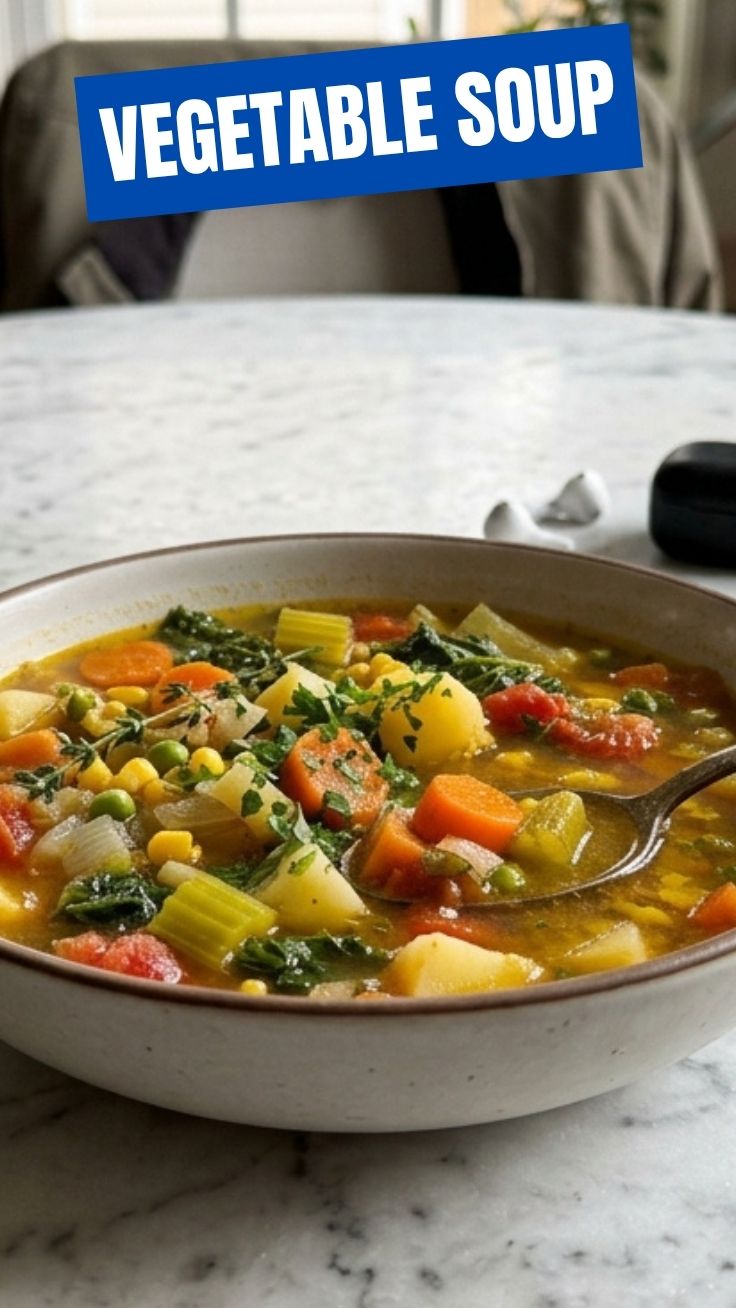
Understanding your time investment is crucial for successful meal planning. This recipe requires approximately 15 minutes of prep time for washing, peeling, and chopping all vegetables. The active cooking time is 20-25 minutes, followed by a 10-minute resting period off the heat before serving. Total time from start to finish: 45-50 minutes.
Pro Tip: Prep all vegetables before you start cooking. Have your onions diced, garlic minced, carrots sliced, and potatoes cubed and submerged in cold water (to prevent browning). This mise en place approach ensures you’re not scrambling mid-recipe and allows flavors to develop properly without burning aromatics.
Step-by-Step Instructions
1. Sauté the Aromatics
Heat olive oil in your Dutch oven over medium heat. Add diced onion and cook for 3-4 minutes until translucent and fragrant. Stir occasionally to prevent browning. Add minced garlic and cook for 30 seconds more until aromatic—be careful not to burn it, which creates bitterness.
2. Build the Vegetable Base
Add carrots, celery, and potatoes to the pot. Stir to coat with oil and cook for 5 minutes, stirring occasionally. This step begins softening the vegetables and developing their natural sugars. Season with a pinch of salt to draw out moisture.
3. Add Liquids and Seasonings
Pour in the diced tomatoes with their juices and the vegetable broth. Add dried thyme and oregano. Bring the soup to a gentle boil, then reduce heat to low-medium for a steady simmer. Temperature control tip: The soup should bubble gently, not violently—rapid boiling breaks down vegetables into mush.
4. Simmer to Perfection
Cover the pot partially with a lid (leave a small gap for steam to escape) and simmer for 12-15 minutes. Test potatoes and carrots with a fork—they should be tender but not falling apart. Texture cue: The broth should be slightly thickened from the potatoes’ natural starch, but still clear and appetizing.
5. Add Greens and Peas
Stir in the fresh spinach or kale and frozen peas. Cook for 2-3 minutes until greens are wilted and peas are heated through. Avoid overcooking greens—they should remain vibrant green. Adjustment tip: Taste and adjust seasoning with salt, pepper, or a squeeze of lemon juice for brightness.
6. Rest and Serve
Remove from heat and let the soup rest, uncovered, for 10 minutes. This resting period allows flavors to meld and the soup to cool to a safe serving temperature. Ladle into bowls and garnish with fresh herbs or a drizzle of olive oil.
This Vegetable Soup benefits greatly from resting—nutrients become more bioavailable, and the broth absorbs the essence of every ingredient. Meanwhile, a well-prepared Homemade Vegetable Soup relies on proper layering of flavors and patience during simmering.
Nutritional Benefits & Advantages
This recipe is a powerhouse of nutrition. Each serving (approximately 1.5 cups) provides:
– Vitamin A: Over 200% daily value from carrots and spinach
– Vitamin C: Approximately 45% daily value from tomatoes and peppers
– Fiber: 8-10 grams from vegetables and legumes
– Antioxidants: Lycopene from tomatoes, beta-carotene from carrots
– Low calorie: Roughly 175-200 calories per serving
– Hydration: High water content from broth supports daily fluid needs
The health advantages extend beyond vitamins. The combination of fiber and plant-based compounds supports digestive health, reduces inflammation, and promotes satiety without excess calories. This soup is naturally vegan, gluten-free, and dairy-free when using vegetable broth, making it accessible to most dietary preferences.
Tips Variations & Cooking Advice
Flavor Variations
– Mediterranean-style: Add 1 teaspoon cumin, ½ teaspoon smoked paprika, and 1 tablespoon lemon juice before serving
– Asian-inspired: Replace oregano with 1 tablespoon ginger, 2 tablespoons soy sauce, and finish with sesame oil
– Roasted version: Roast all vegetables at 400°F for 20 minutes before adding to broth for deeper, caramelized flavor
Cooking Methods
– Instant Pot: Sauté on Sauté mode, then pressure cook on High for 5 minutes with natural release
– Slow Cooker: Cook on Low for 6-8 hours or High for 3-4 hours; add greens during the last 30 minutes
– Blender-friendly: Purée half the soup for a creamy texture while leaving some chunks
Dietary Adaptations
– Low-sodium: Use no-salt-added broth and increase herbs (rosemary, bay leaf)
– High-protein: Add 1 cup cooked quinoa, cannellini beans, or diced firm tofu
– Low-carb: Replace potatoes with cauliflower florets or turnips
Common Mistakes to Avoid
1. Overcooking Vegetables
Issue: Mushy, flavorless soup with broken-down vegetables.
Solution: Add dense vegetables (carrots, potatoes) first, then add tender ones (zucchini, peas) later. Check doneness with a fork every 5 minutes after the initial simmer.
2. Under-seasoning or Over-salting
Issue: Bland soup or salty, undrinkable broth.
Solution: Season in layers—add salt when sautéing, then taste and adjust after adding broth. Remember that canned tomatoes and broth already contain sodium. Always taste before adding final salt.
3. Skipping the Aromatics Sauté
Issue: Flat, one-dimensional flavor.
Solution: Never rush the onion and garlic stage. This 5-minute step creates the flavor foundation that separates good soup from great soup.
4. Adding Greens Too Early
Issue: Brown, slimy, bitter greens.
Solution: Stir in delicate greens (spinach, kale) only during the last 2-3 minutes of cooking. They need just enough heat to wilt, not to cook through.
5. Not Resting the Soup
Issue: Thin, unintegrated flavors.
Solution: The 10-minute rest off the heat allows flavors to meld. This is crucial for Vegetable Soup to taste like it’s been simmering for hours.
Storage & Meal Prep Tips
Refrigeration
– Store in an airtight container for 4-5 days
– Cool soup to room temperature before refrigerating (within 2 hours of cooking)
– Keep vegetables submerged in broth to prevent drying
Freezing
– Freeze in portion-sized containers or freezer bags (remove excess air)
– Leave ½ inch headspace for expansion
– Freeze for up to 3 months at 0°F
– Note: Potatoes may become slightly grainy after freezing; consider adding them fresh when reheating
Reheating
– Stovetop: Reheat gently over medium-low heat, stirring occasionally. Add a splash of broth or water if too thick.
– Microwave: Heat in 30-second intervals, stirring between each, until steaming hot (1-2 minutes total)
– Avoid boiling rapidly, which can break down vegetables further and create a mushy texture
Meal Prep Strategy
– Make a double batch on Sunday for weekday lunches
– Portion into mason jars or Bento boxes with lids for grab-and-go meals
– Pair with a whole-grain roll or crusty bread for a complete meal
Conclusion
Making Vegetable Soup from scratch is one of the most rewarding culinary skills you can develop—it’s economical, healthy, and endlessly customizable. This Homemade Vegetable Soup recipe proves that simple ingredients, when treated with respect and proper technique, can yield extraordinary results. The key takeaways are: layer your flavors, don’t rush the sauté, add tender vegetables at the right time, and always rest your soup before serving. We encourage you to try this recipe today, experiment with your favorite seasonal vegetables, and share your results in the comments below. For more nourishing recipes, explore our collection of one-pot meals and soup variations. Happy cooking!
FAQs
1. Can I use frozen vegetables instead of fresh?
Absolutely. Frozen vegetables work well, especially for convenience. Add them in the last 10 minutes of cooking (no thawing needed). Note that frozen vegetables release more water, so you may need to simmer a few extra minutes to thicken the broth.
2. Why is my vegetable soup bitter?
Bitterness often comes from overcooked garlic (burned during sauté) or from cruciferous vegetables like broccoli or kale cooked too long. Prevent this by cooking garlic only 30 seconds, adding broccoli in the final 5 minutes, and using fresh, not wilted, greens.
3. How can I make the soup creamier without dairy?
Blend 1-2 cups of the cooked soup (remove chunks first) and stir back in. Alternatively, add ¼ cup cashew cream (soaked cashews blended with water) or canned coconut milk for richness without dairy.
4. Can I make this in advance for a party?
Yes! This soup tastes even better the next day as flavors meld. Prepare up to 2 days ahead, refrigerate, and reheat gently. For entertaining, keep warm in a slow cooker on Low setting, stirring occasionally.
5. What’s the best way to add protein to this soup?
Try cooked lentils (add 1 cup during the last 10 minutes), canned chickpeas (drained and rinsed, add with greens), or shredded rotisserie chicken (add just before serving to warm through). For a vegan option, crumbled tofu or tempeh cubes work beautifully.
Proven way to grow delicious Vegetable Soup recipes
Ingredients
Equipment
Method
- Prepare your garden bed by loosening the soil and adding compost; this creates a nutrient-rich environment for your vegetables.
- Plant seeds according to package directions, ensuring proper spacing and depth for optimal growth.
- Water regularly, especially during dry periods, to keep the soil consistently moist.
- Weed your garden frequently to prevent competition for nutrients and sunlight.
- Harvest your vegetables when they are ripe and ready for cooking.
- Heat olive oil in a large pot over medium heat, then add chopped onions, carrots, and celery; cook until softened.
- Stir in diced potatoes, tomatoes, and zucchini, cooking for a few minutes until slightly tender.
- Pour in vegetable broth and water, bring the mixture to a boil, then reduce heat and simmer.
- Add green beans and season with salt and pepper, continuing to simmer until all vegetables are tender.
- Serve hot and enjoy your homemade vegetable soup.