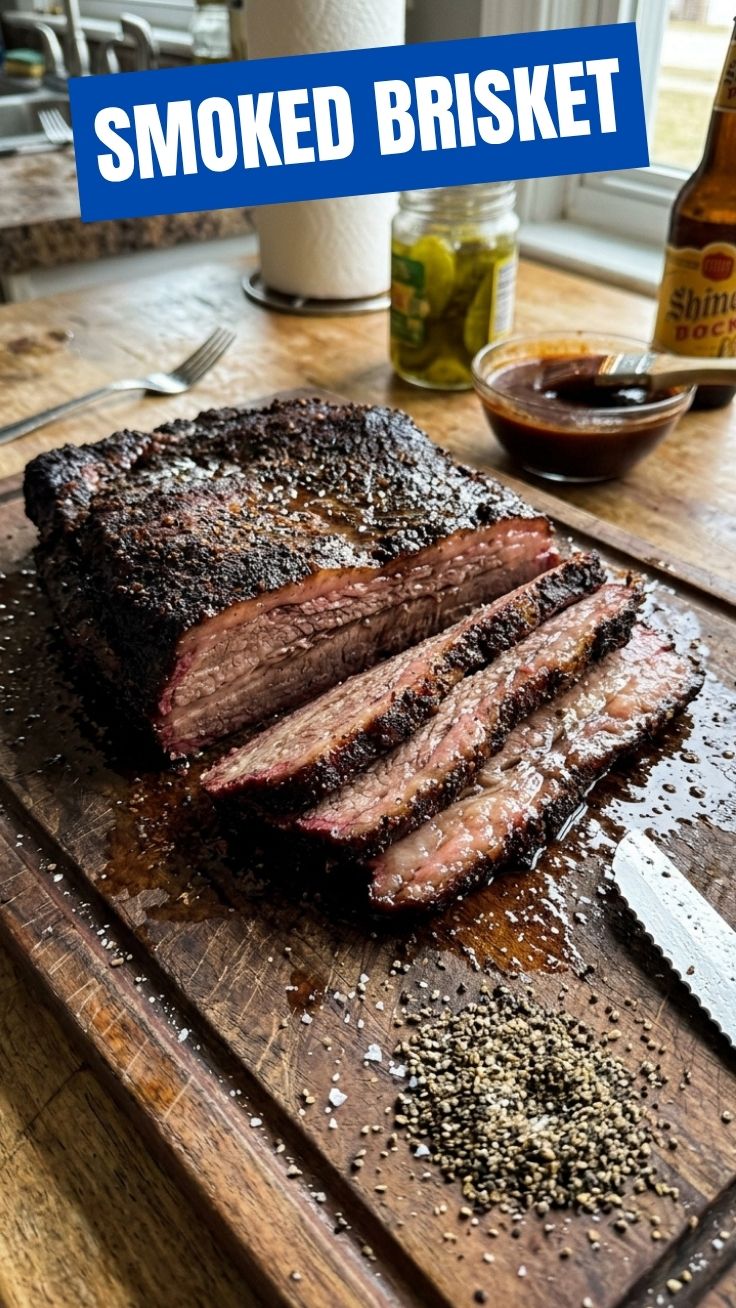
The Ultimate Guide to Perfect Smoked Brisket: A Texas BBQ Masterpiece at Home
Have you ever wondered why brisket from a legendary Smoked Brisket joint tastes like heaven, while your home attempts often end up dry or tough? The secret lies in patience, temperature control, and understanding the meat. Preparing authentic smoked brisket at home is not only rewarding—it saves you money and lets you customize flavors. In this guide, we’ll demystify the art of smoking brisket, drawing inspiration from Texas BBQ traditions to help you achieve that perfect bark, juicy interior, and smoky aroma. Whether you’re a weekend grill master or a beginner, this recipe will transform your backyard into a pitmaster’s paradise. Let’s fire up the smoker and get started.
Ingredients & Kitchen Tools
Meat & Rub
– Whole packer brisket (10–14 lbs) – Choose one with even fat cap (¼ inch) for moist results.
– Coarse kosher salt – Essential for moisture retention; avoid table salt.
– Coarse black pepper – Use 16-mesh grind for classic Texas-style bark.
– Garlic powder – Adds depth without overpowering.
– Optional: smoked paprika, cayenne, or brown sugar – For a sweeter or spicier twist.
Equipment
– Offset smoker or charcoal grill – Any smoker that maintains 225–250°F works. Kamado or pellet grills also fine.
– Meat thermometer – Digital probe or instant-read. Crucial for hitting 203°F internal.
– Wood chunks (oak, hickory, or mesquite) – Oak is traditional; hickory gives stronger smoke.
– Spray bottle with apple juice or water – Keeps surface moist during the stall.
– Aluminum foil or butcher paper – For wrapping (Texas crutch).
– Cutting board, sharp knife, tongs, disposable gloves – For handling hot meat.
Prep Time & Cooking Schedule
| Stage | Time Required | Details |
|——-|—————|———|
| Trimming & Rub | 20 minutes | Trim fat to ¼ inch, apply rub generously. |
| Rest after rub | 1–2 hours (or overnight) | Let salt penetrate at room temp or fridge. |
| Smoking | 10–14 hours | 225°F, target internal temp 203°F. |
| Resting | 1–2 hours (minimum 45 min) | Wrapped in towel inside empty cooler. |
| Total | 14–18 hours | Plan so brisket rests before serving. |
Planning tip: Start smoking at midnight or early morning for a dinner serving. The brisket will stall around 160°F for hours—don’t panic. Wrap it in butcher paper to push through the stall while retaining bark texture.
Step-by-Step Instructions
1. Trim the brisket – Remove hard fat and silver skin, leaving a ¼-inch fat cap. Square off edges to prevent burning.
2. Apply rub generously – Mix 1 part salt, 1 part pepper, and optional garlic powder. Coat all sides, pressing in. Let rest 1 hour at room temp.
3. Preheat smoker to 225°F – Use oak or hickory wood. Maintain thin blue smoke—white smoke means bitter flavors.
4. Place brisket fat side up – This basks the meat as fat renders. Insert probe in thickest part of flat.
5. Smoke unwrapped for 6–8 hours – Spritz with apple juice every 1–2 hours after 3 hours to keep moisture.
6. Wrap when bark sets and internal temp stalls – Around 160–170°F. Wrap tightly in pink butcher paper or foil.
7. Continue until internal temp reaches 203–205°F – Probe should slide in like butter. This typically takes another 4–6 hours.
8. Rest wrapped in a cooler – Place in dry cooler with towels for 1–2 hours. Do not skip—resting redistributes juices.
9. Slice against the grain – Separate point and flat. Cut slices about pencil-thickness for flat, cubes for burnt ends.
Key tip: The best Smoked Brisket comes from patience—never rush the stall. True Texas BBQ masters know the bark is as important as the meat itself.
Nutritional Benefits & Advantages
Smoked brisket is rich in protein (about 30g per 4-ounce serving), iron, and B vitamins—especially B12 and niacin. While it contains saturated fat, trimming wisely reduces excess. The slow cooking process breaks down collagen into gelatin, which supports joint health. Compared to traditional frying, smoking adds no extra oil. Pair with grilled vegetables or a vinegar-based slaw for a balanced meal. If you manage portions (4–6 oz lean meat), brisket fits into a low-carb or keto lifestyle.
Tips, Variations & Cooking Advice
– Flavor twist: Swap black pepper for 50% coarse white pepper—lighter but still spicy. Add coriander seed for earthy notes.
– Substitutions: No smoker? Use offset setup on a charcoal grill with indirect heat, or an electric smoker (add wood chips). For gluten-free, ensure rubs are pure spices—no fillers.
– Dietary adapt: Trim all visible fat for lower sat fat. Serve with cauliflower rice for keto.
– Alternative cuts: Try chuck roast (5–6 lbs) using same method for a shorter smoke (6–8 hours). Not as tender but still delicious.
– Burnt ends bonus: After resting, cube the point, toss with BBQ sauce, and smoke another hour for crispy burnt ends.
Common Mistakes to Avoid
– Skipping the rest – Cutting early releases juices, turning brisket dry. Always rest wrapped at least 45 minutes.
– Peeking too often – Every time you open the smoker, heat escapes, extending cook time. Trust your thermometer.
– Over-trimming fat – Removes essential moisture barrier. Leave ¼ inch.
– Using too strong wood – Mesquite alone can be overpowering; blend with oak or fruit wood.
– Underseasoning – Brisket needs heavy rub; most home cooks use half as much as needed. Be generous.
Storage & Meal Prep Tips
Refrigeration: Wrap leftover brisket tightly in foil or vacuum seal. Keeps 4–5 days in fridge. Reheat in oven at 300°F with a splash of beef broth, covered, until internal temp 150°F (about 15 minutes per pound).
Freezing: Slice first, then wrap portions in plastic wrap + foil + freezer bag. Lasts 3 months. Thaw in fridge overnight, reheat as above. Avoid microwave—it toughens meat.
Meal prep: Smoke a whole brisket on Sunday. Use for tacos, sandwiches, or omelets all week. The point makes great chili.
Conclusion
Mastering the art of barbecue is a journey, and perfecting a Smoked Brisket at home is the pinnacle. By respecting the meat, controlling your fire, and embracing the stall, you can replicate that iconic Texas BBQ flavor right in your backyard. We’ve covered trimming, rub, smoke schedule, resting, and storage—everything you need to succeed. So buy that brisket, light the smoker, and enjoy the process. Once you taste your first perfectly smoky, tender slice, you’ll never go back to store-bought. Share your results in the comments below, or tag us on social media—we’d love to see your bark!
FAQs
1. Can I smoke brisket without a smoker?
Yes. Use a charcoal grill set up for indirect heat (coals on one side, meat on the other) with soaked wood chips. Maintain 225–250°F by adjusting vents. Or use an electric smoker—just add real wood chips for flavor.
2. How do I know when brisket is done without a thermometer?
The “probe test” works: slide a skewer or thermometer probe into the thickest part. If it goes in with little resistance (like room temperature butter), it’s done. Otherwise, keep cooking.
3. Why is my brisket tough?
Two reasons: undercooked (collagen not fully broken down) or cooked at too high heat (protein squeezed dry). Check internal temp reached 200–205°F and that you rested it properly.
4. Can I skip the wrap (Texas crutch)?
Yes, but expect longer cook time and drier bark. If you want a super crunchy bark, skip wrapping—but spritz every hour after the first 3 hours and accept a longer stall. Wrapping speeds up cooking and keeps meat moist.
5. How do I reheat leftover brisket without drying it out?
Place slices in a baking dish with ¼ cup beef broth, cover tightly with foil, and warm at 300°F for 10–15 minutes. For larger portions, reheat in a sous vide bath at 140°F for 1 hour. Avoid microwave.
Enjoy your smoke session!
Quick way to grow 3lbs Smoked Brisket
Ingredients
Equipment
Method
- Trim excess fat from the brisket, leaving about 1/4 inch of fat cap.
- Generously apply the beef rub all over the brisket.
- Prepare your smoker according to manufacturer instructions, aiming for a temperature of 250°F (120°C). Add wood chips.
- Place the brisket fat-side up in the smoker and cook until the internal temperature reaches 165°F (74°C), about 3-4 hours.
- Mix apple cider vinegar and water for the spritz. Begin spritzing the brisket every hour after the first 2 hours of smoking.
- Once 165°F (74°C) is reached, remove the brisket and wrap it tightly in butcher paper or aluminum foil.
- Return the wrapped brisket to the smoker and continue cooking until it reaches an internal temperature of 200-205°F (93-96°C), another 2-3 hours.
- Remove the brisket from the smoker and let it rest, still wrapped, for at least 1 hour before slicing.
- Slice against the grain and serve immediately.