Why This Classic Mediterranean Dish Deserves a Spot in Your Weekly Menu
Have you ever wondered why some dishes taste exponentially better when prepared in your own kitchen rather than ordered from a restaurant? The answer often lies in freshness, quality control, and the love you pour into every ingredient. Today, we’re diving deep into a timeless Mediterranean classic that has won hearts across continents. Preparing this vibrant dish at home not only saves money but also allows you to customize every component to your liking. Whether you’re a seasoned cook or a beginner, mastering this recipe will elevate your culinary confidence. Let’s explore why the Greek Salad is the ultimate fresh meal solution and how you can create it perfectly every time.
Ingredients & Kitchen Tools
For the Salad Base:
– 4 large ripe tomatoes (preferably Roma or vine-ripened) – cut into wedges or chunks
– 1 large cucumber (English or Persian) – halved lengthwise, then sliced into half-moons
– 1 medium red onion – thinly sliced into rings or half-moons
– 1 green bell pepper – seeded and sliced into rings
– 1 cup Kalamata olives – pitted for convenience
– 8 ounces feta cheese – block form, sliced or crumbled (authentic Greek feta is best)
– 2 tablespoons capers (optional but traditional)
For the Dressing:
– 1/4 cup extra virgin olive oil (high quality, cold-pressed)
– 2 tablespoons red wine vinegar
– 1 teaspoon dried oregano (preferably Greek)
– 1/2 teaspoon sea salt
– Freshly ground black pepper to taste
Kitchen Tools Required:
– Large mixing bowl
– Sharp chef’s knife
– Cutting board
– Measuring spoons and cups
– Small whisk or fork for dressing
– Serving platter or individual bowls
Optional Substitutions:
– Replace feta with dairy-free feta or tofu marinated in lemon juice
– Use cherry tomatoes if large tomatoes are out of season
– Substitute white wine vinegar or lemon juice for red wine vinegar
Prep Time & Cooking Schedule
| Stage | Time Required | Notes |
|——-|—————|——-|
| Prep Time | 15 minutes | Chopping vegetables, measuring ingredients |
| Dressing Preparation | 2 minutes | Whisking oil, vinegar, and seasonings |
| Marinating Time | 10–15 minutes | Optional but recommended for flavor melding |
| Total Time | 25–30 minutes | Including resting time |
Schedule tip: Prep your vegetables while the dressing marinates for optimal flavor development. If making ahead, keep dressing separate until serving.
Step-by-Step Instructions
1. Prepare the vegetables: Wash all produce thoroughly under cold water. Pat dry with a clean kitchen towel. Cut tomatoes into bite-size wedges, cucumber into half-moons, and red onion into thin slices. Slice the bell pepper into rings, removing seeds and white pith.
2. Combine the salad base: In your large mixing bowl, gently toss together the tomatoes, cucumber, red onion, bell pepper, and olives. Key tip: Use your hands instead of a spoon to prevent crushing the tomatoes.
3. Create the dressing: In a small bowl, whisk together extra virgin olive oil, red wine vinegar, dried oregano, salt, and pepper. Whisk vigorously until emulsified—this should take about 30 seconds. Texture cue: The dressing should look slightly thickened and opaque.
4. Dress and rest: Pour the dressing over the vegetables and toss gently to coat. Allow the salad to rest for 10–15 minutes at room temperature. This resting period is crucial—it allows the vegetables to absorb the flavors and release their natural juices, creating a delicious base for the feta. During this stage, the Greek Salad truly comes alive as the ingredients meld together harmoniously.
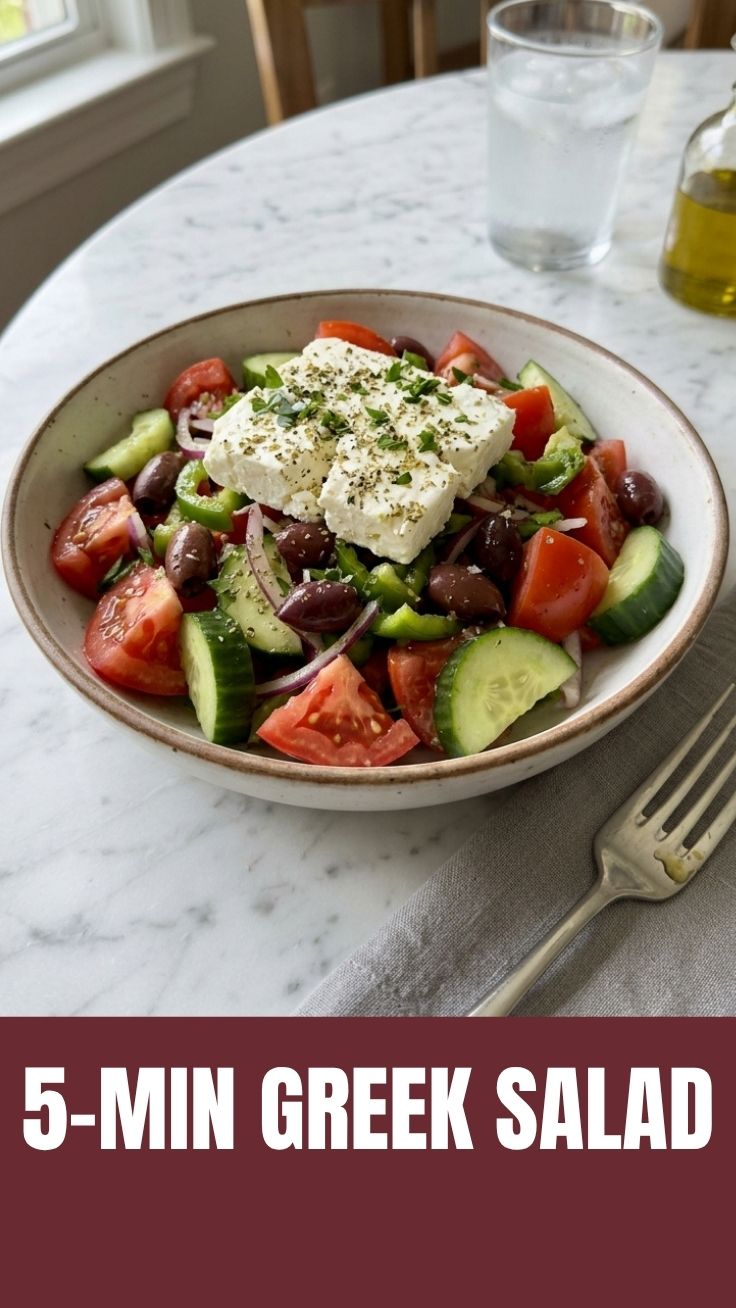
5. Add feta and finish: Just before serving, place the feta cheese on top (either as a whole slice or crumbled). Drizzle a small amount of additional olive oil over the feta and sprinkle with extra oregano. Temperature control: Serve at room temperature, never cold from the refrigerator, as this dulls the flavors.
6. Garnish and serve: Add a few capers if using. For the best results, follow this Greek Salad Recipe exactly as written for your first attempt, then adjust seasonings to your preference. Serve immediately with crusty bread or pita on the side.
Nutritional Benefits & Advantages
This Mediterranean masterpiece is not only delicious but packed with health benefits:
– Rich in lycopene from tomatoes (a powerful antioxidant linked to heart health)
– Hydrating – cucumbers are 96% water, perfect for summer meals
– Healthy fats from olive oil and olives support brain function and reduce inflammation
– Calcium and protein from feta cheese contribute to bone health
– Low glycemic index – suitable for blood sugar management
– High fiber content from fresh vegetables aids digestion
Dietary advantages: Naturally gluten-free, vegetarian, and can easily be made vegan by omitting feta or using a plant-based alternative. This dish aligns perfectly with the Mediterranean diet, consistently ranked as one of the healthiest eating patterns worldwide.
Tips Variations & Cooking Advice
Flavor Variations:
– Mediterranean herb infusion: Add fresh mint, basil, or parsley for extra fragrance
– Spicy kick: Include a pinch of red pepper flakes or sliced jalapeño
– Protein boost: Top with grilled chicken, shrimp, or chickpeas for a heartier meal
– Creamy twist: Add avocado chunks for richness
Ingredient Swaps:
– Use green olives instead of Kalamata for a milder flavor
– Substitute shallots for red onion if you prefer a less pungent taste
– Try marinated artichoke hearts as an additional vegetable component
Alternative Methods:
– For a deconstructed salad, serve vegetables on a platter with feta in the center
– Make it a bowl meal by serving over quinoa, farro, or couscous
– Create a Greek salad wrap using whole wheat pita or lavash bread
Dietary Adaptations:
– Gluten-free: The recipe is naturally gluten-free
– Dairy-free: Use almond-based feta or omit cheese entirely
– Low-sodium: Rinse olives and use low-salt feta
Common Mistakes to Avoid
1. Overdressing the salad: Too much dressing makes vegetables soggy. Start with less and add gradually.
2. Using cold ingredients: Room temperature vegetables and cheese enhance flavor. Remove from refrigerator 20 minutes before assembling.
3. Adding feta too early: Cheese breaks down and becomes mushy. Always add just before serving.
4. Skipping the resting time: This step allows flavors to develop fully. Don’t rush it.
5. Using poor quality olive oil: The dressing is simple—use the best extra virgin olive oil you can afford.
6. Overcomplicating ingredients: Authenticity matters. Stick to fresh, whole ingredients for best results.
Storage & Meal Prep Tips
Refrigeration: Store undressed salad (vegetables and olives) in an airtight container for up to 2 days. Keep dressing separate. Feta should be stored in brine and added fresh when serving.
Freezing: Not recommended—freezing destroys the crisp texture of fresh vegetables. Prepare only what you’ll eat within 2 days.
Reheating: This is a cold salad—never reheat. If you’ve added protein like chicken, warm it separately.
Meal Prep Strategy:
– Chop vegetables up to 24 hours ahead and store in separate containers
– Prepare dressing up to 5 days in advance (shake before using)
– Keep feta in its original packaging until serving
– Assemble just before eating for maximum freshness
Conclusion
Preparing this iconic Mediterranean dish at home transforms simple ingredients into something truly special. By following the techniques outlined above, you’ll consistently create a fresh, flavorful meal that rivals any restaurant version. The Greek Salad demonstrates how quality ingredients and proper technique yield extraordinary results without complicated methods. I encourage you to try this Greek Salad Recipe this week and experience the difference homemade freshness makes. Share your creations, tag your cooking adventures, and explore other Mediterranean recipes on our site for more culinary inspiration. Remember, great cooking starts with great ingredients and a willingness to learn. Happy cooking!
FAQs
1. Can I make Greek Salad ahead of time for a party?
Yes, but keep components separate. Chop vegetables up to 24 hours ahead, prepare dressing, and store feta separately. Combine everything 30 minutes before serving, allowing 10-15 minutes for the flavors to meld.
2. What’s the best feta cheese for authentic Greek Salad?
Use Greek feta from sheep’s milk (or sheep-goat milk blend) sold in brine blocks. Avoid pre-crumbled feta, which contains anti-caking agents and lacks the creamy texture.
3. Can I add lettuce to make it more filling?
While traditional Greek Salad doesn’t include lettuce, adding romaine or butter lettuce is perfectly acceptable for a heartier version. Keep in mind this moves it away from authenticity but adds volume.
4. How do I prevent a watery salad?
Salt tomatoes lightly and let them sit for 5 minutes on a paper towel to draw out excess moisture. Pat cucumber slices dry with a cloth before adding to the bowl.
5. What protein pairs best with Greek Salad?
Grilled chicken or lamb souvlaki are classic choices. For seafood lovers, grilled octopus or shrimp work wonderfully. Vegetarians can add chickpeas, lentils, or grilled halloumi.
Best way to grow with a perfect Greek Salad: 5 fresh twists
Ingredients
Equipment
Method
- Prepare the base by dicing the cucumber, chopping the tomatoes, and thinly slicing the red onion.
- Combine the prepared vegetables with pitted Kalamata olives and crumbled feta cheese in a large bowl.
- Whisk together olive oil, red wine vinegar, dried oregano, salt, and black pepper in a small bowl.
- Pour the dressing over the salad ingredients and toss gently to ensure everything is evenly coated.
- Serve the Greek salad immediately as a refreshing side dish or a light main course.