Mastering the Art of BBQ Brisket (Texas Style): Your Ultimate Guide
Ever dreamt of biting into tender, smoky BBQ Brisket (Texas Style), with that perfect bark and a juicy, melt-in-your-mouth interior, right in your own backyard? Bringing the authentic taste of Texas barbecue home might seem daunting, but with this comprehensive guide, you’ll unlock the secrets to a pitmaster-worthy creation. Preparing this iconic smoked brisket yourself isn’t just about saving money; it’s about the immense satisfaction of transforming a humble cut of beef into a culinary masterpiece, tailored exactly to your preferences. Imagine the aroma filling your home, the pride in serving a dish that’s usually reserved for specialist smokehouses, and the delighted faces of your family and friends. This isn’t just a recipe; it’s an experience, a journey into the heart of American barbecue that promises incredible rewards for your effort.
Ingredients & Kitchen Tools
Crafting the perfect Texas-style brisket requires a combination of quality ingredients and essential tools.
Ingredients:
- 1 whole packer brisket (12-16 lbs): Look for USDA Choice or Prime grade with a good fat cap for moisture and flavor.
- Coarse black pepper (1/2 cup): The backbone of Texas rub; freshly cracked is best.
- Coarse kosher salt (1/2 cup): Essential for flavor and creating the bark.
- Garlic powder (2 tbsp – optional): Adds an extra layer of savory depth.
- Onion powder (2 tbsp – optional): Complements the garlic for a more complex rub.
- Apple cider vinegar (1 cup): For spritzing, helps keep the brisket moist and promotes bark development.
- Water (1 cup): Mixed with apple cider vinegar for the spritz.
- Wood chunks (oak, hickory, or mesquite): For smoke flavor; oak is the most traditional Texas choice.
Kitchen Tools & Utensils:
- Smoker (pellet, offset, or electric): Essential for slow cooking and infusing smoke.
- Sharp boning knife: For trimming the brisket fat.
- Large cutting board: To handle the substantial size of the brisket.
- Meat thermometer (leave-in & instant-read): Crucial for monitoring internal temperature accurately.
- Spray bottle: For spritzing the brisket during the cook.
- Aluminum foil or butcher paper: For wrapping the brisket during the stall. Butcher paper is preferred for a better bark.
- Insulated cooler or warming oven: For the crucial resting period.
- Heat-resistant gloves: For handling the hot brisket.
Prep Time & Cooking Schedule
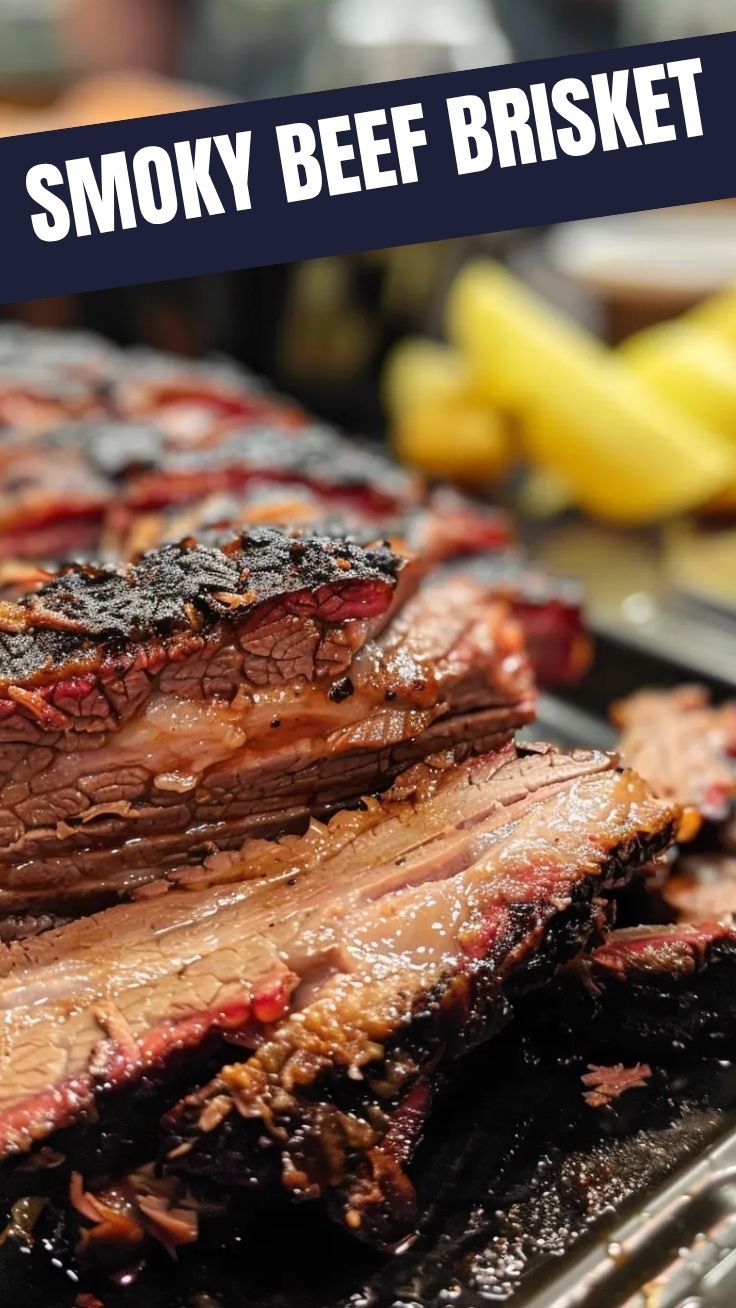
Achieving perfection with BBQ Brisket (Texas Style) is largely about patience and timing.
- Prep Time: 30-60 minutes (for trimming and seasoning). This should be done the day before or several hours before smoking.
- Cooking Time: 12-18 hours (depending on brisket size and smoker temperature, generally 1.5 hours per pound).
- Resting Time: 2-4 hours. This is non-negotiable for tender, juicy results.
Planning Ahead: Start your smoke early in the morning, or even overnight, especially for larger briskets, to allow ample time for the long cook and crucial rest. An overnight cook often allows for a full day of rest and slicing for an evening meal.
Step-by-Step Instructions
1. Trim the Brisket: Using a sharp boning knife, trim the hard fat from the flat, leaving about 1/4 inch of soft fat on both the flat and the point. Remove any silver skin. Shape the brisket to promote even cooking and airflow.
2. Season the Brisket: Generously apply the salt and pepper rub (and optional garlic/onion powder) to all sides of the BBQ Brisket (Texas Style). Press the rub firmly into the meat. Allow it to sit at room temperature for at least 30 minutes, or refrigerate uncovered overnight for a deeper penetration.
3. Preheat Your Smoker: Preheat your smoker to a consistent 250-275°F (120-135°C). Add your chosen wood chunks; aim for a thin, blue smoke.
4. Smoke the Brisket (Phase 1 – Unwrapped): Place the seasoned brisket, fat side up or down depending on your smoker’s heat source, directly on the grates. Close the lid and maintain consistent temperature. Spritz the brisket every 1-2 hours after the first 3-4 hours with the apple cider vinegar/water mixture.
5. Hit the Stall: The internal temperature will typically stall between 150-170°F (65-77°C). This is normal; the moisture evaporating from the surface cools the meat.
6. Wrap the Brisket (Phase 2 – Wrapped): Once the brisket hits the stall and develops a beautiful dark bark (usually 6-9 hours in), wrap it tightly in butcher paper or aluminum foil. This helps push through the stall and retain moisture. Insert a leave-in thermometer into the thickest part of the flat.
7. Continue Smoking: Return the wrapped smoked brisket to the smoker and continue cooking until it reaches an internal temperature of 200-205°F (93-96°C). The true test of doneness is “probe tender” – the thermometer should slide in with very little resistance, like soft butter.
8. Rest the Brisket: This is critical! Once probe tender, remove the wrapped brisket from the smoker and place it in an insulated cooler (or warming oven) for at least 2 hours, and ideally 4 hours. This allows the muscle fibers to relax and reabsorb juices, resulting in an incredibly tender final product.
9. Slice and Serve: Unwrap the brisket. Separate the flat from the point. Slice the flat against the grain into pencil-thick slices. For the point, you can cube it for burnt ends or slice it thicker. Serve immediately.
Nutritional Benefits & Advantages
Texas-style brisket, when prepared correctly, offers more than just incredible flavor. Beef brisket is a good source of protein, essential for muscle repair and growth, and provides important micronutrients like iron, zinc, and B vitamins. While it can be higher in fat, proper trimming can reduce saturated fat, and the slow cooking process renders much of the remaining fat, contributing to moisture rather than excessive grease. The minimal, natural seasoning (salt and pepper) used in traditional Texas BBQ means you’re generally avoiding processed ingredients, artificial flavors, and high sugar content often found in commercial BBQ sauces.
Tips, Variations & Cooking Advice
- Wood Choice: While oak is traditional, experiment with hickory for a stronger smoke flavor or pecan for a milder, slightly nutty profile.
- Moisture Management: The spritz is your friend! It keeps the surface moist and helps create the bark. Don’t over-spritz; a light mist every hour or two is plenty.
- Temperature Consistency: A stable smoker temperature is key. Avoid frequently opening the lid, as this causes significant temperature fluctuations.
- Burnt Ends: The fattier point of the brisket is perfect for making irresistible burnt ends. After separating, cube the point, toss with some extra rub and a touch of sauce (optional), then return to the smoker for another 2-3 hours until deeply caramelized.
- No Smoker? No Problem (Almost): While a smoker is ideal, you can achieve a decent result in an oven after an initial smoke on a conventional grill or with a liquid smoke rub. The depth of flavor won’t be identical, but it’s a viable alternative.
Common Mistakes to Avoid
- Not Trimming Enough (or Too Much): Too much fat leads to a greasy product; too little results in dry brisket. Aim for 1/4 inch of soft fat.
- Cooking at Too High a Temperature: This rushes the cook, prevents proper fat rendering, and results in tough meat. Stick to 250-275°F.
- Not Resting Long Enough: The biggest mistake! Skipping the rest means dry brisket. Don’t rush it; this step is as important as the cook itself.
Slicing with the Grain: This will make the brisket tough and chewy regardless of how tender it is. Always slice against* the grain.
- Over-Seasoning with Sugar: Traditional Texas brisket relies on a simple salt and pepper rub. Sugary rubs burn at high temperatures and aren’t authentic to the style.
Storage & Meal Prep Tips
Storage: Allow leftover BBQ Brisket (Texas Style) to cool completely. Store slices or whole pieces in airtight containers or vacuum-sealed bags in the refrigerator for up to 3-4 days. For longer storage, freeze for up to 3 months. When freezing, it’s best to separate portions with some of the rendered juices to maintain moisture.
Reheating: The best way to reheat brisket is gently. For refrigerated brisket, wrap it tightly in foil with a splash of beef broth or water and reheat in an oven at 250-300°F (120-150°C) until warmed through. For frozen brisket, thaw overnight in the fridge first, then reheat as above. Avoid microwaving, as it can dry out the meat.
Conclusion
Mastering BBQ Brisket (Texas Style) is a journey of patience, precision, and passion, but the reward is truly unmatched. From the meticulous trimming and simple seasoning to the hours of careful smoking and the crucial resting period, every step contributes to that legendary tender, juicy, and flavorful experience. Don’t be intimidated by the cook time; embrace it as part of the slow food process. By following these detailed instructions and expert tips, you’re well on your way to creating a truly authentic smoked brisket that will impress even the toughest critics. We encourage you to try this recipe, share your mouth-watering results with us, and explore more of our barbecue guides to elevate your pitmaster skills!
FAQs
Q1: How do I know when my brisket is “probe tender”?
A1: When the internal temperature is between 200-205°F, insert your instant-read thermometer or a skewer into different parts of the flat. It should slide in with very little to no resistance, feeling like it’s going into soft butter.
Q2: Can I use different wood types for smoking?
A2: Absolutely! While oak is classic, hickory provides a stronger, bolder smoke, and pecan offers a milder, sweeter flavor. Mesquite is very strong and best used sparingly or blended.
Q3: What if my brisket’s internal temperature gets stuck (the “stall”)?
A3: The stall is completely normal and expected. It’s caused by evaporative cooling. The best way to power through it is to wrap your brisket tightly in butcher paper or foil once the bark has set (around 150-170°F internal).
Q4: How important is the resting period? Can I skip it?
A4: The resting period is crucial and should never be skipped. It allows the meat fibers to relax and reabsorb juices, resulting in significantly more tender and moist brisket. Skipping it will lead to dry, less flavorful meat.
Q5: My brisket turned out dry. What went wrong?
A5: Common culprits for dry brisket include not trimming enough fat, cooking at too high a temperature, not wrapping or wrapping too late, or most commonly, not resting the brisket long enough. Ensure your final cooking temperature allows for probe tenderness, not just a specific temperature.
Proven way to grow your BBQ Brisket (Texas Style) in 3 steps
Ingredients
Equipment
Method
- Trim the brisket by removing hard fat and silver skin while leaving a 1/4-inch fat cap on the point and flat portions.
- Season the brisket generously on all sides with kosher salt and coarse black pepper, ensuring even coverage.
- Prepare your smoker for a 12-16 hour cook at a temperature between 225-275°F (107-135°C), using post oak wood for authentic Texas flavor.
- Place the brisket fat-side up in the smoker and maintain a consistent temperature, spritzing every 2-3 hours with apple cider vinegar to keep it moist.
- Continue smoking until the brisket reaches an internal temperature of 175°F (79°C) and develops a dark, flavorful bark.
- Remove the brisket from the smoker and wrap it tightly in butcher paper, then return it to the smoker until it reaches 203°F (95°C) and is fork-tender.
- Transfer the wrapped brisket to a cooler or an oven set to the lowest temperature, allowing it to rest for a minimum of 2 hours, or up to 6 hours.
- After resting, unwrap the brisket and slice it against the grain: separate the flat from the point, then slice the flat into 1/4-inch pieces and cube the point for burnt ends or chop it.