The Ultimate Beef Stew Recipe: Hearty, Flavorful, and Easy to Make
What if the perfect bowl of comfort could simmer itself while you go about your day? Whether you’re craving a classic Beef Stew or a hands-off version made in a slow cooker beef stew, both deliver deep, savory richness that warms you from the inside out. Preparing this dish at home not only lets you control the quality of ingredients but also fills your kitchen with an irresistible aroma that no store‑bought alternative can match. With the right technique, you’ll achieve fork‑tender meat, perfectly cooked vegetables, and a broth so flavorful it could be a meal on its own. In this guide, I’ll walk you through every step to ensure a foolproof result every time.
—
Ingredients & Kitchen Tools
Ingredients
– Beef chuck (2 lbs) – Cut into 1½‑inch cubes; marbling ensures tenderness after long cooking.
– All‑purpose flour (3 tbsp) – For dredging; creates a rich fond and thickens the broth.
– Olive oil (2 tbsp) – Used for browning; can substitute with avocado or canola oil.
– Yellow onions (2 medium) – Diced; add sweetness and depth.
– Garlic cloves (4) – Minced; freshly pressed is best.
– Carrots (4 large) – Peeled and cut into 1‑inch chunks.
– Celery ribs (3) – Sliced; provides aromatic base.
– Russet potatoes (3 medium) – Cubed; Yukon Golds also work well.
– Beef broth (4 cups) – Low‑sodium preferred; or use bone broth for extra nutrients.
– Tomato paste (2 tbsp) – Adds umami and color.
– Red wine (1 cup) – Optional but recommended; use a dry variety like Cabernet Sauvignon.
– Bay leaves (2) – For subtle herbal notes.
– Fresh thyme (4 sprigs) – Or 1 tsp dried.
– Salt & black pepper – To taste.
– Frozen peas (1 cup) – Stir in at the end for a pop of color and sweetness.
Kitchen Tools
– Dutch oven or heavy‑bottomed pot – Ideal for browning and simmering.
– Chef’s knife & cutting board
– Wooden spoon or spatula
– Measuring cups & spoons
– Colander – For rinsing vegetables.
– Tongs – For turning meat.
– Slow cooker (optional) – For the crockpot method.
Optional Substitutions
– Flour → Gluten‑free all‑purpose blend or cornstarch (as slurry).
– Red wine → Extra beef broth + 1 tbsp balsamic vinegar.
– Potatoes → Parsnips or turnips for low‑carb option.
– Beef → Lamb or bison chuck; adjust cooking time slightly.
—
Prep Time & Cooking Schedule
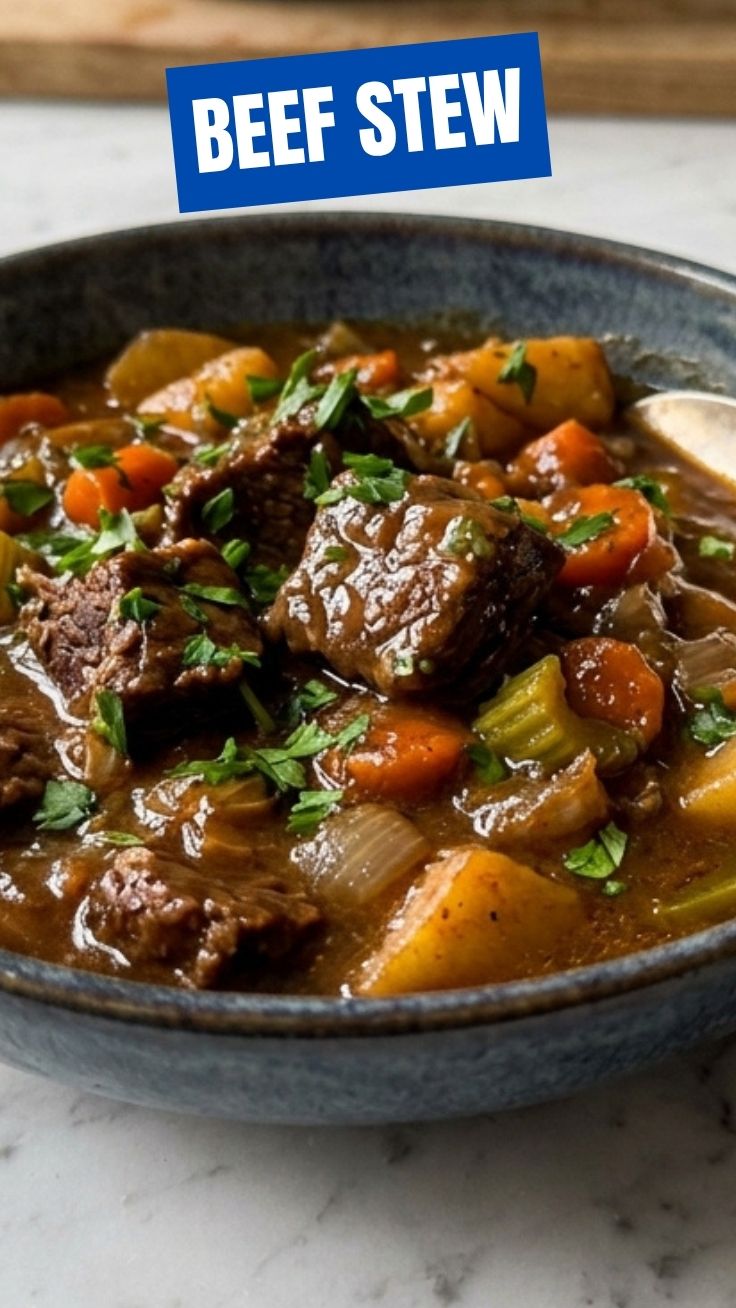
– Prep time: 20 minutes (chopping, measuring, dredging meat)
– Cook time (stovetop): 2–2½ hours
– Cook time (slow cooker): 6–8 hours on low, 3–4 hours on high
– Resting time: 10 minutes before serving; allows flavors to meld
Planning tip: This stew actually tastes even better the next day, so consider making it 24 hours ahead. The stovetop method is faster for same‑day dinners, while the slow cooker approach is perfect for busy mornings – just brown the meat first and then let the appliance do the work.
—
Step-by-Step Instructions
1. Brown the beef: Pat the beef cubes dry with paper towels. Season generously with salt and pepper, then toss with flour until lightly coated. Heat 1 tablespoon of olive oil in a Dutch oven over medium‑high heat. Add the beef in a single layer (work in batches if needed) and sear for 3–4 minutes per side until deeply browned. Transfer to a plate.
2. Sauté aromatics: Reduce heat to medium. Add remaining oil, onions, carrots, and celery. Cook for 5 minutes, scraping up the browned bits. Stir in garlic and tomato paste for 1 minute until fragrant.
3. Deglaze and simmer: Pour in the red wine (if using) and let it reduce by half for 2 minutes. Add beef broth, bay leaves, and thyme. Return the beef to the pot along with any accumulated juices. Bring to a gentle boil, then reduce heat to low, cover, and simmer for 1½ hours.
4. Add potatoes: Stir in the potato cubes, re‑cover, and continue cooking for 30–40 minutes until the potatoes are tender and the meat pulls apart easily.
5. Finish and serve: Remove bay leaves and thyme stems. Stir in frozen peas and cook for 2 more minutes. Taste and adjust salt and pepper. Let rest for 10 minutes before serving. For an even deeper flavor, skip the stovetop and instead prepare a slow cooker beef stew by transferring all browned ingredients and liquids to a crockpot after step 2, then cooking on low for 7 hours. This Beef Stew variation yields exceptionally tender meat with minimal effort.
Pro tips: To test meat doneness, pierce a cube with a fork – it should slide off easily. If the broth seems thin, mash a few potato cubes against the side of the pot to naturally thicken it. For a silkier texture, stir in 1 tablespoon of butter before serving.
—
Nutritional Benefits & Advantages
This hearty dish is not only comforting but also nutrient‑dense. A single serving (about 1½ cups) provides:
– ~25g protein – Supports muscle repair and satiety.
– ~30g carbohydrates – Mostly complex carbs from potatoes and carrots.
– ~8g fiber – From vegetables and legumes (if peas are included).
– Iron – Beef is a rich source of heme iron, which improves oxygen transport.
– Vitamin A – Carrots deliver beta‑carotene for eye health.
– Collagen – Slow cooking breaks down connective tissue, supporting joint health.
Compared to canned stews, homemade versions contain half the sodium and no artificial preservatives. Using lean beef chuck trimmed of excess fat keeps the dish balanced for a regular dinner rotation.
—
Tips Variations & Cooking Advice
– Flavor variations: Add a pinch of smoked paprika or chipotle powder for a subtle smoky kick. For an herby twist, swap thyme for rosemary and add a sprig of sage.
– Ingredient swaps: Replace potatoes with sweet potatoes or butternut squash. Use mushrooms instead of half the beef for a meat‑light version.
– Alternative cooking methods: Pressure cooker – cook on high for 35 minutes with natural release. Instant Pot works wonderfully.
– Dietary adaptations:
– Gluten‑free: Use gluten‑free all‑purpose flour or omit flour entirely and thicken with a cornstarch slurry (1 tbsp cornstarch + 2 tbsp cold water) added in the last 10 minutes.
– Dairy‑free: This recipe is naturally dairy‑free – just ensure your broth and tomato paste contain no milk solids.
– Low‑carb: Swap potatoes for cauliflower florets and celery root.
—
Common Mistakes to Avoid
– Skipping the browning step: Searing meat is non‑negotiable – it creates the deep, caramelized flavor that defines a great stew. Without it, the broth will taste flat.
– Overcrowding the pot: Adding too many beef cubes at once lowers the pan temperature, causing them to steam rather than brown. Always work in batches.
– Adding vegetables too early: Potatoes and carrots can become mushy if simmered for the full 2 hours. Stagger their addition based on cooking time – root vegetables go in halfway through.
– Underseasoning: Salt the beef before browning and taste the broth at the end. A final squeeze of lemon juice or splash of vinegar can brighten the entire dish.
—
Storage & Meal Prep Tips
– Refrigeration: Store in an airtight container for up to 4 days. The flavors will intensify as the stew sits.
– Freezing: Portion cooled stew into freezer‑safe bags or containers, leaving 1‑inch headspace. It keeps for up to 3 months. Thaw overnight in the fridge before reheating.
– Reheating: Reheat gently in a saucepan over medium‑low heat, stirring occasionally. Add a splash of broth or water if the stew has thickened too much. Avoid microwaving on high, as it can make vegetables rubbery.
– Meal prep: Cook a double batch on Sunday and divide into lunch portions. The stew also freezes beautifully in single servings for quick weekday meals.
—
Conclusion
Mastering a classic Beef Stew – whether you choose the traditional stovetop route or the ultra‑convenient slow cooker beef stew – unlocks a world of comfort that never goes out of style. By following the steps above, you’ll consistently produce a rich, tender stew that impresses family and friends. I encourage you to try this recipe this week, customize it with your favorite herbs, and share your results in the comments. Don’t forget to explore other slow‑cooked classics on the blog for more cozy inspiration.
—
FAQs
1. Can I use a different cut of beef for stew?
Yes. Chuck is the gold standard, but brisket, round, or even short ribs work. Avoid lean cuts like sirloin, as they will dry out during long cooking.
2. How do I thicken the stew without flour?
Mash some of the cooked potatoes against the pot, or stir in a cornstarch slurry (1 tbsp cornstarch + 2 tbsp cold water) and simmer for 3–4 minutes.
3. Why is my beef still tough?
The meat likely wasn’t cooked long enough. Beef chuck needs at least 1½ hours of gentle simmering (or 6 hours on low in a slow cooker) to break down collagen. If it’s still chewy, continue cooking for 30 more minutes.
4. Can I make this stew in a pressure cooker?
Absolutely. Brown the beef using the sauté function, then pressure cook on high for 35 minutes with natural release. Add potatoes afterward and cook for another 5 minutes.
5. How can I reduce the sodium without losing flavor?
Use low‑sodium broth and avoid adding salt until the end. Boost flavor with extra garlic, fresh herbs, a dash of Worcestershire sauce, or a splash of red wine vinegar.
Proven way to grow a perfect Beef Stew
Ingredients
Equipment
Method
- Dredge the beef cubes in flour, then heat olive oil in a large Dutch oven over medium-high heat. Brown the beef in batches on all sides to develop flavor, then remove and set aside.
- Add the chopped onion, carrots, and celery to the pot, sautéing until softened for about 5-7 minutes. Stir in the minced garlic and cook for another minute until fragrant.
- Pour in the beef broth, scraping up any browned bits from the bottom of the pot. Stir in the tomato paste, Worcestershire sauce, dried thyme, and bay leaves.
- Return the browned beef to the pot, bring the liquid to a simmer, then reduce heat to low, cover, and cook for 1.5-2 hours, or until the beef is nearly tender.
- Add the cubed potatoes to the stew and continue to simmer, covered, for another 30-45 minutes, or until the potatoes are tender and the stew has thickened.
- Remove the bay leaves, taste, and season with salt and black pepper as needed before serving hot.