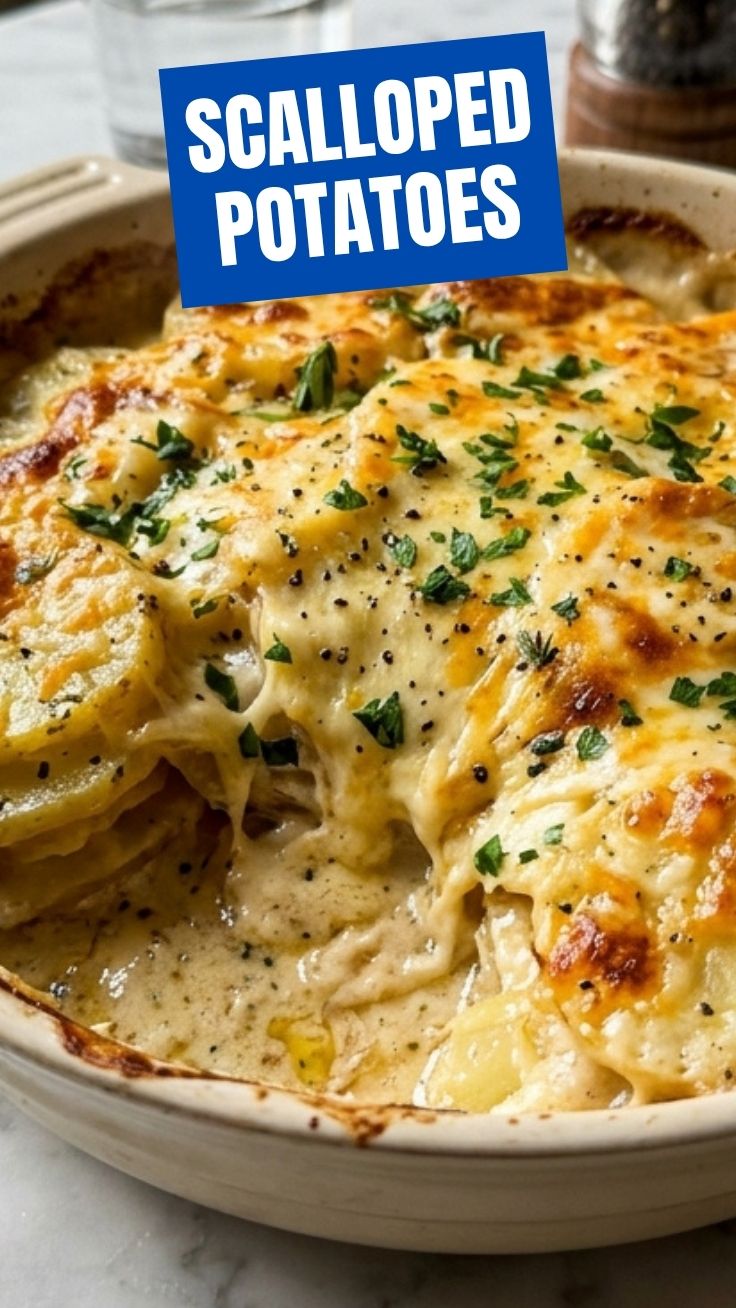
The Ultimate Guide to Perfectly Creamy Scalloped Potatoes (a.k.a. Potato Gratin)
Have you ever craved a side dish so rich and comforting that it steals the show from the main course? That’s the magic of Scalloped Potatoes—thinly sliced potatoes baked in a velvety cream sauce until golden and bubbly. While often confused with Potato Gratin (which typically includes cheese), both dishes share a core of tender, layered potatoes that turn any meal into a celebration. Making scalloped potatoes at home not only saves money but lets you control the ingredients for a fresher, healthier result. In this guide, we’ll walk you through every detail—from choosing the right potato to achieving that perfect fork-tender texture—while keeping your kitchen stress‑free.
Ingredients & Kitchen Tools
Ingredients
– Potatoes (2.5 lbs / about 1.1 kg) – Yukon Gold or Russet work best; they hold shape while absorbing cream.
– Heavy cream (2 cups / 480 ml) – For richness; half‑and‑half works as a lighter option.
– Whole milk (1 cup / 240 ml) – Balances thickness without being too heavy.
– Garlic (3 cloves, minced) – Adds savory depth; omit for a milder flavour.
– Butter (3 tbsp) – Used to grease the dish and brush between layers.
– Salt & white pepper – White pepper keeps the sauce clean; black pepper can substitute.
– Fresh thyme (1 tsp, chopped) – Optional but adds a subtle herbal note.
– Cheese (optional) – For a Potato Gratin style, add 1 cup shredded Gruyère or cheddar.
Kitchen Tools
– Mandoline slicer – Ensures uniform ⅛‑inch slices for even cooking.
– 8×8‑inch or 9×13‑inch baking dish – Choose depth based on number of layers.
– Heavy‑bottomed saucepan – For simmering the cream mixture.
– Whisk – To prevent lumps when combining milk and cream.
– Aluminum foil – For covering the first half of baking to trap steam.
Prep Time & Cooking Schedule
– Prep time: 20 minutes (peeling, slicing, and grating cheese).
– Baking time: 55–65 minutes at 375°F (190°C).
– Resting time: 10 minutes after baking – crucial for the sauce to thicken and layers to set.
Plan to start about 1.5 hours before serving. If you’re meal prepping, you can assemble the dish a day ahead and refrigerate; just add 10–15 minutes to the bake time.
Step-by-Step Instructions
1. Preheat oven to 375°F. Grease your baking dish with butter.
2. Prepare the cream mixture: In a saucepan, combine heavy cream, milk, minced garlic, salt, and white pepper. Warm over medium heat until steaming (do not boil). Remove from heat.
3. Slice potatoes using a mandoline into ⅛‑inch rounds. Immediately place slices in a bowl of cold water to prevent browning, then pat dry.
4. Layer the dish: Spread a thin layer of cream mixture on the bottom. Arrange a single layer of potato slices, slightly overlapping. Pour a small amount of cream over the layer and sprinkle with thyme (if using). Repeat until all potatoes are used (typically 4–5 layers).
5. For a Potato Gratin variation, add shredded cheese between every other layer and on top. This transforms your scalloped potatoes into an indulgent gratin.
6. Cover with foil and bake for 40 minutes. Remove foil and bake another 20–25 minutes until the top is golden brown and the potatoes are fork-tender.
7. Rest for 10 minutes before serving – this step is non‑negotiable for the sauce to thicken.
Pro tip: If the cream curdles during simmering, whisk in 1 teaspoon of cornstarch slurry to stabilize.
Nutritional Benefits & Advantages
Per serving (about ⅙ of the dish without cheese):
– Calories: ~280
– Carbohydrates: 32 g
– Protein: 6 g
– Fat: 15 g
– Fiber: 3 g
Potatoes are rich in vitamin C, potassium, and resistant starch (when cooled slightly), which supports gut health. Using whole milk and cream provides calcium and vitamin D. By making scalloped potatoes at home, you avoid preservatives and excess sodium found in boxed mixes. For a lighter version, substitute half the cream with unsweetened almond milk and reduce butter by half.
Tips, Variations & Cooking Advice
– Flavor boost: Add caramelized onions or a pinch of nutmeg to the cream.
– Dietary swaps
– Dairy‑free: Use full‑fat oat milk + 2 tbsp nutritional yeast + vegan butter.
– Gluten‑free: The recipe is naturally GF; just verify your cream and spices.
– Cheese choices: Gruyère melts beautifully; cheddar gives a sharper tang; Parmesan adds saltiness.
– Potato alternatives: Sweet potatoes or parsnips create a colorful, slightly sweeter gratin.
– Make ahead: Assemble up to step 4, cover, and refrigerate for up to 24 hours. Bake straight from the fridge, adding 15 minutes to the covered stage.
Common Mistakes to Avoid
– Slicing too thick – Potatoes won’t cook through; stick to ⅛ inch.
– Skipping the rest time – The sauce will be runny and layers will slide apart.
– Boiling the cream – High heat causes curdling; always warm gently.
– Under‑seasoning – Potatoes absorb a lot of salt; taste the cream before layering.
– Overcrowding the dish – Too many layers prevent heat from reaching the center; 4–5 layers max.
Storage & Meal Prep Tips
– Refrigerate: Store leftovers in an airtight container for up to 4 days.
– Freeze (less ideal): Cooked scalloped potatoes freeze for up to 2 months, but the texture becomes slightly grainy. To freeze, cool completely, wrap tightly in foil and plastic, then thaw overnight in the fridge.
– Reheat: Place in a 350°F oven covered with foil for 15 minutes, then uncover for 5 minutes to restore crispness. Microwaving works but will soften the top – add a splash of milk before reheating to revive creaminess.
Conclusion
Mastering scalloped potatoes at home elevates any dinner with minimal effort once you know the technique. Whether you stay classic or lean into a cheese‑laden Potato Gratin, the reward is a crowd‑pleasing dish that tastes far more complex than it is. Try our recipe this weekend, snap a photo of your golden, bubbly creation, and share your results with us. We’d love to see how your scalloped potatoes turn out – and remember, a perfectly executed gratin is just a few layers away.
FAQs
Q: Can I use regular milk instead of heavy cream?
A: Yes, but the sauce will be thinner. To mimic richness, whisk 1 tablespoon of all‑purpose flour into the milk before warming.
Q: Why did my sauce curdle?
A: Usually from too‑high heat. Always warm the cream on medium‑low, and if curdling starts, immediately whisk in a splash of cold milk.
Q: How do I know when the potatoes are done?
A: A paring knife should slide through the center without resistance. If the top browns too quickly, cover with foil for the remaining time.
Q: Can I add meat (like ham or bacon)?
A: Absolutely. Layer cooked, crumbled bacon or diced ham between the potato layers for a heartier dish.
Q: What’s the difference between scalloped potatoes and Potato Gratin?
A: Traditional scalloped potatoes rely on cream and butter, while gratin always includes cheese (often Gruyère) and sometimes breadcrumbs. Both are delicious variations of the same potato‑centered comfort food.
Proven way to grow 5-Star Scalloped Potatoes
Ingredients
Equipment
Method
- Preheat your oven to 375°F (190°C) and grease a 9x13 inch baking dish.
- Peel and thinly slice the potatoes, ensuring uniform thickness for even cooking.
- In a medium saucepan, melt the butter over medium heat, then whisk in the flour and cook for 1 minute.
- Gradually whisk in the milk, salt, and pepper, continuing to cook and stir until the sauce thickens and bubbles.
- Layer half of the sliced potatoes in the prepared baking dish, then pour half of the sauce over them and sprinkle with half of the shredded cheese.
- Repeat with the remaining potatoes, sauce, and cheese, then cover the baking dish with aluminum foil.
- Bake for 45 minutes, then remove the foil and continue baking for another 15-20 minutes, or until the potatoes are tender and the top is golden brown and bubbly.
- Let the scalloped potatoes cool for a few minutes before serving, and garnish with fresh parsley if desired.