The Ultimate Guide to Perfect Lasagna: A Step-by-Step Homemade Recipe
Have you ever wondered what separates a mediocre lasagna from one that’s truly unforgettable? The secret lies not just in the ingredients, but in the technique, patience, and love you pour into every layer. While it’s tempting to grab a frozen tray, preparing this classic comfort dish at home allows you to control the quality of each component—from the richness of the meat sauce to the perfect balance of cheeses. You’ll quickly discover that a homemade Lasagna is not only more flavorful but also more satisfying to create. If you have been scrolling through countless Lasagna recipes, stop right here—this guide will give you the data-backed, foolproof method you need to succeed.
Ingredients & Kitchen Tools
For the Meat Sauce:
– 1 lb ground beef (or a mix of beef and pork for deeper flavor)
– 1 medium onion, finely diced
– 3 cloves garlic, minced
– 1 (28 oz) can crushed tomatoes
– 2 tbsp tomato paste (adds umami)
– 1 tsp dried oregano
– 1 tsp dried basil
– Salt and black pepper to taste
– 2 tbsp olive oil
For the Cheese Mixture:
– 15 oz whole milk ricotta (or cottage cheese for a lighter option)
– 1 large egg (binds the mixture)
– 2 cups shredded mozzarella (low-moisture preferred for less watery results)
– 1 cup grated Parmesan or Pecorino Romano
– 1/4 cup fresh parsley, chopped
For the Pasta:
– 12 lasagna noodles (no-boil or regular; if using regular, you’ll need to parboil)
Kitchen Tools:
– 9×13-inch baking dish
– Large skillet or Dutch oven
– Large pot for boiling noodles
– Mixing bowls
– Aluminum foil
Optional Substitutions:
– Replace beef with ground turkey or plant-based crumbles.
– Use gluten-free noodles for a gluten-free version.
– Swap ricotta with a dairy-free tofu ricotta.
Prep Time & Cooking Schedule
– Prep Time: 25 minutes (chopping vegetables, browning meat, mixing cheeses)
– Cook Time: 45 minutes (assembly + baking)
– Resting Time: 10–15 minutes after baking (critical for clean slices)
– Total Time: Approximately 1 hour 20 minutes
Plan ahead: Make the sauce up to two days in advance and refrigerate. This actually deepens the flavor. For a busy weeknight, assemble the lasagna a day before and bake just before dinner—add 10 extra minutes to the bake time if starting cold.
Step-by-Step Instructions
1. Prepare the sauce: Heat olive oil in a large skillet over medium-high heat. Add the ground beef and cook until browned, breaking it into small crumbles (about 6 minutes). Remove excess fat, leaving about 1 tablespoon for flavor. Add the diced onion and cook until translucent, 3 minutes. Stir in garlic for 30 seconds, then add crushed tomatoes, tomato paste, oregano, and basil. Season with salt and pepper. Lower the heat and simmer for 10 minutes, stirring occasionally. You want a thick, concentrated sauce—not watery.
2. Cook the noodles: If using regular lasagna noodles, boil them in salted water until just al dente (about 1 minute less than package directions). Drain and lay flat on a baking sheet to prevent sticking. No-boil noodles are a time-saver—just proceed directly to assembly.
3. Mix the cheese filling: In a bowl, combine ricotta, egg, 1 cup of mozzarella, half the Parmesan, and fresh parsley. Stir well. Season with a pinch of salt and pepper.
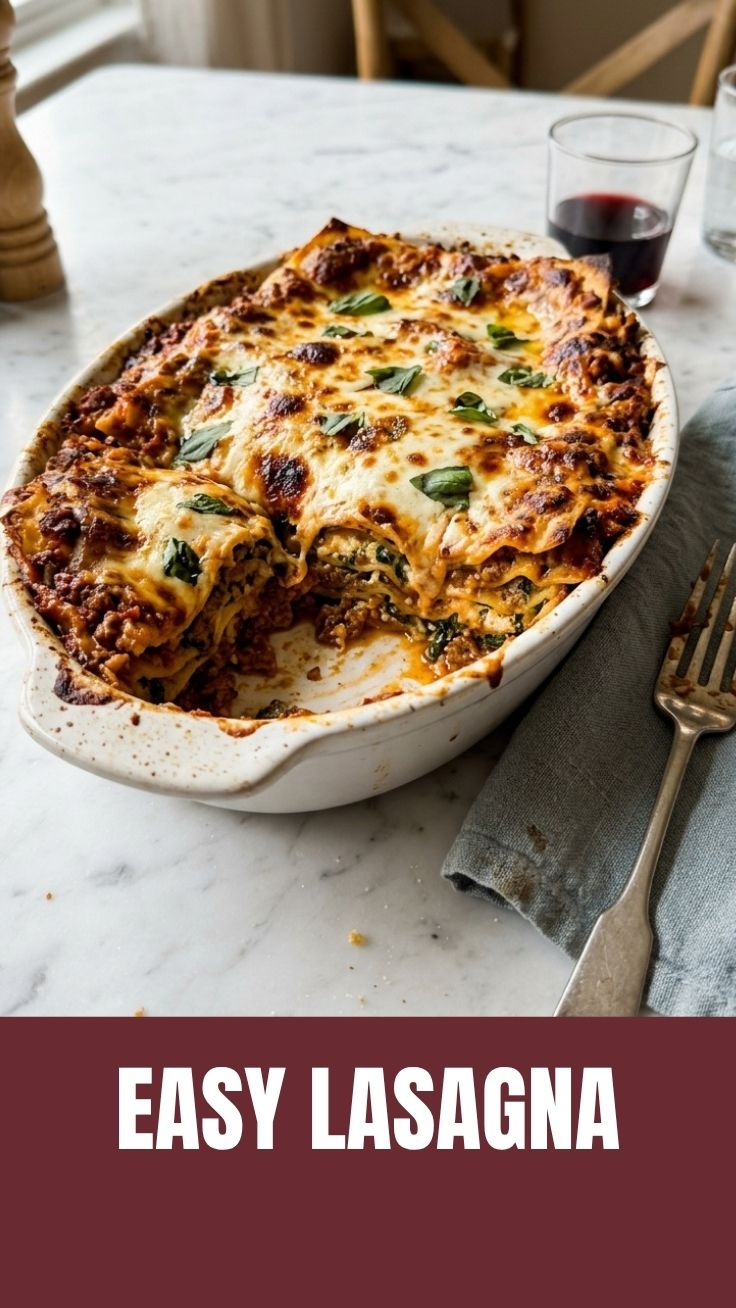
4. Assemble the lasagna: Spread a thin layer of meat sauce (about 1/2 cup) on the bottom of the baking dish. Place three noodles side by side (do not overlap). Spread one-third of the ricotta mixture over the noodles, then one-third of the remaining meat sauce. Sprinkle a layer of mozzarella and Parmesan. Repeat this layering process twice. For the top layer, finish with sauce, remaining mozzarella, and the rest of the Parmesan. This is where your Lasagna gets its golden, bubbly crown.
5. Bake: Cover the dish with foil (spray the underside with cooking spray to avoid sticking) and bake at 375°F for 25 minutes. Remove the foil and bake another 15–20 minutes until the cheese is bubbly and lightly browned. Let it rest for 10–15 minutes before slicing—this allows the layers to set. As with the best Lasagna recipes, patience during resting pays off with perfect squares.
Nutritional Benefits & Advantages
This dish is a powerhouse of protein (about 25 grams per serving), thanks to the beef, ricotta, and mozzarella. The tomatoes provide lycopene, an antioxidant linked to heart health. Using whole-milk dairy offers calcium and vitamin D. For a lighter version, swap beef with lean ground turkey and use part-skim cheeses—you still get great flavor with less saturated fat. The layered structure also makes portion control easy: one square is a filling meal.
Tips Variations & Cooking Advice
– Flavor twist: Add a pinch of red pepper flakes to the sauce for heat, or stir in sliced mushrooms with the onion for earthy depth.
– Vegetarian adaptation: Replace meat with sautéed zucchini, spinach, and mushrooms. Use marinara instead of meat sauce.
– No-boil noodle trick: If using no-boil noodles, ensure your sauce is slightly thinner (add 1/4 cup water or broth) so the noodles hydrate fully during baking.
– Make it gluten-free: Use gluten-free lasagna sheets and double-check your tomato paste and seasonings for hidden gluten.
Common Mistakes to Avoid
– Soggy lasagna: This happens when you over-sauce or skip resting time. Always let it rest after baking. Also, drain excess fat from the meat and don’t oversaturate the noodles.
– Dry or tough noodles: Undercook regular noodles slightly (they finish cooking in the oven). For no-boil, make sure the sauce has enough moisture.
– Burnt cheese topping: Cover with foil for the first 25 minutes, then uncover only at the end. Watch carefully in the last 5 minutes.
– Too much salt: Remember that Parmesan and mozzarella are naturally salty. Season the sauce lightly and taste before adding more.
Storage & Meal Prep Tips
– Refrigerate: Store leftovers in an airtight container for up to 4 days. To reheat, cover with foil and warm in a 350°F oven for 15 minutes, or microwave in 30-second bursts.
– Freeze: Assemble the lasagna completely but don’t bake. Wrap tightly in plastic wrap, then foil. Freeze for up to 3 months. To bake from frozen, add 20–25 minutes to the covered baking time, then uncover and bake until bubbly.
– Reheat without drying: Add a splash of water or extra sauce before reheating in the oven to maintain moisture.
Conclusion
Mastering a classic Lasagna at home is a rewarding skill that impresses family and friends. From perfectly cooked noodles to a rich, layered sauce, every step builds toward comfort food perfection. As you explore different Lasagna recipes, remember that the best version is the one you make with care. Try this recipe this weekend, share your results, and don’t hesitate to experiment with your own twists!
FAQs
1. Can I substitute ricotta with cottage cheese?
Yes, but drain the cottage cheese first to reduce excess liquid. The texture will be slightly less creamy but still delicious.
2. My lasagna is too watery. What went wrong?
You likely didn’t simmer the sauce long enough to thicken it, or you used high-moisture mozzarella. Pat the mozzarella dry with paper towels before shredding, and always cook down your sauce.
3. How do I prevent noodles from sticking together when boiling?
Use a large pot with plenty of salted water. Stir immediately after adding noodles, and add a splash of olive oil to the water. Lay cooked noodles flat on a baking sheet—don’t stack them.
4. Can I make this lasagna dairy-free?
Absolutely. Use dairy-free ricotta (tofu or cashew-based), vegan mozzarella shreds, and nutritional yeast in place of Parmesan. Check that your noodles are egg-free if needed.
5. Why did my top cheese burn before the lasagna was heated through?
Your oven runs hot, or you left the foil off too early. Always bake covered for at least 25 minutes, then uncover only for the last 10–15 minutes.