The Ultimate Guide to a Healthy Summer Pasta Salad (That Actually Stays Fresh)
Have you ever prepared a pasta salad for a picnic, only to find it dry, soggy, or flavorless by the time you’re ready to eat? You’re not alone. The secret to a vibrant, satisfying, and healthy summer pasta salad lies not just in the ingredients, but in the technique. This dish is a lifesaver for busy weeknights, backyard barbecues, and meal prep Sundays. By making it at home, you control the quality of oil, the sodium level, and the freshness of every vegetable. This guide will walk you through creating a masterpiece that is as nutritious as it is delicious, while also introducing you to the endless world of pasta salad recipes that can transform your summer menu.
Ingredients & Kitchen Tools
For the Salad
– Pasta: 12 oz (340g) of short pasta like rotini, farfalle, or penne. Tip: Whole wheat or legume-based pasta adds fiber and protein.
– Cherry Tomatoes: 2 cups, halved. Opt for multi-colored varieties for visual appeal.
– Cucumber: 1 large, diced. English cucumbers have fewer seeds and stay crunchier.
– Bell Pepper: 1 large (any color), diced. Red, orange, or yellow are sweeter than green.
– Red Onion: ½ small, thinly sliced. For a milder bite, soak slices in cold water for 10 minutes.
– Kalamata Olives: ½ cup, halved. Substitute with black olives if preferred.
– Feta Cheese: ½ cup, crumbled. Omit for a dairy-free version.
– Fresh Basil: ¼ cup, chiffonade. Adds a signature Mediterranean aroma.
– Fresh Parsley: ¼ cup, chopped. Great for garnish.
For the Dressing
– Extra Virgin Olive Oil: ⅓ cup. Use a high-quality oil for best flavor.
– Red Wine Vinegar: 3 tablespoons. White balsamic or lemon juice works too.
– Dijon Mustard: 1 teaspoon. An emulsifier that keeps dressing from separating.
– Garlic: 1 clove, minced.
– Dried Oregano: 1 teaspoon.
– Salt & Black Pepper: To taste.
Kitchen Tools
– Large pot for boiling pasta
– Colander
– Large mixing bowl
– Whisk or small jar for dressing
– Chef’s knife & cutting board
– Measuring cups & spoons
Prep Time & Cooking Schedule
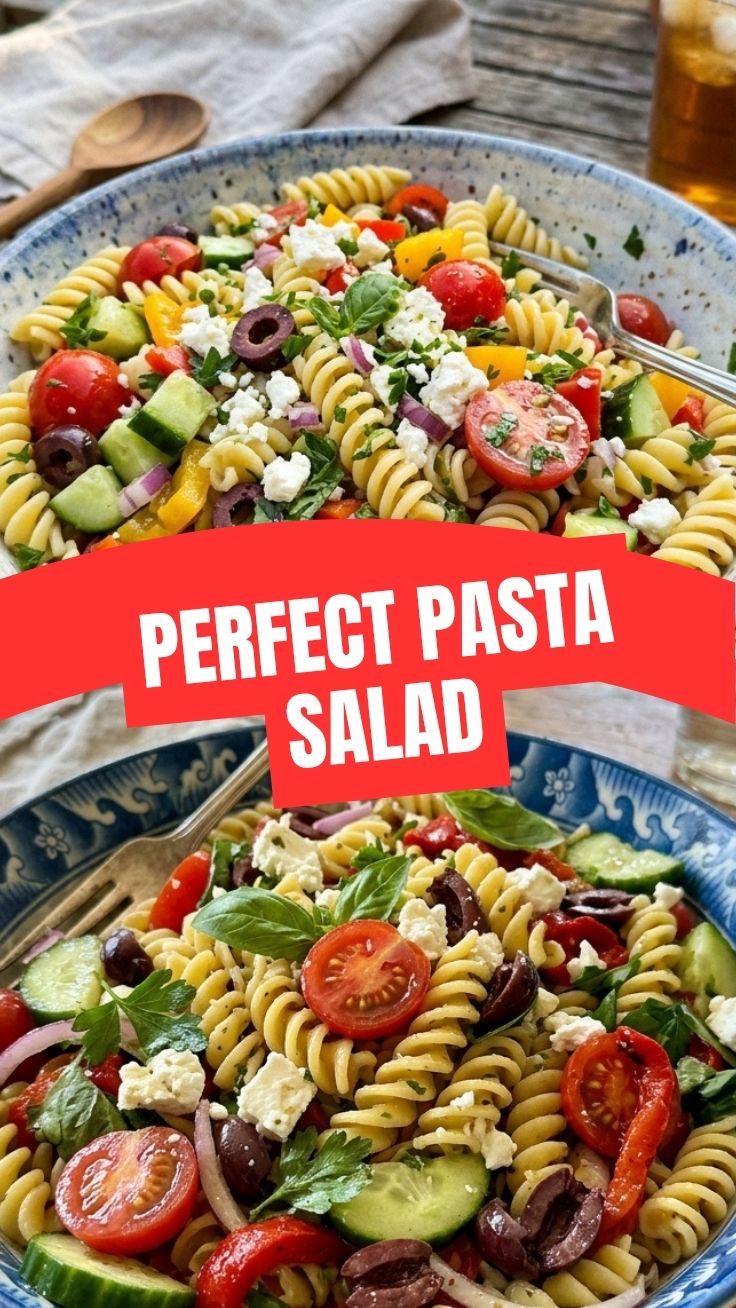
Total Time: 35 minutes active + 30 minutes chilling (optional but recommended)
| Stage | Time | Notes |
|——-|——|——-|
| Vegetable prep | 10 minutes | Dice, slice, and halve all produce |
| Pasta cooking | 10-12 minutes | Follow package directions for al dente |
| Dressing prep | 3 minutes | Whisk ingredients together |
| Assembly & toss | 5 minutes | Combine all components |
| Resting time | 30 minutes (optional) | Allows flavors to meld |
Pro Scheduling Tip: Cook the pasta while you chop vegetables to maximize efficiency. The pasta needs to cool completely before mixing, so plan ahead. This dish actually tastes better after resting, making it ideal for make-ahead meals.
Step-by-Step Instructions
1. Cook the Pasta: Bring a large pot of salted water to a rolling boil. Add pasta and cook according to package instructions until al dente. Pro tip: Set a timer for 1 minute less than the suggested time—the residual heat will finish cooking, preventing mushiness. Drain immediately and rinse under cold running water to stop the cooking process. Toss with 1 teaspoon of olive oil to prevent sticking.
2. Prepare the Dressing: In a small bowl or jar, combine olive oil, red wine vinegar, Dijon mustard, minced garlic, dried oregano, salt, and pepper. Whisk vigorously or shake in a sealed jar until emulsified. Taste test: Adjust acidity with a pinch of sugar if the vinegar feels too sharp.
3. Chop Vegetables: Dice cucumber, halve cherry tomatoes, chop bell pepper into ½-inch pieces, and thinly slice red onion. For the healthy summer pasta salad to maintain crunch, ensure cucumber pieces are uniform in size.
4. Combine Salad Ingredients: In a large mixing bowl, combine the cooled pasta, cherry tomatoes, cucumber, bell pepper, red onion, and Kalamata olives. Gently toss to distribute ingredients evenly.
5. Add Dressing & Cheese: Pour dressing over the salad and toss again until everything is well coated. Add crumbled feta cheese and fresh herbs. Gently fold—don’t stir—to avoid crushing the cheese.
6. Season & Adjust: Taste and adjust salt, pepper, or additional vinegar. For a brighter finish, squeeze half a lemon over the top. If you’re exploring other pasta salad recipes, this base dressing works beautifully with grilled chicken or roasted vegetables.
7. Chill (Optional): Cover and refrigerate for 30 minutes to allow flavors to meld. Serve cold or at room temperature.
Nutritional Benefits & Advantages
This healthy summer pasta salad is a powerhouse of nutrition. The whole-grain or legume pasta provides complex carbohydrates and fiber, which stabilize blood sugar levels. Cucumbers and bell peppers are rich in vitamin C and antioxidants, while tomatoes offer lycopene, a compound linked to heart health. The olive oil provides heart-healthy monounsaturated fats, and the feta adds calcium and protein without excessive calories.
Key Nutritional Stats (per serving, approx. 1.5 cups):
– Calories: ~350
– Protein: 12g
– Fiber: 6g
– Healthy Fats: 18g
– Vitamin C: 60% of Daily Value
This dish fits a Mediterranean diet, is vegetarian-friendly, and can easily be made vegan by omitting feta and adding chickpeas for protein.
Tips Variations & Cooking Advice
Flavor Variations
– Greek-Inspired: Add diced grilled chicken, sun-dried tomatoes, and swap basil for mint.
– Southwest Style: Use black beans, corn, avocado, and a lime-cumin dressing instead of red wine vinegar.
– Pesto Power: Replace the dressing with ½ cup of basil pesto and add cherry tomatoes and pine nuts.
Ingredient Swaps
– Pasta: Gluten-free (brown rice or quinoa pasta), chickpea pasta, or zucchini noodles (for keto).
– Dressing: Lemon juice instead of vinegar; avocado oil for a more neutral flavor.
– Cheese: Goat cheese, mozzarella pearls, or nutritional yeast (for vegan).
Cooking Advice
– Don’t overdress: Start with ½ the dressing and add more just before serving to prevent sogginess.
– Temperature matters: Serve at room temperature for fullest flavor; cold dulls taste.
– Batch prep: Chop vegetables 1-2 days ahead and store in airtight containers.
Common Mistakes to Avoid
– Cooking pasta too soft: Always cook al dente—the pasta will continue absorbing dressing as it sits.
– Not cooling pasta completely: Hot pasta wilts vegetables and melts cheese. Rinse with cold water immediately after draining.
– Using watery vegetables: Salting cucumbers 10 minutes before assembly and patting them dry removes excess moisture.
– Adding dressing too early: For best texture, add dressing no more than 2 hours before serving. Reserve extra dressing to revive leftovers.
– Skipping the seasoning: Salt the pasta water generously (like the sea), and taste the dressing before adding it.
Storage & Meal Prep Tips
Refrigeration: Store in an airtight container for up to 4 days. The salad will taste best on day 2 or 3 as flavors meld.
Freezing: Not recommended—vegetables become mushy and pasta loses texture upon thawing.
Reheating: Eat cold or allow to sit at room temperature for 15 minutes before serving. If you must warm it, microwave in 30-second bursts and stir.
Reviving Leftovers: Add a splash of olive oil or lemon juice to refresh the dressing. Toss with extra fresh herbs to bring back brightness.
Conclusion
This healthy summer pasta salad is more than a side dish—it’s a template for creative, nourishing meals that celebrate fresh produce. By mastering the balance of textures, flavors, and temperatures, you can adapt it endlessly. Whether you’re looking for quick lunch options or crowd-pleasing party fare, this recipe delivers. We encourage you to explore various pasta salad recipes to keep your menu exciting year-round. Try this version today, and share your twists in the comments below—we’d love to see how you make it your own!
FAQs
Q1: Can I use gluten-free pasta in this recipe?
Yes, absolutely! Brown rice or quinoa pasta works well. Cook it slightly less time than instructed, as gluten-free pasta can become mushy quickly.
Q2: How can I make this pasta salad dairy-free?
Skip the feta cheese or substitute with vegan feta, crumbled tofu marinated in lemon juice and salt, or nutritional yeast for a cheesy flavor.
Q3: What’s the best pasta shape for this salad?
Short shapes with ridges (rotini, fusilli, or farfalle) hold dressing and vegetables best. Avoid long strands like spaghetti.
Q4: Why is my pasta salad dry the next day?
Pasta absorbs dressing over time. Reserve 2-3 tablespoons of dressing to toss with leftovers, or add a splash of olive oil and vinegar before serving.
Q5: Can I add protein to make it a main dish?
Definitely! Grilled chicken, shrimp, chickpeas, or cubed tofu make excellent additions. Just fold them in gently when adding vegetables.
Best way to grow your healthy summer pasta salad
Ingredients
Equipment
Method
- Cook the pasta according to package directions until al dente, then drain and rinse with cold water to cool.
- In a large bowl, combine the cooked pasta, halved cherry tomatoes, diced cucumber, thinly sliced red onion, and diced bell pepper.
- In a separate small bowl, whisk together the olive oil, red wine vinegar, Dijon mustard, dried oregano, salt, and black pepper to create the dressing.
- Pour the dressing over the pasta and vegetable mixture, then toss gently to ensure all ingredients are evenly coated.
- Serve immediately, or chill in the refrigerator for at least 30 minutes to allow the flavors to meld, then serve cold.