The Ultimate Guide to Making a Perfect Caprese Salad at Home
Have you ever bitten into a slice of ripe tomato paired with creamy mozzarella and fresh basil, only to wonder why restaurant versions taste so much better? The secret isn’t expensive ingredients—it’s how you treat them. Preparing a Caprese Salad at home lets you control quality, ripeness, and seasoning, turning a simple dish into a vibrant masterpiece. In this guide, you’ll learn everything from selecting the best Caprese Salad components to mastering the layering technique. And because the heart of this salad lies in its dairy, we’ll explore why using genuine Italian Mozzarella elevates every bite. Whether you’re a novice or a seasoned cook, this data-driven post will help you achieve consistent, restaurant-quality results.
Ingredients & Kitchen Tools
For the Salad
– Fresh tomatoes (2 large or 3 medium): Use heirloom or beefsteak for best flavor; Roma works but is less juicy.
– Fresh mozzarella cheese: 8 oz (about 2 balls). Opt for Italian Mozzarella if available—it’s creamier and less rubbery.
– Fresh basil leaves: 10–12 leaves, preferably small ones for even bites.
– Extra virgin olive oil: 3 tablespoons, high-quality for drizzling.
– Balsamic vinegar (or balsamic glaze): 1 tablespoon for acidity; reduction is sweeter.
– Salt and black pepper: Flaky sea salt recommended.
– Optional: Pine nuts, avocado slices, or a sprinkle of oregano.
Kitchen Tools
– Sharp chef’s knife
– Cutting board
– Serving platter or shallow dish
– Small bowl (for dressing)
– Tongs or your hands for arranging
Prep Time & Cooking Schedule
– Prep time: 10 minutes
– Resting time: 15 minutes (to let flavors marry)
– Total time: 25 minutes
No cooking required—this is a no‑heat recipe. However, letting the salad sit at room temperature after assembly is crucial. The salt draws moisture from the tomatoes, which mixes with olive oil and balsamic, creating a natural dressing. Plan to serve within 30 minutes of resting for peak texture.
Step-by-Step Instructions
1. Slice the tomatoes and mozzarella
Cut tomatoes into ¼‑inch thick rounds. Slice the fresh mozzarella into similar thickness. If using Italian Mozzarella, note that it’s softer—use a gentle sawing motion to avoid crushing.
2. Layer the salad
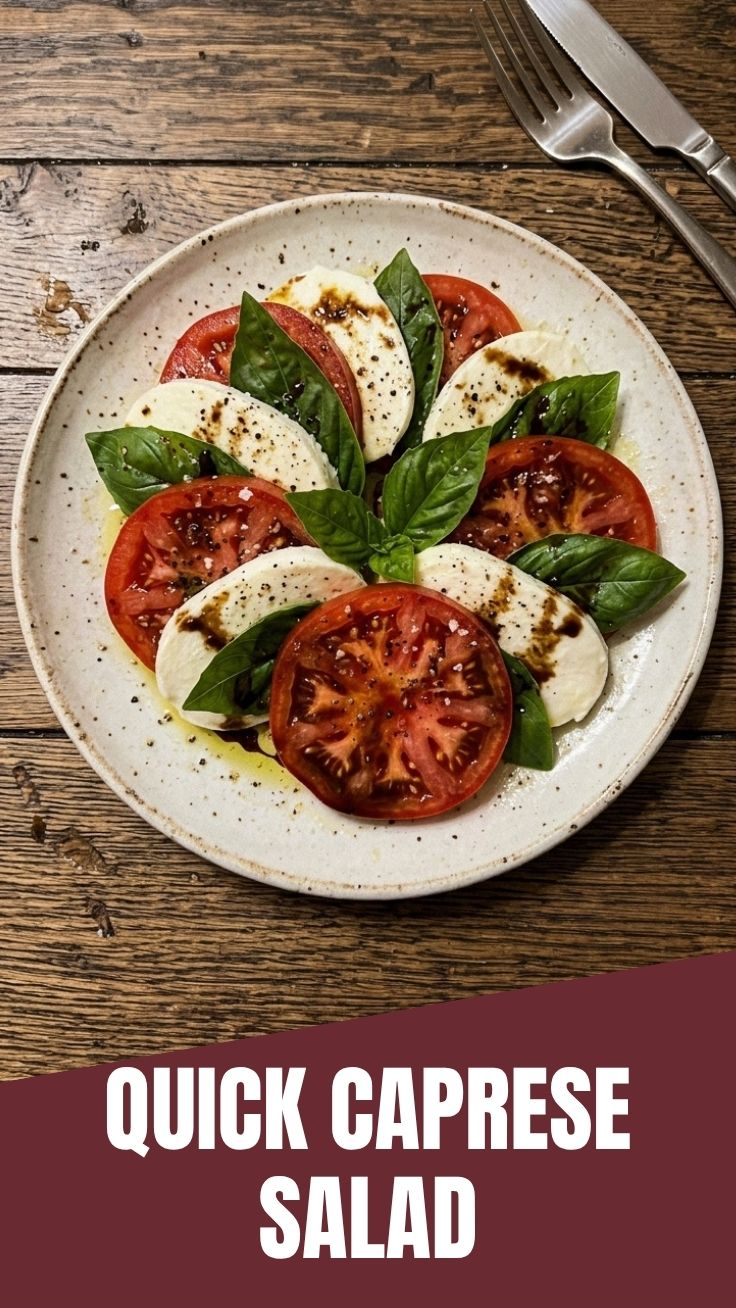
On a large platter, alternate tomato, mozzarella, and basil leaves in an overlapping pattern. Arrange in a single layer for even dressing.
3. Season immediately
Sprinkle flaky salt and freshly ground black pepper over the entire surface. This draws out tomato juices—a key step for a Caprese Salad that isn’t dry.
4. Drizzle with oil and balsamic
Pour extra virgin olive oil in a zigzag pattern, then add balsamic vinegar (or glaze). Use a light hand—you can always add more.
5. Rest before serving
Let the salad sit for 15 minutes at room temperature. During this time, the salt will macerate the tomatoes, and the Italian Mozzarella will soften slightly, melding with the oil. Do not refrigerate; cold dulls the flavors.
Temperature tip: Tomatoes should be at room temperature, not chilled. Mozzarella should be removed from the fridge 20 minutes before slicing.
Nutritional Benefits & Advantages
A classic Caprese Salad is naturally gluten-free, low in carbs, and packed with nutrients. Tomatoes provide lycopene (a powerful antioxidant) and vitamin C. Fresh mozzarella offers calcium and high-quality protein, while basil contributes vitamin K and anti-inflammatory compounds. Olive oil supplies heart-healthy monounsaturated fats. This dish is also keto-friendly and can be adapted for dairy-free diets using plant-based mozzarella. The balance of protein, fat, and fiber (from tomatoes) makes it a satisfying appetizer or light meal.
Tips Variations & Cooking Advice
– Flavor variations
Swap balsamic for a lemon–herb vinaigrette. Add arugula for peppery notes or prosciutto for saltiness.
– Ingredient swaps
Use burrata instead of mozzarella for extra creaminess. Try yellow or green tomatoes for visual variety.
– Portion changes
Serve as a side salad (half the mozzarella) or as a main (double the protein and add quinoa).
– Dietary adaptations
Dairy-free: Use cashew-based mozzarella. Low-sodium: Skip salt and rely on balsamic reduction.
– Cooking method
Grill tomatoes and mozzarella lightly for a warm version—just 1–2 minutes per side.
Common Mistakes to Avoid
– Overlapping too thickly – prevents even seasoning and dressing absorption. Keep layers single.
– Using cold ingredients – kills aroma and mouthfeel. Always temper.
– Skipping the resting step – the salad remains dry and bland.
– Drowning in balsamic – acidic overload. Start with 1 tablespoon, adjust.
– Slicing mozzarella too thin – it falls apart. Aim for ¼‑inch thickness.
Storage & Meal Prep Tips
– Refrigeration: Store leftovers in an airtight container for up to 24 hours. Note that tomatoes will release water, making the salad soggy.
– Freezing: Not recommended—mozzarella and tomatoes become mushy.
– Reheating: Not applicable; serve cold or at room temp. To revive, drain excess liquid, add fresh basil, and re‑drizzle with oil.
– Meal prep: Slice ingredients separately and assemble just before serving. Keep mozzarella and tomatoes in separate containers.
Conclusion
Mastering a Caprese Salad is about respecting simplicity—choosing ripe tomatoes, high-quality dairy, and giving the dish time to meld. The interplay of fresh basil, tangy balsamic, and creamy Italian Mozzarella creates a timeless summer favorite. Whether you serve it as a starter or a light lunch, the key is to let the ingredients shine. Try this recipe tonight, and share your photos in the comments. For more quick Italian-inspired dishes, browse our related posts.
FAQs
1. Can I make Caprese Salad ahead of time?
Yes, but assemble no more than 2 hours before serving. Store covered at room temperature—refrigeration dulls flavor.
2. What if I can’t find fresh mozzarella?
Use burrata or even halloumi (grilled). Avoid pre-shredded mozzarella—it lacks moisture.
3. How do I fix a watery caprese salad?
Slice tomatoes, salt them lightly, and let them drain on paper towels for 10 minutes before assembling.
4. Is balsamic glaze necessary?
No, but it adds sweetness and reduces acidity. You can substitute with balsamic reduction or leave it out.
5. Can I use dried basil instead of fresh?
Fresh basil is essential for texture and flavor. Dried basil won’t provide the same aromatic kick.
Proven way to grow 3 Caprese Salad
Ingredients
Equipment
Method
- Slice the ripe tomatoes into 1/4-inch thick rounds.
- Also slice the fresh mozzarella ball into 1/4-inch thick rounds.
- Arrange the sliced tomatoes and mozzarella alternatingly on a serving platter, overlapping them slightly.
- Tuck fresh basil leaves in between the tomato and mozzarella slices.
- Drizzle generously with extra virgin olive oil and, if desired, balsamic glaze.
- Season with salt and freshly ground black pepper to taste.
- Serve immediately as a refreshing appetizer, side dish, or light lunch.