Why You Should Make Falafel (Homemade) Today
What if you could recreate that crispy, golden-brown street food magic in your own kitchen, with fresher ingredients and zero guesswork? Preparing Falafel (Homemade) at home transforms a takeout indulgence into a rewarding culinary project. You gain total control over texture, spice levels, and oil quality, while unlocking deeper flavors than any pre-made mix can offer. The secret lies in using dried Chickpea rather than canned—this single swap elevates the entire dish. Falafel (Homemade) doesn’t require hard-to-find equipment or advanced skills; with a food processor and about 30 minutes of active work, you’ll produce a batch that rivals your favorite Mediterranean spot. Let’s break down exactly how to achieve that perfect balance of crunchy exterior and fluffy, herb-flecked interior.
Ingredients & Kitchen Tools
For the falafel mixture:
– 1 cup dried chickpeas (not canned—canned ones turn the texture mushy)
– ½ cup fresh parsley, roughly chopped
– ¼ cup fresh cilantro
– 1 small onion, quartered
– 4 garlic cloves
– 1 teaspoon ground cumin
– 1 teaspoon ground coriander
– ½ teaspoon baking powder (adds lightness)
– 1 teaspoon salt
– ½ teaspoon black pepper
– 2–3 tablespoons all-purpose flour or chickpea flour (binder; use gluten-free if needed)
For frying:
– Vegetable oil, about 2 inches deep (or avocado oil for higher smoke point)
Kitchen tools:
– Food processor
– Large mixing bowl
– Deep frying pan or Dutch oven
– Slotted spoon or spider skimmer
– Paper towels for draining
– Cookie scoop (optional, for uniform balls)
Optional substitutions: Replace parsley with mint for a brighter profile; swap cilantro for more parsley if you dislike cilantro’s soapy notes.
Prep Time & Cooking Schedule
Total timeline: 24 hours (mostly hands-off)
– Soaking time: 8–12 hours (overnight)
– Active prep: 15 minutes
– Chilling time: 30 minutes (helps the balls hold shape)
– Cooking time: 8–10 minutes per batch
Plan ahead: Soak the chickpeas the night before. If you’re short on time, a quick soak method works—bring chickpeas and water to a boil, remove from heat, cover, and let sit for 1 hour. Still far better than canned. After cooking, the falafel stay crispy for about 2 hours at room temperature, making them meal-prep friendly.
Step-by-Step Instructions
1. Soak the chickpeas. Place 1 cup dried chickpeas in a large bowl, cover with 3 inches of cold water, and let sit overnight (or use the quick soak above). They will double in size. Drain and rinse thoroughly before using.
2. Blend the base. Add drained chickpeas, parsley, cilantro, onion, and garlic to a food processor. Pulse in short bursts until the mixture resembles coarse sand. Avoid over-processing into a paste—you want small, visible chickpea bits for texture.
3. Season and bind. Transfer the mixture to a large bowl. Stir in cumin, coriander, salt, pepper, baking powder, and flour. Mix with your hands until homogenous. Cover and refrigerate for 30 minutes—this firms the mixture so patties don’t fall apart during frying.
4. Shape the falafel. Using a cookie scoop or your hands, form 1½-inch balls (or slightly flattened patties for more even cooking). Press gently to compact. Pro tip: If the mixture sticks to your hands, lightly oil your palms.
5. Heat the oil. Pour vegetable oil into a deep pan until it reaches 2 inches. Heat to 350°F (175°C)—use a thermometer for accuracy. Too low, and falafel absorb oil; too high, they burn outside before cooking through.
6. Fry in batches. Gently lower 5–6 falafel into the hot oil. Fry for 3–4 minutes, turning occasionally, until deep golden brown all over. Remove with a slotted spoon and drain on paper towels. Let oil return to temperature between batches.
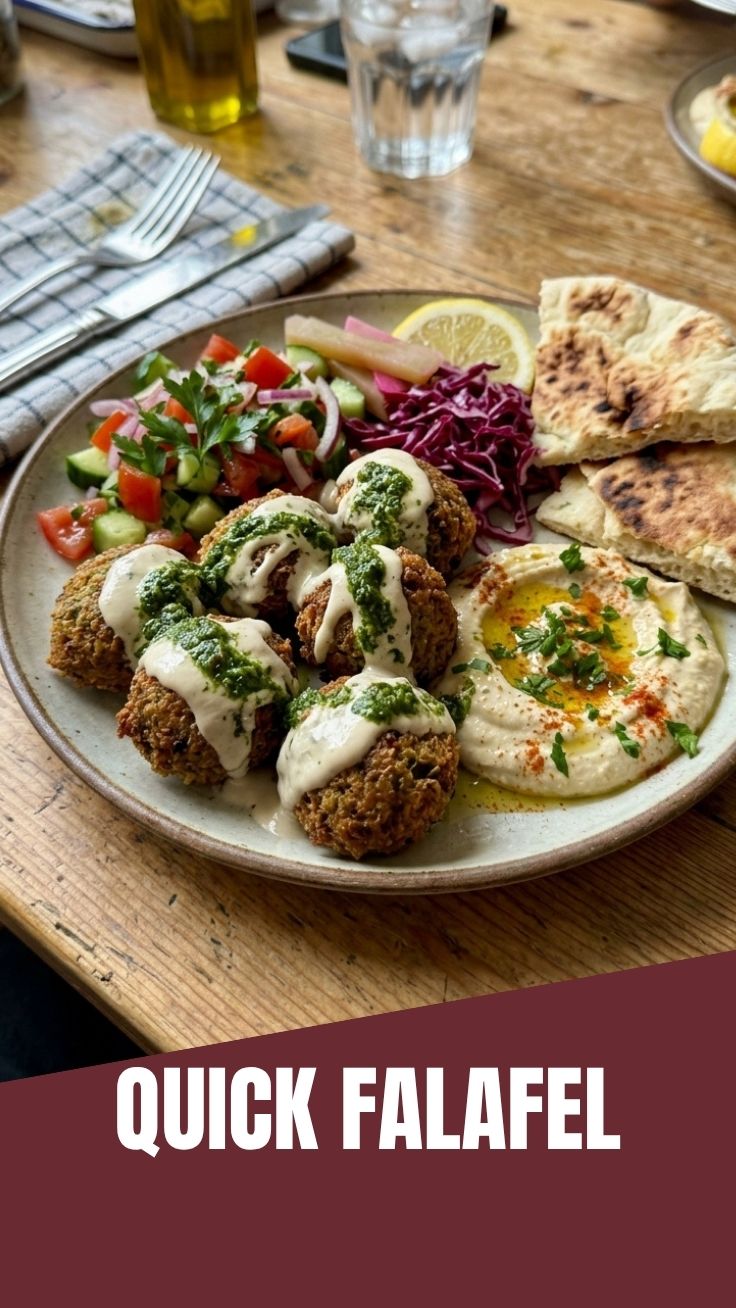
7. Serve immediately. Crispy Falafel (Homemade) pairs perfectly with warm pita, tahini sauce, and fresh veggies. The Chickpea base delivers a nutty, satisfying bite that stays tender inside.
Nutritional Benefits & Advantages
This dish packs a powerhouse punch. Chickpeas provide approximately 15 grams of protein and 12 grams of fiber per cooked cup, supporting sustained energy and digestive health. Falafel (Homemade) also delivers iron, folate, and manganese. Because you control the oil and avoid preservatives, the homemade version contains significantly less sodium and saturated fat than commercial alternatives. The parsley and cilantro add antioxidants and vitamin C. If you bake instead of fry, each patty contains roughly 80 calories—an excellent lean protein option for plant-based eaters.
Tips Variations & Cooking Advice
– Flavor shifts: Add ½ teaspoon of smoked paprika for a subtle heat, or a pinch of cayenne for spice.
– Baking alternative: Preheat oven to 375°F, brush patties with oil, and bake 12–15 minutes per side until golden. Texture will be less crunchy but still satisfying.
– Air fryer method: Cook at 375°F for 8–10 minutes, flipping halfway. Spritz with oil for best browning.
– Dietary adaptations: Use chickpea flour instead of wheat flour for gluten-free falafel. For oil-free, skip the oil spray and bake on parchment—the exterior will be softer but the flavor remains bold.
– Portion changes: Double the recipe and freeze half (see Storage section). Great for weekly meal prep or impromptu guests.
Common Mistakes to Avoid
– Using canned chickpeas. They contain too much moisture, causing falafel to fall apart in the oil. Always start with dried, soaked chickpeas.
– Over-processing the mixture. A smooth paste results in dense, gummy falafel. Keep it coarse so the balls stay light.
– Skipping the chilling step. Without 30 minutes in the fridge, the mixture lacks cohesion and will disintegrate during frying.
– Oil temperature swings. Frying too cold makes greasy falafel; too hot burns the exterior. Invest in a thermometer and let oil recover between batches.
– Crowding the pan. Overfilling lowers oil temperature. Fry in small batches to maintain consistent heat.
Storage & Meal Prep Tips
– Refrigeration: Store cooked falafel in an airtight container lined with paper towels for up to 4 days. Reheat in a 350°F oven for 5–6 minutes to restore crispiness.
– Freezing uncooked mixture: Shape falafel balls and freeze on a baking sheet until solid (about 1 hour). Transfer to a zip-top bag for up to 3 months. Fry directly from frozen—add 1–2 minutes to cook time.
– Freezing cooked falafel: Cool completely, place in a single layer on a baking sheet, freeze until firm, then transfer to a freezer bag. Reheat in the oven or air fryer (not the microwave, which makes them soggy).
– Meal prep plan: Soak chickpeas Sunday night, prep mixture Monday morning, shape and refrigerate until dinner. Cook half, freeze the rest. You’ll have falafel ready in under 20 minutes on busy weeknights.
Conclusion
Mastering Falafel (Homemade) is one of the most rewarding kitchen skills you can develop. You control every spice, every texture, and every ingredient—especially the Chickpea foundation that makes this dish so uniquely satisfying. The recipe rewards patience: a proper soak, a coarse grind, and careful oil temperature deliver falafel that are crispy, fluffy, and deeply flavorful. Once you taste the difference, you’ll never reach for a boxed mix again. Try this method with your favorite pita, pickled turnips, and a drizzle of tahini, then share your results in the comments—we’d love to hear how your batch turned out.
FAQs
1. Can I use canned chickpeas in a pinch?
Technically yes, but the texture will be considerably denser and more prone to falling apart. If you must, rinse and dry them very well, then add 1 extra tablespoon of flour and ½ teaspoon baking powder to compensate for excess moisture.
2. Why did my falafel break apart in the oil?
Most likely because the mixture wasn’t chilled long enough, or you used too much moisture (canned chickpeas or over-processed greens). Chill for at least 30 minutes and ensure your chickpeas are thoroughly drained.
3. Can I make this recipe without a food processor?
You can mash the chickpeas by hand with a potato masher, then finely mince the herbs and onion. The texture will be chunkier and less uniform, but the flavor remains delicious. Expect a more rustic result.
4. How do I adjust spices for a milder version?
Reduce cumin and coriander to ½ teaspoon each, and omit any optional cayenne. Add a pinch of sumac or lemon zest for brightness without heat. The chickpea flavor will shine through nicely.
5. How long does homemade falafel last in the fridge?
Cooked falafel stays fresh for 3–4 days when stored in an airtight container with paper towels to absorb moisture. Reheat in the oven or air fryer—never the microwave—to maintain the crispy exterior.
Proven way to grow perfect Falafel (Homemade) in 3 steps. Falafel (Homemade)
Ingredients
Equipment
Method
- Combine all ingredients except the oil in a food processor and pulse until finely minced but not pureed, scraping down the sides as needed. Transfer the mixture to a large bowl, cover, and refrigerate for at least 30 minutes.
- Heat the vegetable oil in a deep fryer or heavy-bottomed pot to 350°F (175°C). Form the falafel mixture into small balls or patties, then carefully drop them into the hot oil.
- Fry the falafel for 3-5 minutes, or until deeply golden brown and cooked through, turning occasionally. Remove with a slotted spoon and drain on paper towels before serving hot.