The Ultimate Guide to Perfectly Blackened Salmon at Home
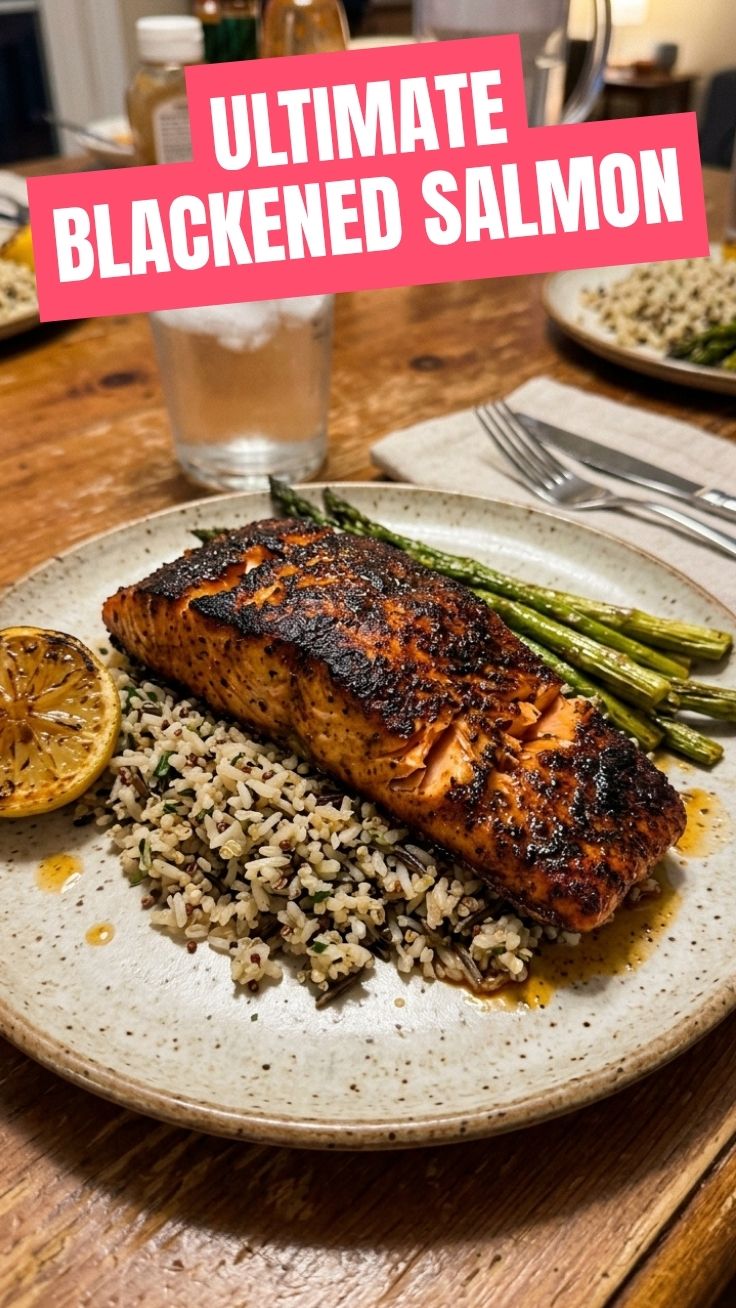
Have you ever craved that crispy, smoky crust of restaurant-quality blackened salmon but hesitated to try it at home? You’re not alone. The secret lies in a sizzling-hot cast iron skillet, a potent spice blend, and perfect timing. Whether you’re aiming for a classic Blackened Salmon or a spicier Cajun Salmon, mastering this technique unlocks a fast, healthy, and restaurant-worthy meal in under 20 minutes. Preparing blackened salmon at home not only saves money but also lets you control the heat and freshness. Today we’ll walk through every step, from seasoning to serving, ensuring your Cajun salmon turns out perfectly charred and flaky every time.
—
Ingredients & Kitchen Tools
For the blackened seasoning (makes ~3 tablespoons):
– 1 tbsp smoked paprika – for color and depth
– 1 tsp garlic powder
– 1 tsp onion powder
– 1 tsp dried thyme
– 1 tsp dried oregano
– ½ tsp cayenne pepper – adjust for heat
– ½ tsp black pepper
– ½ tsp salt (or to taste)
– Pinch of white pepper (optional, adds earthiness)
For the salmon:
– 4 (6-ounce) salmon fillets, skin-on or skinless (skin helps protect the flesh)
– 2 tbsp melted butter or avocado oil (butter gives richer flavor)
Kitchen tools:
– Cast iron skillet (heavy-bottomed preferred)
– Fish spatula (thin, flexible)
– Paper towels (for drying fillets)
– Tongs
– Small bowl for seasoning
– Instant-read thermometer (optional but helpful)
Substitutions:
– No dried thyme/oregano? Use 1 tsp Italian seasoning instead
– Cayenne too hot? Replace with ½ tsp chipotle powder for smoky mild heat
– Need dairy-free? Substitute ghee or avocado oil for butter
—
Prep Time & Cooking Schedule
| Stage | Time |
|——-|——|
| Seasoning & resting | 10 minutes (5 min rest after seasoning) |
| Pan heating | 5–7 minutes |
| Cooking (per batch) | 6–8 minutes total |
| Resting after cooking | 2–3 minutes |
| Total active time | ~20 minutes |
Planning tip: The pan must be screaming hot (smoking point of oil/butter) before the fish hits the surface. Prep seasoning and dry fillets while the pan preheats. If cooking multiple batches, allow the pan to reheat between batches.
—
Step-by-Step Instructions
1. Dry the salmon thoroughly – Pat fillets dry with paper towels. Moisture is the enemy of a good crust. Leave skin on if you want easy flipping; remove skin if you prefer all-seasoning edges.
2. Make the blackening spice – Combine all dry spices in a small bowl. This blend is the heart of both blackened salmon and Cajun salmon – use it generously.
3. Season the fillets – Brush each fillet with melted butter (or oil). Then coat every surface (including sides) with the spice mixture. Press gently to adhere. Let rest 5 minutes at room temperature.
4. Heat the skillet – Place cast iron over high heat for 5–7 minutes until a water droplet evaporates instantly. Add 1 tbsp butter/oil and swirl to coat. The pan should just begin to smoke.
5. Sear flesh-side down first – Place fillets skin-side up (if skin-on) or presentation-side down. Press gently with a spatula for 5 seconds. Cook undisturbed for 3–4 minutes. Look for a deep brown crust forming at the edges.
6. Flip carefully – Using a fish spatula, flip the fillet. Do not force it – if it resists, cook 30 more seconds. Cook skin-side down (or second side) for 2–3 minutes for medium doneness (125°F internal). For well-done, cook 4 minutes.
Temperature cue: The flesh should be opaque on the outside and slightly translucent in the center. Instant-read thermometer inserted sideways at thickest part: 120–125°F for medium, 130°F for medium-well.
7. Rest and serve – Transfer to a plate, tent loosely with foil, and rest 2 minutes. This finishes cooking gently and redistributes juices. Serve immediately with lemon wedges and steamed greens.
✅ Pro tip: If you want an even crispier crust, finish the fish under a broiler for 1 minute after flipping. But watch carefully – the spices can burn.
—
Nutritional Benefits & Advantages
Salmon is a powerhouse of omega-3 fatty acids (EPA and DHA), which support heart and brain health. A single 6-ounce fillet provides:
– ~35g high-quality protein
– 60% daily value of vitamin D
– 100%+ daily value of selenium (antioxidant)
– B vitamins for energy metabolism
The blackening spices (paprika, cayenne, oregano) add antioxidants like capsaicin and flavonoids with anti-inflammatory properties. Cooking in butter adds vitamin A and healthy saturated fats that aid nutrient absorption. Unlike heavy creamy sauces, this dry-rub method keeps the dish low in added sugars and refined carbs, making it ideal for keto, paleo, and gluten-free diets.
—
Tips, Variations & Cooking Advice
Flavor variations:
– Lemon-herb blackened salmon – Add 1 tsp lemon zest and 2 tbsp fresh chopped dill to the spice mix.
– Smoky maple blackened salmon – Stir 1 tbsp maple syrup into the melted butter before brushing.
– Extra spicy Cajun salmon – Increase cayenne to 1 tsp and add ½ tsp chipotle powder.
Alternative cooking methods:
– Grill – Preheat to high, oil grates, cook 4 minutes per side over direct heat.
– Oven broil – Place seasoned fillets on a foil-lined baking sheet, broil 6–8 minutes (watch for burning).
– Air fryer – 380°F for 8–10 minutes, no preheating needed (but crust will be less intense).
Dietary adaptations:
– Gluten-free: The spice blend is naturally GF. Check paprika if you’re celiac (some brands have cross-contact).
– Dairy-free: Use avocado oil instead of butter.
– Lower sodium: Reduce salt to ¼ tsp and add ½ tsp lemon pepper.
Portion changes: For larger fillets (8 oz), add 1 minute per side. For thinner tail pieces, reduce cooking time by 1 minute per side.
—
Common Mistakes to Avoid
❌ Pan not hot enough – Results in pale, steamed fish instead of a blackened crust. Fix: Heat pan 5+ minutes and test with a drop of water.
❌ Overcrowding the pan – Fillets steam instead of sear. Fix: Cook in batches. If you must crowd, use a larger pan or increase heat slightly.
❌ Skipping the drying step – Wet skin = no crust. Fix: Pat dry with paper towels 2–3 times.
❌ Flipping too early – The crust tears and sticks. Fix: Use a thin spatula and gently lift an edge to check color. Wait until deeply browned.
❌ Overcooking – Dry, mealy salmon. Fix: Use an instant-read thermometer and remove at 125°F. Carryover cooking adds 5°F during rest.
—
Storage & Meal Prep Tips
Refrigerator: Store leftover blackened salmon in an airtight container for up to 3 days. Place a paper towel under the fillet to absorb excess moisture. Reheat gently: 30 seconds in the microwave (cover with damp paper towel), or 5 minutes in a 300°F oven.
Freezer: Cooked salmon freezes well for up to 2 months. Wrap individually in plastic wrap then foil. Thaw overnight in the fridge. Reheat in a skillet with a splash of water to restore moisture.
Meal prep: Make the spice blend in bulk (store in an airtight jar for up to 6 months). Season and cook salmon fillets on Sunday, then use for salads, grain bowls, or wraps throughout the week. Do not reheat more than once.
—
Conclusion
You now have the tools to create restaurant-quality blackened salmon with a crisp, spicy crust and moist, flaky interior – all from your own kitchen. Whether you stick to the classic version or experiment with a bold Cajun salmon twist, the technique is the same: dry the fish, heat the pan until smoking, and don’t rush the sear. The payoff is a high-protein, flavorful meal ready in 20 minutes. I’d love to hear how your batch turns out – drop a comment below or tag your photos. And if you’re hungry for more coastal-inspired recipes, check out our guides for grilled salmon and one-pan lemon garlic shrimp.
—
FAQs
Can I use frozen salmon?
Yes, but thaw completely in the refrigerator overnight. Pat extremely dry before seasoning – frozen salmon releases more moisture during cooking.
Why did my spice mixture burn?
The pan was too hot, or the spices were left on too long before cooking. Use high heat, but reduce to medium-high after flipping. Also, do not pre-season more than 10 minutes ahead.
Can I make this without a cast iron skillet?
Yes. Use a stainless steel or carbon steel pan. Avoid nonstick for best crust – it doesn’t get hot enough on high heat. If using nonstick, reduce heat to medium-high and cook 1 minute longer per side.
What’s the best salmon for blackening?
King (chinook) or coho salmon for rich flavor and high fat content. Atlantic salmon works well too. Avoid sockeye if you prefer medium doneness – it leans leaner and cooks faster.
How do I keep the kitchen from smoking out?
Open a window, turn on the exhaust hood, and use an oil with a high smoke point (avocado oil or clarified butter). If smoke is excessive, lower heat just a touch – the pan should be hot but not producing continuous heavy smoke.
Proven way to grow a perfect Blackened Salmon meal
Ingredients
Equipment
Method
- Pat dry the salmon fillets with paper towels to ensure a crispy skin when cooked.
- Generously coat each salmon fillet with the blackening seasoning on all sides.
- Heat olive oil in a heavy-bottomed skillet over medium-high heat until shimmering.
- Carefully place the seasoned salmon fillets, skin-side down, in the hot skillet.
- Cook for 4-6 minutes per side, or until the salmon is opaque throughout and flakes easily with a fork.
- Remove the salmon from the skillet and let it rest for a few minutes before serving.