Why You Should Master Homemade Biscotti (Italian Almond) for Your Next Coffee Break
Have you ever bitten into a store-bought biscotti only to find it crumbly, bland, or worse—stale? There’s nothing like the authentic crunch and rich almond flavor of a perfectly baked Biscotti (Italian Almond) made in your own kitchen. Preparing this classic Italian treat at home not only saves money but also lets you control every ingredient, from the quality of almonds to the sweetness level. The best part? You can pair it with your morning espresso or afternoon tea for an elevated experience. And if you’ve been hunting for a reliable almond biscotti recipe, you’ve just found one that delivers consistent, bakery-worthy results every time. Let’s dive into the art of making these twice-baked delights from scratch.
—
Ingredients & Kitchen Tools
Ingredients
– All-purpose flour (2¼ cups) – Provides structure; can substitute 1:1 gluten-free flour blend for a gluten-free version.
– Granulated sugar (¾ cup) – Adds sweetness and helps create that signature crisp texture.
– Baking powder (1 teaspoon) – Ensures slight rise during first bake.
– Salt (¼ teaspoon) – Balances sweetness and enhances almond flavor.
– Eggs (3 large, at room temperature) – Bind the dough; room-temp eggs incorporate better.
– Almond extract (1 teaspoon) – Essential for that authentic Italian almond profile.
– Vanilla extract (1 teaspoon) – Rounds out the flavor.
– Whole almonds (1 cup, raw, unskinned) – Provide crunch and nuttiness. Toast them lightly for deeper flavor.
– Butter (2 tablespoons, melted) – Optional but adds tenderness; omit for dairy-free version.
Kitchen Tools
– Mixing bowls (medium and large)
– Whisk or electric mixer
– Rubber spatula
– Baking sheet (lined with parchment paper)
– Sharp knife (for slicing baked logs)
– Cooling rack
– Measuring cups and spoons
—
Prep Time & Cooking Schedule
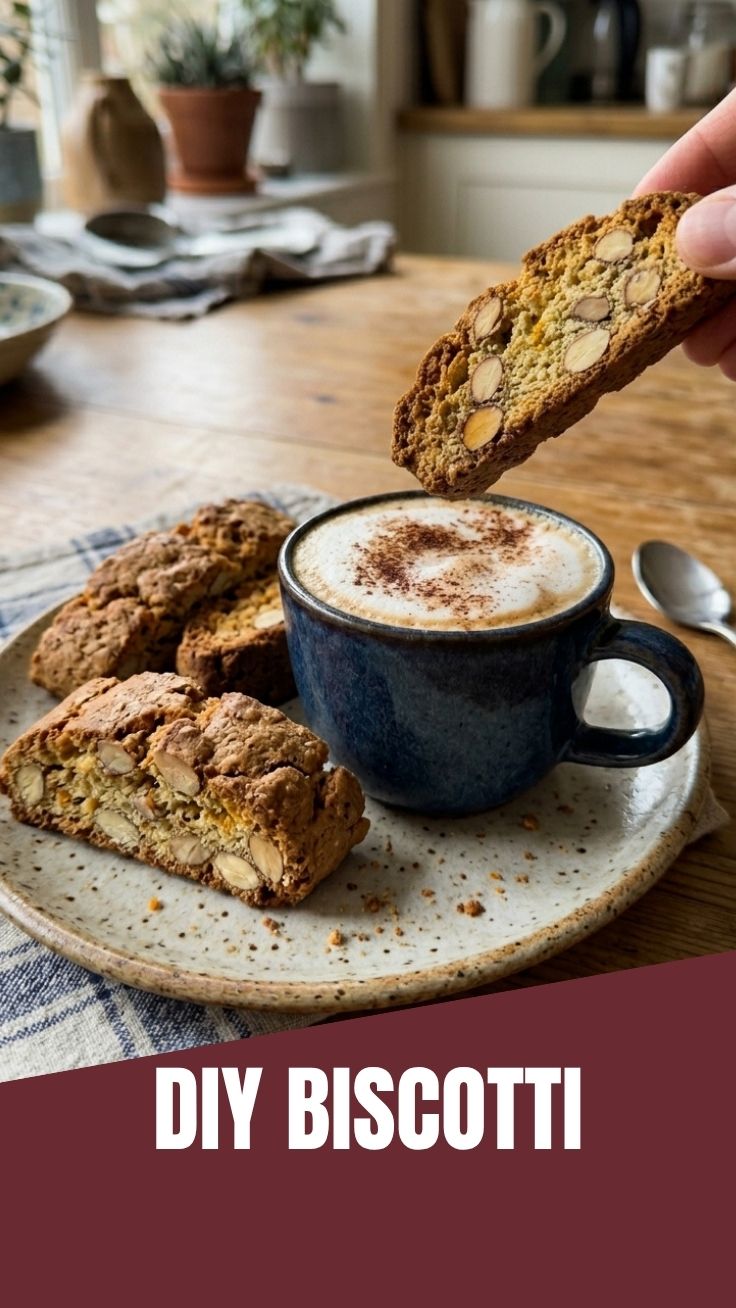
– Prep Time: 20 minutes
– First Bake: 25–30 minutes at 350°F (175°C)
– Cooling Time: 10 minutes (for logs before slicing)
– Second Bake: 12–15 minutes per side at 325°F (163°C)
– Total Time: About 1 hour 20 minutes
Planning tip: Biscotti actually taste better the next day, so make them a day ahead if time allows. The second bake dries them perfectly for long-term storage.
—
Step-by-Step Instructions
1. Preheat and prep. Set oven to 350°F (175°C). Line a baking sheet with parchment paper.
2. Dry ingredients. In a medium bowl, whisk flour, baking powder, and salt.
3. Wet ingredients. In a large bowl, beat eggs and sugar until thick and pale (about 3 minutes). Stir in melted butter, almond extract, and vanilla extract.
4. Combine. Gradually add dry ingredients to wet mixture, folding gently until a soft dough forms. Avoid overmixing.
5. Add almonds. Fold in whole almonds until evenly distributed.
6. Shape into logs. Divide dough in half. On floured hands, shape each half into a 12-inch log, about 2 inches wide. Place logs 3 inches apart on the baking sheet.
7. First bake. Bake for 25–30 minutes, until logs are golden and firm to the touch. Remove and let cool on the pan for 10 minutes.
8. Slice. Using a sharp serrated knife, cut logs diagonally into ½-inch slices. For the best texture, slice while logs are still slightly warm—this prevents crumbling.
9. Second bake. Reduce oven to 325°F (163°C). Arrange slices cut-side down on the baking sheet. Bake 12 minutes, flip, and bake another 12–15 minutes, until crispy and lightly golden.
10. Cool completely on a wire rack. The cookies will continue to crisp as they cool.
Pro tip: When making this Biscotti (Italian Almond), watch the dough moisture—if it feels too sticky, add a tablespoon of flour. Conversely, if too dry, add a teaspoon of milk. And if you follow this almond biscotti recipe, the second bake is crucial: underbaking leads to soft interiors, while overbaking makes them rock-hard. Aim for a dry, crunchy center with a slight give.
—
Nutritional Benefits & Advantages
Biscotti are naturally lower in fat than many cookies because they contain minimal butter. Almonds, the star ingredient, are packed with vitamin E, magnesium, and healthy monounsaturated fats that support heart health. The twice-baked process reduces moisture, making them shelf-stable without preservatives. Each biscotto (about 1½ inches) contains roughly 80–100 calories, making them a moderate treat. Plus, the high protein from eggs provides lasting satiety—perfect with a cup of coffee.
—
Tips, Variations & Cooking Advice
– Flavor twist: Swap almonds for pistachios, hazelnuts, or dried cranberries. Add 1 teaspoon orange zest for a citrus note.
– Chocolate dip: Melt dark chocolate and dip one end of each cooled biscotto for a decadent finish.
– Gluten-free: Use a 1:1 gluten-free baking flour blend (with xanthan gum) and reduce first bake by 2 minutes.
– Vegan alternative: Substitute each egg with a flax egg (1 tablespoon ground flax + 3 tablespoons water) and use coconut oil instead of butter.
– Spiced version: Add ½ teaspoon ground cinnamon and ¼ teaspoon nutmeg for warm holiday flavor.
– Slicing hack: For cleaner cuts, freeze the baked logs for 15 minutes before slicing.
—
Common Mistakes to Avoid
| Mistake | Solution |
|———|———-|
| Dough too sticky to shape | Chill dough for 15 minutes or add a little extra flour |
| Slices crumbling during cutting | Use a serrated knife and cut while logs are still warm (not hot) |
| Biscotti too hard after second bake | Reduce second bake time by 2–3 minutes; check at minute 10 |
| Uneven browning | Rotate baking sheet halfway through each bake |
| Bland flavor | Always toast almonds lightly before folding in; don’t skip the almond extract |
—
Storage & Meal Prep Tips
– Room temperature: Store in an airtight container for up to 3 weeks. The drier they are, the longer they last.
– Freezing: Biscotti freeze beautifully. Place cooled cookies in a freezer bag with parchment between layers. Freeze for up to 3 months.
– Reheating: To revive crispness, bake frozen biscotti at 300°F (150°C) for 5 minutes. No need to thaw.
– Meal prep: Double the batch and keep one log in the freezer unbaked. Slice and bake directly from frozen (add 3 minutes to first bake time).
—
Conclusion
Mastering homemade biscotti opens a world of crunchy, dunkable snacking that far surpasses anything from a package. By following this guide, you’ve learned how to achieve that perfect balance of crispness and flavor—thanks to the careful second bake and quality ingredients. Whether you enjoy it as a Biscotti (Italian Almond) with your latte or gift it during the holidays, this recipe is a keeper. And if this almond biscotti recipe has inspired you, don’t forget to share your results—tag friends and explore more espresso-pairing ideas on our site. Happy baking!
—
FAQs
Q1: Can I use almond flour instead of all-purpose flour?
A: Not directly—almond flour lacks gluten and will make the dough too oily. If you need a grain-free option, try a blend of almond flour and coconut flour (use 2:1 ratio) but expect a denser texture.
Q2: Why did my biscotti turn out soft instead of crunchy?
A: Most likely the second bake was too short. Bake until the cookies are dry and lightly golden around the edges. Also, store them in an airtight container after completely cooling.
Q3: Can I substitute sugar with a sugar alternative?
A: Yes, but results vary. Erythritol or monk fruit sweetener works for the first bake, but they don’t caramelize the same way, so the texture may be slightly less crisp. Avoid liquid sweeteners.
Q4: How do I make biscotti without eggs?
A: Use flax eggs (1 tablespoon ground flax + 3 tablespoons water per egg) or aquafaba (3 tablespoons per egg). The dough will be more fragile—handle gently.
Q5: My biscotti logs spread too much during the first bake. Why?
A: The oven might be too low, or the dough was too wet. Ensure your baking powder is fresh and chill the logs for 20 minutes before baking to minimize spread.
Biscotti (Italian Almond)
Ingredients
Equipment
Method
- Prepare your planting area with well-draining soil and ensure it receives plenty of sunlight.
- Plant the Biscotti (Italian Almond) seeds about 1 inch deep and space them 6 inches apart.
- Water the seeds immediately after planting and keep the soil consistently moist.
- Once seedlings emerge, thin them to 12 inches apart to allow for proper growth.
- Provide support as the plants grow and harvest the almonds when the outer hull begins to split.