Why You Need to Make This Chilled Soup from Andalusia
Is there anything more refreshing than a bowl of cold tomato soup on a sweltering summer day? If you’ve never tried authentic Gazpacho (Classic), you’re missing one of Spain’s most iconic culinary gifts. This no-cook, raw vegetable soup originated in Andalusia and has become a global staple for health‑conscious food lovers. Preparing it at home is not only economical—it allows you to control the quality of ingredients, adjust acidity, and avoid the preservatives found in store‑bought versions. Whether you’re new to Spanish recipe traditions or a seasoned cook, blending your own gazpacho delivers a vibrant, nutrient‑packed meal in minutes.
—
Ingredients & Kitchen Tools
For the Gazpacho
– Ripe Roma tomatoes (1 kg) – The backbone of the soup; choose deep‑red, in‑season tomatoes for maximum sweetness.
– English cucumber (1 medium) – Provides cooling freshness; peeling is optional but reduces bitterness.
– Red bell pepper (1 large) – Adds fruity notes and a touch of sweetness.
– Garlic (1–2 cloves) – Use less for a mild version, more for punch.
– Extra‑virgin olive oil (¼ cup) – Emulsifies the soup and adds richness; use a fruity Spanish variety if possible.
– Sherry vinegar (2 tbsp) – Essential for acidity; substitute red wine vinegar if unavailable.
– Day‑old bread (1 slice, crust removed) – Thickens the texture; omit for a gluten‑free version.
– Cold water (½ cup, plus more as needed) – Adjusts consistency.
– Salt and black pepper – To taste.
Kitchen Tools
– High‑speed blender – A standard blender works, but a Vitamix or similar yields a silkier texture.
– Fine‑mesh strainer – Optional; use if you prefer an ultra‑smooth, seedless soup.
– Chef’s knife + cutting board
– Measuring cups & spoons
– Large bowl – For chilling.
– Citrus juicer – Not required, but handy if you want to add a squeeze of lemon.
Optional Substitutions
– Gluten‑free → Skip bread and add 1 tablespoon of raw almonds for thickness.
– Dairy‑free → Already dairy‑free; no changes needed.
– Low‑acid → Replace sherry vinegar with fresh lemon juice and reduce garlic.
—
Prep Time & Cooking Schedule
– Prep time: 15 minutes
– Blending & straining: 10 minutes
– Chilling (minimum): 2 hours (ideally 4+ hours or overnight)
Gazpacho is served cold, so timing matters. The longer it chills, the more the flavors meld. I recommend making it the morning of or the day before serving. If you’re short on time, use ice‑cold water and place the blender pitcher in the freezer for 10 minutes before blending.
—
Step‑by‑Step Instructions
1. Prepare the vegetables. Roughly chop tomatoes, cucumber, and red bell pepper. Remove seeds from the pepper but leave tomato seeds intact—they add body. Peel the cucumber if you prefer a paler color.
2. Soak the bread in a bowl of cold water for 2 minutes, then squeeze out excess moisture. This helps the bread emulsify rather than clump.
3. Blend in stages. Add the bread, garlic, and sherry vinegar to the blender first, then pour in olive oil and a splash of cold water. Pulse to combine. Add all chopped vegetables and blend on high for 60 seconds until completely smooth.
4. Season and adjust. Taste and add salt, pepper, and more vinegar if needed. For a thinner consistency, add cold water a tablespoon at a time while blending. For a thicker, heartier Gazpacho (Classic), reduce water and blend longer.
5. Strain (optional). Pass through a fine‑mesh strainer for a velvety texture; use the back of a ladle to press through the solids. This step is traditional in many Spanish recipe kitchens but completely optional.
6. Chill thoroughly. Transfer to a bowl or airtight container and refrigerate for at least 2 hours. Stir before serving, as separation is natural.
Pro tip: Chill the serving bowls too—every degree matters when serving cold soup.
—
Nutritional Benefits & Advantages
Gazpacho is a nutritional powerhouse. Tomatoes provide lycopene, a potent antioxidant linked to heart health and reduced inflammation. Cucumber and bell pepper deliver vitamin C and hydration (the soup is over 90% water). Olive oil supplies healthy monounsaturated fats that aid nutrient absorption. A typical 1‑cup serving contains around 120 calories, 2 g protein, 10 g carbs, and 7 g fat—perfect for a light lunch or appetizer. The raw preparation preserves heat‑sensitive vitamins, and the high fiber content supports digestion.
—
Tips, Variations & Cooking Advice
– Add herbs: A handful of fresh basil or mint blended in adds an aromatic twist.
– Swap peppers: Use yellow or orange bell peppers for a milder, sweeter profile.
– Make it spicy: Include a small serrano pepper (seeds removed) or a pinch of cayenne.
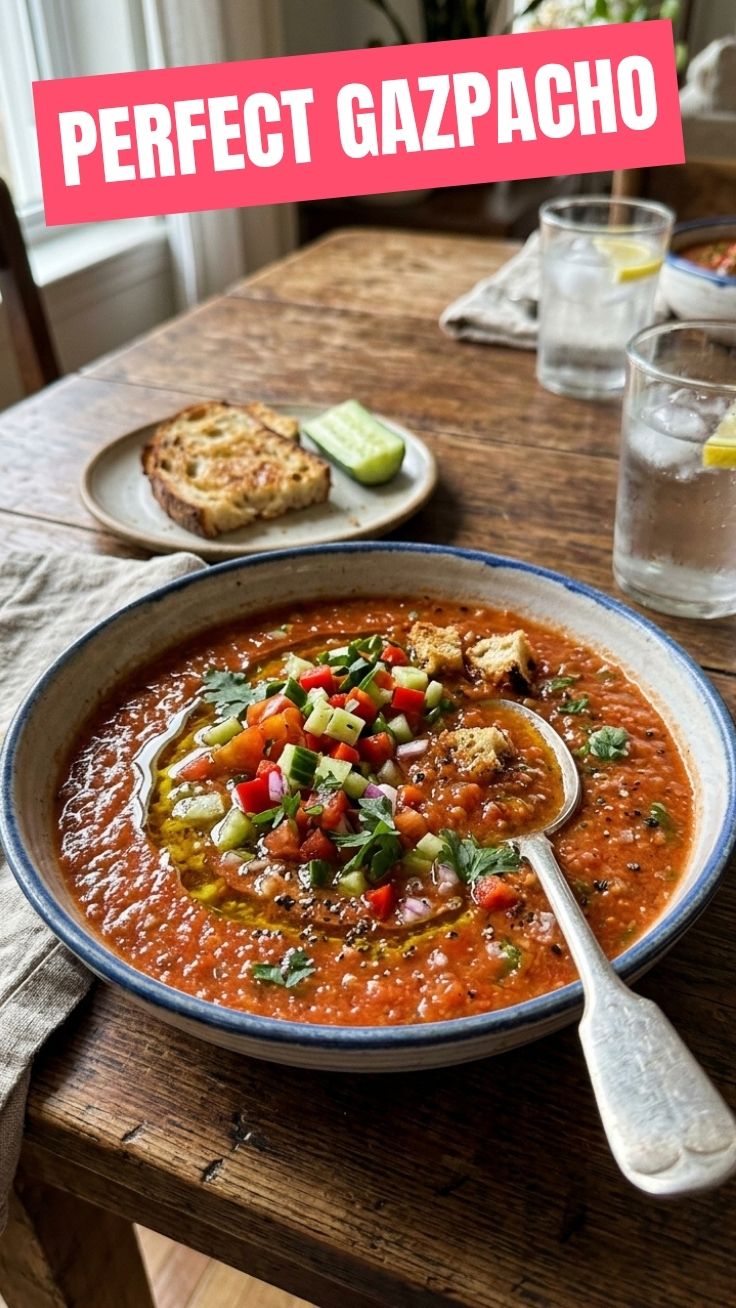
– Turn it into a meal: Garnish with diced hard‑boiled egg, chopped ham, or croutons for extra protein and crunch.
– Romesco‑style: Add a teaspoon of smoked paprika and a tablespoon of roasted almonds.
For a dairy‑free version, simply skip the bread (if using) and add an extra tablespoon of olive oil to maintain creaminess.
—
Common Mistakes to Avoid
1. Using out‑of‑season tomatoes – Pale, mealy tomatoes yield bland soup. Wait for summer or use high‑quality canned San Marzano tomatoes (drained).
2. Skipping the chill – Gazpacho served lukewarm is unappetizing. Reserve at least 2 hours for chilling.
3. Over‑blending garlic – Blend garlic with liquid first, not at the end, or it may become bitter.
4. Adding too much water – Start with minimal water; you can always thin later. Over‑diluted gazpacho loses its characteristic body.
5. Forgetting salt – Salt wakes up the flavors of raw vegetables. Season generously after blending, then adjust before serving.
—
Storage & Meal Prep Tips
– Refrigeration: Store in an airtight container for up to 4 days. Stir before serving as solids settle.
– Freezing: Gazpacho freezes well for up to 3 months. Pour into freezer‑safe bags or jars, leaving headroom. Thaw overnight in the fridge and re‑blend if separation occurs.
– Reheating: This soup is meant to be cold—do not heat it. If you prefer it at room temperature, let it sit out for 15 minutes before serving.
– Batch prep: Double the recipe and freeze individual portions for a quick, healthy lunch. Add fresh diced vegetables as garnish after thawing.
—
Conclusion
Making your own Gazpacho (Classic) at home is a rewarding way to celebrate summer produce while enjoying a time‑honored Spanish recipe that’s both nutritious and satisfying. With just 25 minutes of hands‑on time and a few simple ingredients, you can create a silky, refreshing soup that rivals any restaurant version. The key is quality produce, patience during chilling, and a willingness to adjust seasoning to your taste. I encourage you to try this recipe, share your results with friends, and explore other cold soups like Salmorejo or Ajoblanco—your palate (and your body) will thank you.
—
FAQs
1. Can I make gazpacho without a blender?
Yes, but the texture will be coarser. Finely dice all vegetables and crush the garlic, then whisk vigorously with olive oil and vinegar. Let it marinate overnight for enhanced flavor.
2. Why is my gazpacho too watery?
You likely added too much water or used overripe tomatoes. Remove some liquid by straining, or blend in a slice of bread or a handful of almonds to thicken.
3. Can I use canned tomatoes?
Absolutely. Use whole peeled San Marzano tomatoes (drained) for best results. Reduce or omit additional water since canned tomatoes are less watery than fresh.
4. How do I fix a gazpacho that’s too acidic?
Balance acidity with a pinch of sugar or a grated carrot. Alternatively, add a splash of cream (dairy or coconut) to mellow the tang.
5. Is gazpacho served hot or cold?
Always cold. It’s a summer soup designed to cool you down. Serve at 40–45°F (4–7°C). If it’s been sitting out, add a few ice cubes and re‑blend.
Gazpacho (Classic)
Ingredients
Equipment
Method
- Roughly chop the tomatoes, cucumber, green bell pepper, red onion, and garlic cloves and have them ready for blending.
- Combine all the chopped vegetables with olive oil, red wine vinegar, stale bread, and cold water in a blender, then blend until the mixture is very smooth. Season the gazpacho with salt and pepper to taste.
- Transfer the gazpacho to an airtight container and chill it in the refrigerator for at least 2 hours, or ideally overnight, to allow the flavors to fully meld before serving. Serve the gazpacho cold, optionally garnished with a drizzle of olive oil, finely diced vegetables, or croutons.